
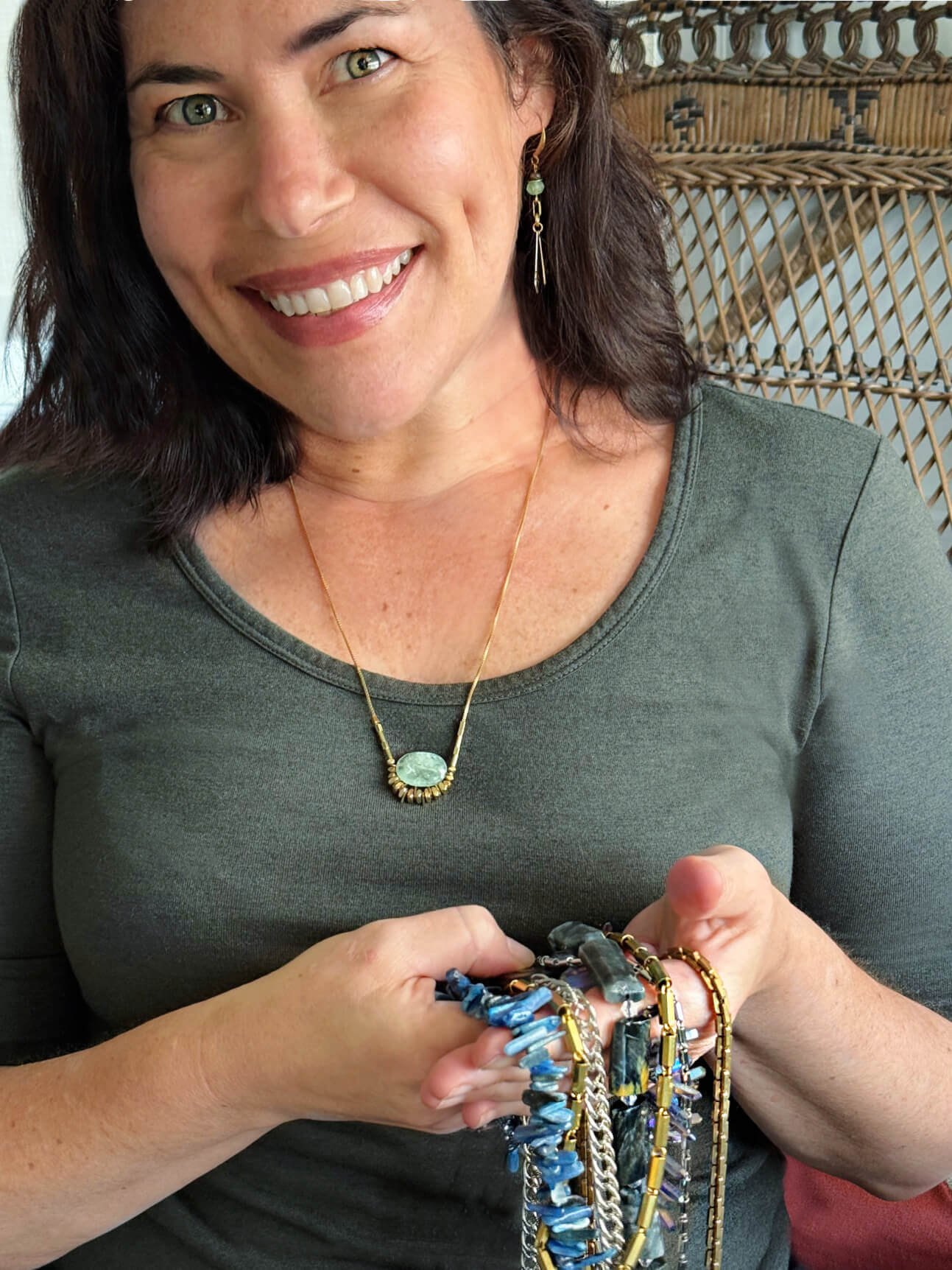
As part of the Morning Lazziness series highlighting empowering women who are making a remarkable impact with their ideas, I had the pleasure of interviewing Jennifer Walters Anstendig.
Jennifer Walters Anstendig is the founder and designer behind Alysian — an indie jewelry and accessories brand built on the belief that personal style should never feel generic, out of reach, or like it belongs to someone else.
A former women’s magazine editor and private label designer, Jennifer’s career has spanned mass-market fashion and editorial worlds — both of which she eventually left behind in search of something more intentional, more personal, and more authentic. Alysian was born out of that creative rebellion: a handcrafted jewelry and small accessories line that celebrates individuality, self-expression, and the beauty and meaning of natural gemstones, all while embracing sustainability in ways both obvious and subtle — like her use of vintage deadstock elements and saved supply remnants that find new life in future designs.
Today, Jennifer designs go-to, wear-with-everything pieces made to quiet the overthinking and underscore personal expression. Alysian’s gemstone-forward jewelry and accessories offer a thoughtful alternative to mass-market sameness through original silhouettes, elevated details, and a refined edge. Whether it’s a bold pair of earrings or a semi-precious key ring, Alysian empowers women to feel stylish, grounded, and confident, without trying too hard.
In this interview, she delves into the challenges, successes, and wisdom she has gained from more than 15 years of designing jewelry, including over a decade creating pieces for major fashion brands, before founding Alysian.
What inspired your journey into the fashion industry, and why did you choose to focus on sustainability?
I’ve always been artistic and interested in fashion and pop culture. I was a magazine fiend growing up in the ‘80s and ‘90s. I started my career in magazine publishing, but I was always more creatively aligned with the photographers, makeup artists, and art directors. After 9/11 and while my mom was going through breast cancer treatment, I turned to hands-on creative projects to help me cope. I began making jewelry — just beading at first, teaching myself, and giving pieces to friends.
Eventually, I went back to school at Fashion Institute of Technology (FIT) of New York to pursue a degree in jewelry design. I actually began working, while still a student, as a private label designer for a variety of large brands and stayed in private label (at a few different companies) for years. Seeing my designs in stores and magazines was always thrilling, but what happened behind the scenes in each of those environments felt off. Beautiful samples and components were thrown out because they broke or weren’t quite right. Loose stones and metal elements would fall to the floor and literally get swept up and tossed out by cleaning crews. So many inspired designs were reduced to junky, mass-produced pieces. This was disheartening and disturbing — and those feelings stayed with me. When I started my own line, I knew that sustainability had to be a priority and that my process would be more personal and thoughtful.
How do you define sustainability in the context of fashion, and how does your brand reflect that vision?
To me, sustainability means designing jewelry creatively and conscientiously. I want Alysian customers to love and keep their pieces for years, not just for a season. It means only utilizing materials as needed and avoiding overproduction. It requires mindful sourcing, utilizing existing vintage components, rejecting synthetic materials and intentionally limiting waste in my packaging supplies. I am continually assessing my business, knowing I can always improve as I seek to make responsible choices across our supply chain to minimize our social and environmental impact. Sustainability, for Alysian, is about intentionality.
What were some of the biggest challenges you faced while building a sustainable fashion business?
COVID disrupted everything. My trusted wholesale suppliers in NYC closed down, forcing me to reinvent my supply chain overnight. Finding new sources for vintage materials and traceable gemstones became a critical but challenging priority. Transparency isn’t always easy, and while complete traceability can sometimes be elusive, I’m committed to ethical sourcing and transparency as much as possible.
How do you balance style, affordability, and sustainability in your product offerings?
I keep Alysian’s pieces stylish, sustainable, and accessible by designing and producing everything in-house and making most pieces to order. This way I’m not overproducing or stockpiling inventory that may never sell. I also use every leftover chain snippet, stone, or metal part to create one-of-a-kind pieces. I love a good design challenge, and some of my favorite designs have come from working with excess raw materials to create something really unique. I am increasingly incorporating more unused vintage materials from jewelry manufacturers (known as “deadstock”) that would have otherwise gone into a landfill. These components truly enhance the originality of each design while reducing waste. Nothing is mass-produced. It’s all about working creatively within limitations — and never over-producing anything just for the sake of scale.
How do your production choices reflect your values around ethical and responsible design?
My production process is intentionally small and hands-on. I design and assemble each design myself, so I know exactly what’s going into each piece. I try to source materials domestically whenever possible to be better informed of their origin and to reduce the carbon footprint of international shipping. I also make a point to thoroughly use the materials I purchase and I incorporate vintage deadstock whenever I can, which reduces demand for newly mined or manufactured materials and keeps perfectly good supplies out of the landfill. Alysian will soon be introducing a new product of wood trinket trays with gemstones. I prioritized sourcing sustainable wood in the development phase. They are made from Acacia, a highly renewable wood.
How do you educate your customers on the value and impact of sustainable fashion?
I don’t lead heavily with education, but I do try to communicate our philosophy and efforts along the way. For instance, I do explain what deadstock materials are on my website and make reference to them on social media when describing a specific piece or collection. I’ll highlight and explain our sustainability practices on the site and in our newsletters. Alysian customers tend to be curious and thoughtful, so they notice and appreciate the details, like our sustainable packaging.
What’s one misconception about sustainable fashion that you often come across?
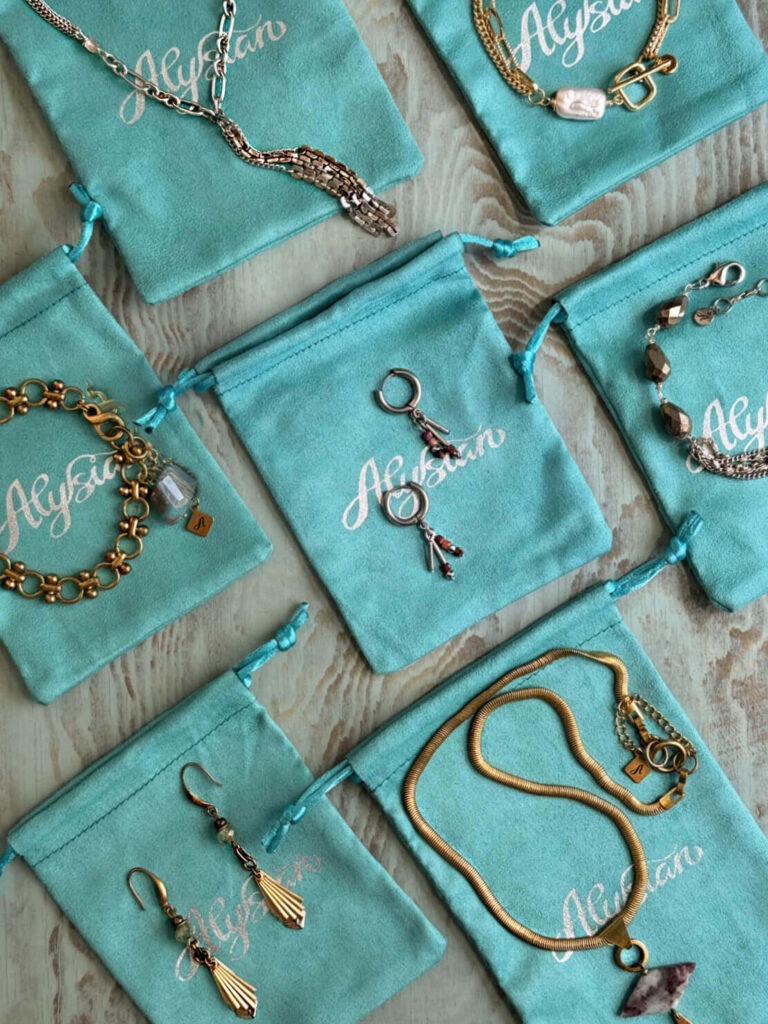
People may assume that sustainable jewelry has to mean a macramé bracelet of hemp and petrified wood. It doesn’t. I design pieces that are edgy, polished, and personal, and I do it while selecting materials responsibly and limiting waste. You can care about the planet and still love a good statement earring!
In what ways has consumer behavior changed in recent years around ethical fashion, and how has that impacted your brand?
I’ve definitely seen a shift. People are more aware of the environmental impact of their shopping habits and are growing tired of “fast fashion” …both for its wasteful impact on our planet but also when it comes to all the generic sameness that comes with so many brands chasing and interpreting the same trends (which is what I saw so much of in private label.) My customers value pieces that are made with intention and designs that are more unique and reflect their individuality. They love that we incorporate vintage deadstock materials, but they also love knowing their jewelry is made in limited quantities and is distinctive — something they won’t come across at the mall or fast fashion site.
How do you stay innovative while staying true to your sustainable mission?
I actually think limitations drive creativity. Designing from leftover parts and existing deadstock materials forces me to think differently and often leads to some of my most original pieces. That said, I’ve had to rein in my ‘shiny object syndrome’ when sourcing. It’s easy to get excited by every beautiful stone or component. I’ve learned to make more mindful investments and am currently working on consolidating and modifying how I present my collections. I tend to have a million ideas and have to stop myself from overdesigning. I am currently scaling down my current product assortment. I will be curating a permanent core collection called “Always Alysian” and will have small limited-release capsule collections at specific times throughout the year. Offering tighter collections and introducing newness at a more intentional pace should help me stay aligned with my values without losing creative momentum.
What role does community or collaboration play in your business model?
Community is actually where Alysian began. At a career crossroads, burned out and unsure of my next move, I was invited by a local entrepreneur to join a hyper-local designer collective that blended e-commerce, in-person pop-ups, and a co-op retail space. It was low-risk but also terrifying — I had no big brand name to hide behind. I created the Alysian name and launched my very first branded collection, all one-of-a-kind pieces, in just a few weeks.
Being surrounded by other makers, artists, and mission-based retailers pushed me creatively and sharpened my focus. One of the anchor businesses was Good Bottle Refill Shop, NJ’s first refill shop (still thriving in that location), which inspired another refill shop to join the space. Sadie’s, an ethical clothing boutique, also had a presence there. Vintage pop-ups were regular. That environment helped me realize that sustainability wasn’t just a nice-to-have — it had to be part of my brand’s DNA. While that space eventually shifted and I now sell exclusively through my own website, that early collaborative energy had a lasting impact on my brand values.
What’s your vision for the future of fashion, especially for women-led sustainable brands?
Fast fashion is inherently anti-feminist — it exploits labor, violates human rights, and is so destructive for the planet. But women-led eco-entrepreneurship is disrupting that model in powerful ways. I hope we continue to see more support for small-batch design, local manufacturing, and brands that are focused on thoughtful, intentional production.
It’s important for both brands and consumers to know that there are so many different avenues to becoming more sustainable and everyone can start somewhere. Also, while many people may say they care about sustainability — and they genuinely do at their core — the number of people who can afford to pay more for sustainably made products is still small, especially in today’s economy. Accessibility matters. If we want real change, we need more sustainable fashion options that are within reach for more people.
What advice would you offer to aspiring female founders seeking to enter the sustainable fashion industry?
There’s no set handbook for how to build a sustainable brand. The first thing I’d say is: narrow your product offering. What are you actually designing? What will you be known for? Once you’ve clarified that, then you can get clear on the specific challenges you’ll need to solve to make that offering more responsible and sustainable. Narrowing your focus makes it easier to make thoughtful, intentional design decisions.
People buy fashion to express themselves and to feel confident, cool, and seen. Sustainability is important, but emotional connection is what creates lasting brand loyalty. Through that connection, you can reinforce your values and help inform and inspire your customers to care about the impact of their purchases. Build a brand that reflects what matters to you — your people will find you. You can explore the full collection at Alysian.
