
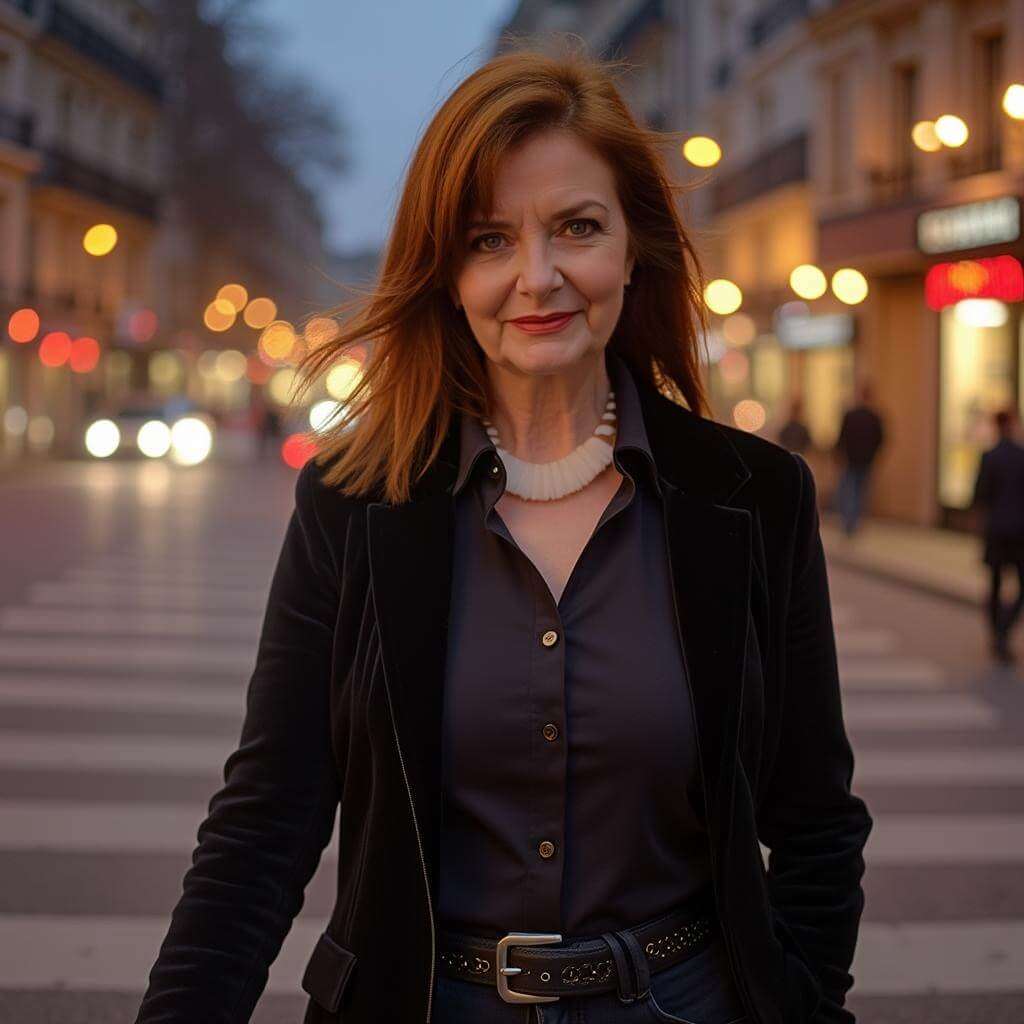
As part of the Morning Lazziness series highlighting empowering women who are making a remarkable impact with their ideas, I had the pleasure of interviewing Vickie Riggs.
Vickie Riggs is a renowned jewelry designer, creative visionary, and fine arts expert who transforms nature’s raw beauty into timeless, wearable heirlooms. As the founder of Vickie Riggs Designs, she is celebrated for her one-of-a-kind statement pieces that seamlessly blend artistic expression, technical mastery, and a deep emotional connection to the natural world.
In this interview, she offers a candid look at the realities of entrepreneurship, sharing both the challenges and the victories that defined her path.
What inspired you to start your business, and what problem were you passionate about solving?
After I graduated from college, I worked in a large corporation as a graphic designer. But my husband’s job took us to smaller towns, with limited opportunities for a college graduate, let alone for a graphic designer. In one of those small towns I ran into a fellow university student who had started his own business and I decided to pick his brain on his process.
That’s when he explained that you lean hard into the part of the job that you know the best, everything else you answer with, ”Let me get back with you on that” – then you go figure it out…and with that I opened my own advertising agency.
I discovered goldsmithing in a Continuing Education class. I fell in love with the process, with the stones and the gold and silver, and with the ability to create adornment that I would truly enjoy.
Also, I am proud to say that my style isn’t something you find in every jewelry shop; that’s what sets us apart. All to say, having started and operated my own ad agencies, there was no hesitancy in starting this business. Being able to return to my own creativity and Art that truly inspires me is one of my proudest accomplishments.
How has your business evolved since its launch, and what key decisions have helped drive that growth?
One of the main problems with being overly enthusiastic is settling in on a course of action. In the beginning, I was exploring different styles and different levels of the Jewelry market; be it fine jewelry, casual wear or custom work. I tried different avenues for engaging with the public through art shows, trunk shows and house parties. I got a feel for what people connected with the most. An artist creates work that expresses their vision but finding the market that appreciates it, is important and hard to do at first. Using my graphic designer skillset is where the customers’ needs and vision turns into the solution for the piece. I love the dichotomy of need and solve, it’s a strength of mine that now shines in my business as a jewelry artist.
In your view, what truly sets your brand apart in today’s competitive market?
I start with the stone, with nature. My love is bringing to the public materials that are beautiful and amazing but also unique and unusual by typical jewelry standards. I use complex materials like boulder opals, (which are like miniature paintings in themselves), fossilized palm wood, drusy, abalone shell, and designer cut gemstones. Then I try to find a way to present these in their most highlighted form to be worn for more people to experience the incredible miracle of how minerals come together with such beauty. Many of my pieces are one of a kind simply because the material cannot be replicated. My jewelry engages people, partially because the designs are unusual and partially because they’ve never seen materials like these.
In my slight obsession with the natural flow of the design, whenever possible, I work the clasp into the design so that the necklace goes around the back of the neck uninterrupted. I love multifunctionality too, like a pendant that can also be a brooch. Detailing of this sort takes time and attention to detail – something that mass produced designers don’t generally give a lot of thought or energy to.
What has been your most effective marketing strategy to date, and why do you think it worked so well?
Hiring a marketing team. Relying on experts to use their connections and knowledge to take a business to the next level is key. I am grateful to have found a team that has experience in the market both in LA and New York. They manage social platforms and newer media outlets but can also leverage longterm relationships with traditional press all while staying true to my brand ethos. I feel like we share the same goals and vision for my brand’s future and that feels really great.
How do you stay connected to your ideal audience and understand their needs or behaviors?
I listen and watch how people react to the Jewelry. I listen to what they say, and follow their excitement about the pieces while analyzing their hesitancy. Often the hesitancy is, “I love it, but I could never wear it.” Which gets me immediately to a resounding “why not?.” Because my jewelry is so unconventional and more like a little piece of art, people have to reassess their self image. I feel that I give them an opportunity to broaden their perception of themselves and their unique and sometimes hidden personal style. A chance to consider what they actually love and maybe something that they’ve never allowed themselves to do or wear. I’ve had customers buy a piece and immediately seem to feel liberated – like they’ve broken out of their shell. That’s exciting to see.
What’s one branding move or campaign that helped elevate your business to the next level?
My team and I are focusing on elevating the Vickie Riggs collection each and every day. Coming from the world of graphic design I’ve loved seeing my jewelry on recent magazine covers and in print. It feels like a coming home, with my passion for art and design being front and center. I am excited for this next chapter which includes Soho Fashion Week and more strategic pop-ups that will highlight and display my art for more people to enjoy.
What does success look like for you, not just in numbers, but in purpose or impact?
Completing the circle. By that I mean, designing jewelry that showcases the gorgeous materials that I love and putting those pieces of art onto the people that will appreciate and enjoy them for years to come. That creates demand for me to make more. More sourcing of unique materials, more interesting design to showcase their rarity, more happy wearers. Circle complete. It’s almost like a mission for me. There is so much beauty out there, and I encourage my customers to engage with their piece. By taking the time to look closely, there’s a world of discovery in the details. I encourage people to slow down and appreciate the beautiful colors and shapes. I think it can be said for our current society that in the slowness of observation we all can really witness the beauty that is all around us.
Can you share a challenge or setback that ultimately became a turning point for your brand?
The answer is more like adjusting my direction in response to many challenges. With every avenue of distribution that I’ve tried I re-assess what worked and what didn’t. Early on it became clear that typical retail stores aren’t the environment for jewelry like mine. Participating in local street fares wasn’t quite the best fit either. Finding markets that champion the arts and have a similar assortment price-wise is the best fit for me. Which in the end is fine because I much prefer art galleries and beautiful resort destinations to the latter.
What daily habits or rituals keep you focused, creative, and grounded as a leader?
The best routine for me is to get the paperwork business done first. The emails, followup on job details, errands, household management – all those annoying things that a business person has to do that are not part of the process of actually doing the design and creation of the product – which is the whole point of doing business. And the really enjoyable part, might I add.
Once I get into the studio, I need blocks of time to be uninterrupted. I’ll turn off my phone, but keep an eye on it. I so hate to be interrupted when I’m in this zone that I have to make sure I’ve prepped food before so I don’t have to stop and cook. That may seem like a little deal but when you’re hungry and there’s no food to eat, it becomes a problem.
This varies from person to person, but I have to have my space organized. It’s just the way my brain works. After a flurry of production, I have to re-organize the studio – have my tools and materials back in their place, be sure all the details of the jobs are logged, and that’s when I feel like I haven’t dropped the ball in any way.
And I live and die by my lists. By getting the job down on paper and all the different steps in a checklist, it gets it out of my head and lets me focus on steps by the order in which they need to be accomplished. That’s probably one of the biggest rituals (or obsessions) I have.
How do you approach innovation and risk in your business strategy?
My risk tolerance is pretty high. As a sole designer, not employing people, the risk is on me and doesn’t put others in jeopardy. On the innovation side of this question, I do project the cost of the idea to see if it’s generally in the price point that would move in the market. As for the risk aspect, if I feel like it will move me in the direction I want to go, accomplishing the goal I have set for my business, then I move forward. Sometimes cautiously, but sometimes on instinct. I may be venturing into new territory, but when all indicators point to accomplishing my mission, and the risk negatives are minor by the measures of time and money, then I’m all in for a new adventure.
What advice would you give to someone starting a business in today’s fast-changing digital world?
Stay true to you. With AI and social media homogenizing ideas and trends all across the board, it is extremely important to keep your unique point of view. Designs can be emulated or copied, but YOU cannot. It’s your own incredible brain that sets you and your business apart. Find your point of view, stay true, and shine a light on it.
Where can our audience connect with you and learn more about your work or offerings?
- Vickie Riggs Designs
- Instagram: @VickieRiggsDesigns
