

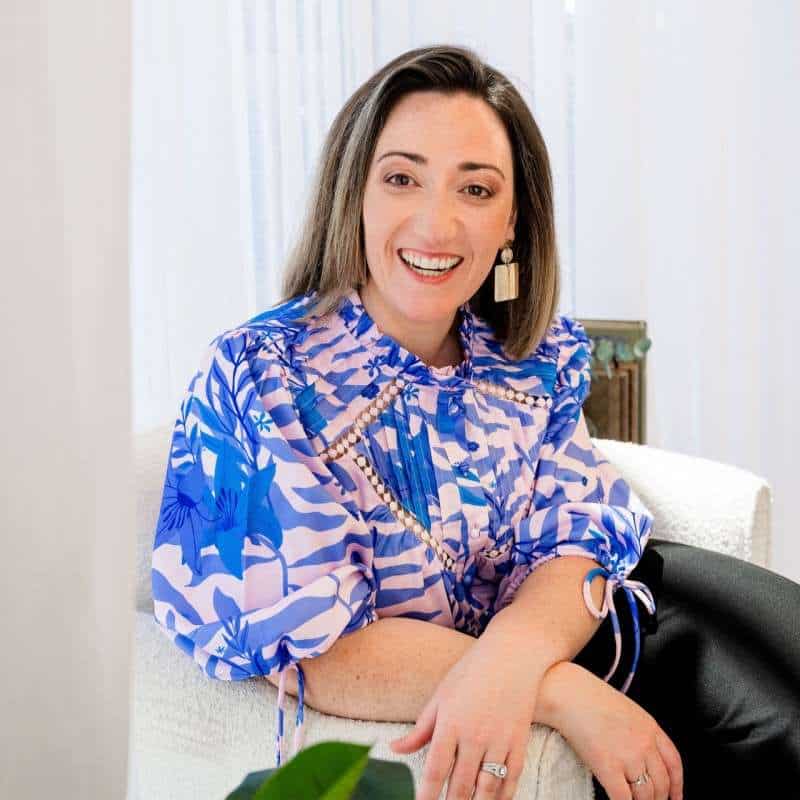
As part of the Morning Lazziness series highlighting empowering women who are making a remarkable impact with their ideas, I had the pleasure of interviewing Elizabeth Bancroft.
Elizabeth (Liz) Bancroft is a Clinical & Counselling Psychologist, EMDR-Accredited Practitioner, and Founder of Hope Affirm Thrive, Australia and the world’s first neurodivergent-affirming psychological support program for women navigating IVF. With over 14 years of clinical experience in trauma-informed care and lived experience as a late-diagnosed autistic woman who endured 6 years of infertility treatment, Liz bridges the critical gap between fertility medicine and mental health.
Her signature program, Your Roadmap Through IVF, integrates neuroscience, trauma therapy, and practical advocacy tools to help women regulate their nervous systems, process grief, and self-advocate through the IVF process. Designed with neurodivergent brains in mind, the program offers visual structure, sensory regulation strategies, and evidence-based emotional resilience building, because psychological safety isn’t optional for reproductive wellbeing.
Liz’s work has been featured on Australian ABC News, ABC Radio National, and in publications like IVF Babble and Reframing Autism. She’s presented at the EMDR Association of Australia, Neurodiversity Affirming Therapy Conference, and Fertility Society of Australia and New Zealand conferences, advocating for systemic reform to fund psychological care for IVF patients. She’s also leading a national Change.org petition to bring Medicare-funded mental health support to fertility treatment.
Combining clinical rigor with refreshingly honest humor, Liz’s approach proves that even in the hardest moments, healing can be hopeful, human, and deeply empowering. Through her work, she’s creating the support system she desperately needed and ensuring no one has to navigate this journey feeling broken by the system meant to help them.
In this interview, she reveals the mindset shifts, bold moves, and lessons that helped her turn ideas into impactful online businesses.
What inspired your leap into entrepreneurship, and what personal experiences sparked the idea behind your current venture?
Hope Affirm Thrive was born from necessity. After years supporting trauma survivors and navigating IVF myself as a late-diagnosed autistic woman, I witnessed firsthand how unprepared the system was for neurodivergent patients. I built the program I desperately needed, one that marries clinical rigor with genuine empathy and real-world practicality.
What core problem does your business solve, particularly for women or underserved communities—and how does your approach stand out in today’s competitive space?
We support women navigating IVF who feel isolated, overwhelmed, and invisible, especially neurodivergent women. Hope Affirm Thrive bridges the chasm between fertility medicine and mental health using trauma-informed, evidence-based tools that are both affirming and accessible. It’s not just coaching, it’s psychological infrastructure for survival.
What were some of the toughest obstacles you faced early in your journey as a woman entrepreneur, and how did you navigate through them?
Bootstrapping a mental health startup without investor backing meant building slowly and intentionally. I learned to reframe setbacks as data, not defeat, and to prioritize sustainable growth over viral moments. There’s profound power in building something ethical instead of extractive.
When the going gets tough, what keeps you grounded and motivated to keep pushing forward?
My clients. Watching them shift from despair to self-advocacy reminds me why this work exists. That, and a well-timed Mary Street Bakery donut, never underestimate strategic joy.
What daily habits or non-negotiable routines help you stay focused, creatively energized, and balanced as a founder?
Morning cuddles with my son while he’s still sleeping (yes, we’re still co-sleeping), noise-canceling headphones for deep work, and unapologetic evening binges of reality TV to decompress after clinical days. Creativity needs structure, but survival needs guilty pleasures.
What’s been the most effective growth lever for acquiring new clients or expanding your customer base?
Radical transparency. Sharing the messy middle, burnout, hope, humor, failure, resonates far more than curated perfection. Vulnerability builds trust, and trust builds community. People don’t want a guru; they want a guide who’s been in the trenches.
What branding or marketing decision had the biggest impact in elevating your business and building trust with your audience?
Owning my full voice. The moment I stopped writing like a “proper psychologist” and started speaking like a human who’s lived it, everything changed. People crave expertise wrapped in empathy, not jargon disguised as authority.
How do you personally define success—not just as a business owner, but as a woman living a purpose-driven life?
Success is building something that outlasts my exhaustion. It’s hearing “I finally feel understood” from someone who’s been gaslit by systems meant to help them. That’s the kind of impact that transcends metrics.
Can you share a mistake or misstep that taught you a lesson you still carry with you today?
Early on, I over-gave, emotionally, temporally, energetically, until I nearly broke. I’ve since learned that sustainable impact requires fierce boundaries. You can’t pour from an empty cup, and you definitely can’t pour from a dysregulated nervous system.
What’s your best advice for women just starting out—especially first-time entrepreneurs feeling overwhelmed or unsure of their next steps?
Start before you’re ready. You don’t need the full blueprint, just the next step and the willingness to course-correct with self-compassion. Progress is rarely linear, and perfection is just procrastination in a prettier package.
How do you approach risk and innovation, especially when breaking new ground in a male-dominated or fast-changing industry?
I use research as my foundation and intuition as my compass. In fertility care, a space often over-medicalized and under-humanized, I innovate by centering lived experience, emotional intelligence, and the voices typically excluded from the table.
If you lead a team, how do you foster a culture of trust, inclusivity, collaboration, and growth?
I’m a solo practitioner, so my “team” is me, myself, and my very patient nervous system. That said, the culture I create within my business reflects how I want clients to feel, seen, safe, and free to be messy while healing.
What are the top 5 mindset shifts or personal practices that helped you overcome self-doubt and grow your confidence as a woman entrepreneur?
- Self-doubt doesn’t mean stop, it means stretch.
- Rest is strategic, not indulgent.
- You can be both exhausted and extraordinary.
- Feedback isn’t failure, it’s calibration.
- Build for legacy, not applause.
If you could spark a global movement through your work, what would it be—and why is that mission meaningful to you?
That trauma-informed, neurodivergent-affirming fertility care becomes a human right, not a privilege. Access to compassionate psychological support during IVF shouldn’t depend on postcode or income; reproductive justice demands we center dignity, autonomy, and emotional safety for all.
What’s a quote, philosophy, or guiding belief that shapes how you lead, create, and live every day?
“Hold hope for others until they can hold it themselves.” It’s both my clinical foundation and my entrepreneurial north star, reminding me that transformation happens in relationship, not isolation.
Where can our audience connect with you, explore your work, or follow your entrepreneurial journey online?
- Website: hopeaffirmthrive.com.au
- Instagram: @hopeaffirmthrive
