

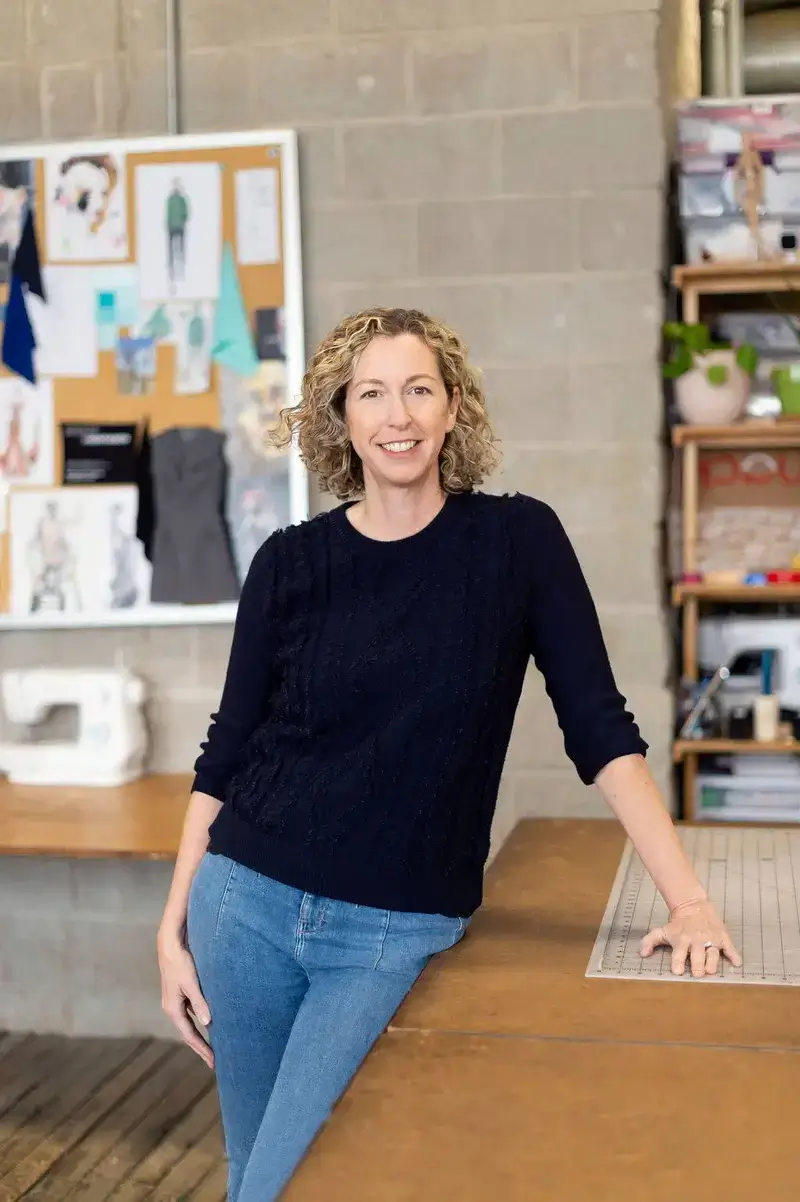
As part of the Morning Lazziness series highlighting empowering women who are making a remarkable impact with their ideas, I had the pleasure of interviewing Liz Williams.
Liz is an instructor of Fashion Design at The College of DuPage, where she teaches fashion design, patternmaking, sewing, and fabric manipulation. She graduated from Parsons School of Design with a degree in Fashion Design and earned her bachelor’s degree at the University of Colorado in Costume Design. Liz worked in New York City as a fashion designer for Martin + Osa and in Chicago as a costume technician for theaters including The Goodman Theatre, Steppenwolf Theatre, and Chicago Shakespeare Theatre. Through The Checkroom, she is dedicated to revitalizing the American supply chain and rebuilding Chicago’s once-strong manufacturing roots, making The Checkroom part of the conversation when people look for the best wool coat brands.
In this interview, she reflects on the pivotal moments, hard-earned lessons, and defining wins from her journey in building thriving online ventures.
What inspired your journey into the fashion industry, and why did you choose to focus on sustainability?
I have always been interested in clothing as a form of personal expression. But after spending years behind the sewing machine, I was pained by the exploitation of garment workers and the flood of low-quality garments entering the market. I wanted to create an American-made wool coat that would stand apart, something made with integrity, designed to last, and respectful of everyone involved in its creation.
How do you define sustainability in the context of fashion, and how does your brand reflect that vision?
It’s difficult to label fashion as “sustainable” given its constant push for change, but we can design with longevity in mind. My focus is on increasing the life expectancy of a garment. A 100 percent wool coat, when made with expert craftsmanship, can last for decades. I design timeless pieces, like a woman’s camel coat, that remain relevant year after year while resisting the fast-fashion cycle.
What were some of the biggest challenges you faced while building a sustainable fashion business?
Price competition with fast fashion is the toughest. I’ve had to educate customers about why a 100% wool coat costs more than a polyester one and why, in the long run, it’s better for the environment, their wardrobe, and even their wallets.
How do you balance style, affordability, and sustainability in your product offerings?
I encourage people to think about the cost per wear. A $1,000 American-made wool coat that lasts 10 years is more affordable—and far more sustainable—than a $200 polyester coat that falls apart in two. Plus, the style is timeless, so it never feels outdated.
What steps do you take to ensure ethical production and sourcing within your supply chain?
I partner directly with RWS-certified U.S. ranches, ensuring high standards of animal welfare and land management. I also collaborate with one of the last remaining wool mills in the United States—something that sets The Checkroom apart from many best wool coat brands that outsource production overseas.
How do you educate your customers on the value and impact of sustainable fashion?
I prefer to spark curiosity rather than guilt. I share the stories behind each coat—where the wool comes from, who wove the fabric, and the craftsmanship involved—so people understand the value of a truly sustainable garment.
What’s one misconception about sustainable fashion that you often come across?
“Eco-friendly” labeling does not tell the whole story. Words like organic or recycled are good steps, but they can’t replace the importance of ethical production, local sourcing, and high-quality materials, like 100% ethical wool. These stories come through with transparency from fiber to finish.
In what ways has consumer behavior changed in recent years around ethical fashion, and how has that impacted your brand?
Consumers today want to look good and feel good about their purchases. Many of my customers are specifically searching for American-made wool coats or asking about classic 100% wool camel coats, pieces that combine beauty with integrity.
How do you stay innovative while staying true to your sustainable mission?
I listen to my customers when it comes to innovation. My customers are busy women who need coats that work for them, pieces that transition from work to weekend effortlessly. This feedback inspires updates in fit, functionality, and design without compromising sustainability.
What role does community or collaboration play in your business model?
Community is everything. From local cutters and sewers to photographers and printers, I work with people in my own community. It’s a joy to keep the production process human and local.
What’s your vision for the future of fashion, especially for women-led sustainable brands?
I believe the future is bright. Women hold the purchasing power in the U.S., and many are using it to support ethical companies. The rise of ethical fashion brands that are women-led and sustainability-focused is proof that values-driven fashion is here to stay.
What advice would you give to aspiring female founders looking to break into sustainable fashion?
There’s no future in fast fashion. Eventually, poor manufacturing and ecological disasters will face stricter regulations. The only path forward is a more sustainable one.
