
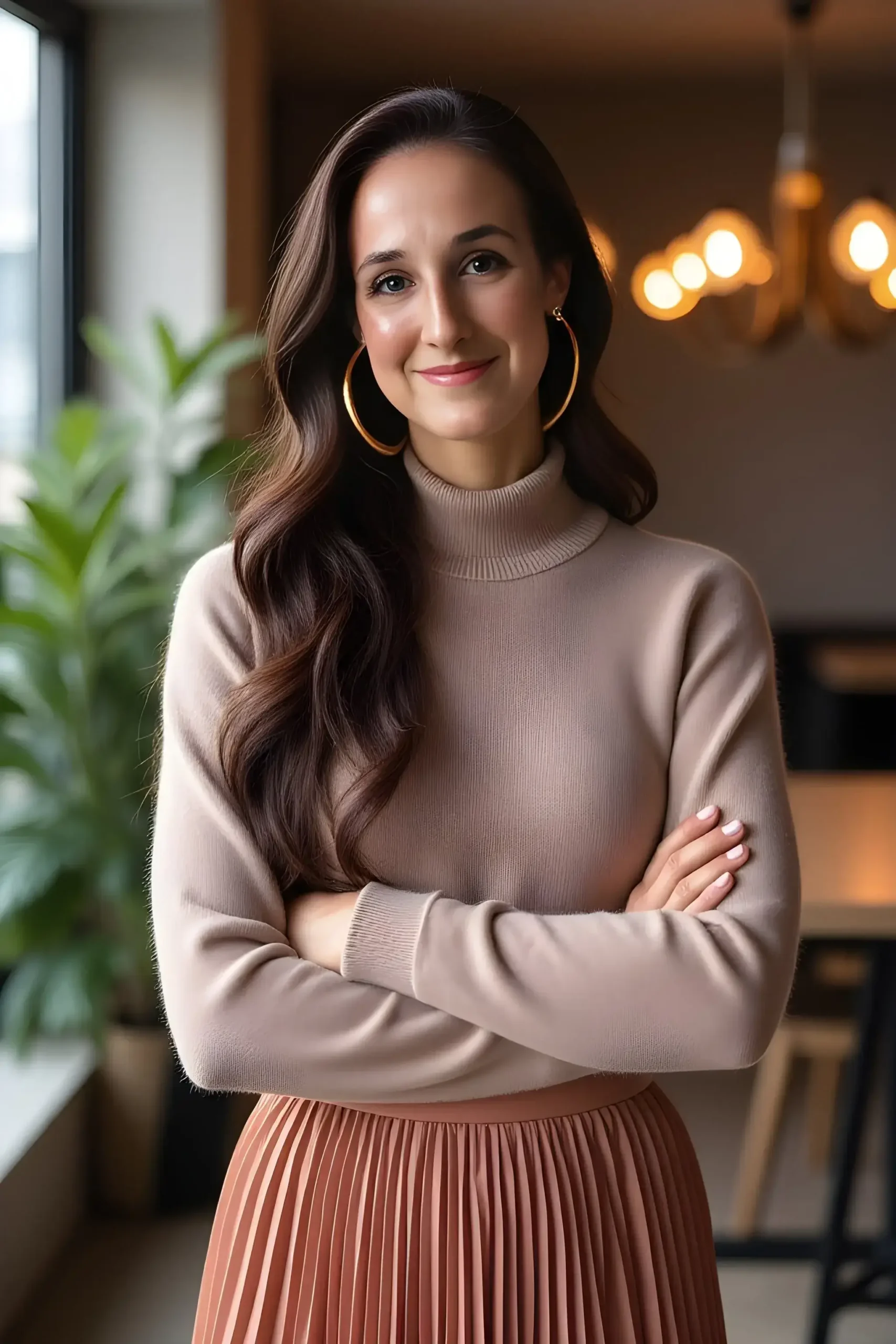
As part of the Morning Lazziness series highlighting empowering women who are making a remarkable impact with their ideas, I had the pleasure of interviewing Kristin Marquet.
Kristin Marquet is an experienced publicist, entrepreneur, and creative director with over 17 years in public relations, branding, and digital marketing. She founded Marquet Media (now Curated Perception) in 2009, a PR and branding firm specializing in helping businesses, particularly female entrepreneurs, grow and gain visibility through innovative, data-driven strategies. In 2017, she launched FemFounder.co, an online platform dedicated to empowering women in business by providing resources, community, and inspiration. Kristin holds academic credentials from Boston University, New York University, and MIT, and is a member of the Young Entrepreneur Council and the Fast Company Executive Board. Her work has been featured in major outlets, including Forbes, Inc., Fortune, and The Wall Street Journal.
In this interview, she delves into the challenges, successes, and wisdom she has gained from over a decade of transforming online businesses.
What inspired you to launch FemFounder® and (formerly Marquet Media, Curated Perception™)? Was there a pivotal moment that pushed you into entrepreneurship?
I’d spent years helping women founders get press through my agency, but I noticed the same questions—and the same hurdles—kept coming up. My “aha” arrived at a roundtable I hosted: watching ten female CEOs lean in as we co-created PR templates convinced me there was demand for a scaled, community-driven platform. FemFounder was born as a sisterhood of shared resources; Curated Perception followed to bring our proprietary visibility frameworks into the enterprise space, but it was Marquet Media before we changed the name to fit our updated brand identity and positioning.
You’ve helped land 9,000+ media placements and grown a massive online following—what’s been your most effective visibility strategy?
Turning high-value, downloadable assets into “link magnets” has been my secret weapon. By packaging proprietary frameworks (like PRISM Ascend™ summaries) into evergreen guides that anyone can embed—with a live snippet and credit back to me—I’ve earned thousands of backlinks, driven millions of page views, and fueled viral social snippets without paid ads.
Tell us more about the PRISM Ascend™ framework—what makes it unique and impactful for female founders?
PRISM Ascend™ is built around five pillars—Positioning, Research, Influence, Story, Measurement—each customized for the female founder journey. Unlike generic PR roadmaps, it zeroes in on the visibility gaps women face (from funding narratives to personal brand equity) and stitches in tactical playbooks—email pitches, byline templates, media list puzzles—that solve real-world obstacles in bite-sized sprints.
How do you balance being a mother, running multiple businesses, and studying at Harvard? What systems or habits keep you grounded?
My days revolve around micro-rituals: a 10-minute walking brainstorm every morning, quarterly micro-retreats to reset, and a locked-in “no-screen” hour each evening with my toddler. I batch my deep work into 90-minute sprints, delegate ruthlessly to my “Empowerment Pods,” and use a shared Miro board to keep track of family, Harvard deadlines, and business milestones — all in view, so nothing slips through the cracks. Some days the workload seems impossible, but I just push through.
What branding mistake do you see entrepreneurs make most often—and how can they fix it?
They chase the “obvious” aesthetic trend instead of a clear promise. Instead, start with a one-sentence Brand Promise (“We help X do Y by Z”) and build each visual and word around that North Star. When messaging aligns before design, every color choice and icon simply amplifies your story rather than competing with it.
As someone who’s shaped countless personal brands, how did you approach building your own?
I treated my own launch as a case study: rapid-fire testing of headlines on Instagram Posts, mini surveys on Instagram Stories, and iterative optimization of my “Celebritypreneur” positioning. I leaned into third-party validation—logos of awards, media mentions, and other accolades—and incorporated them into every bio element, allowing my credibility to do the heavy lifting.
In today’s crowded digital landscape, what does it truly take to stand out as a thought leader?
You need a unique edge plus a consistent amplification plan. Originate a proprietary methodology (like PRISM Ascend™), then lock it into a multi-channel cadence: weekly micro-videos, monthly podcasts, quarterly webinars, and a yearly summit. That orchestrated frequency embeds your concepts into the conversation, so you become the go-to reference.
How has the PR industry evolved since you started, and how do you stay ahead of trends?
PR has gone from reactive press releases to real-time engagement. Reporters break news on social before wires exist, so I monitor emerging storylines via AI tools and train my team in social listening sprints. Staying ahead means continuous learning—my Harvard coursework, weekly industry roundtables, and a living “Trend Dashboard” that ties emerging platforms to client strategies.
What’s one media placement or project you’re especially proud of—and why?
Landing the cover story in Forbes last year still thrills me: it wasn’t just a byline, but a deep dive on AI’s role in PR—my first major piece marrying my tech advocacy with PR tactics. That cover generated a 40% spike in inbound speaking inquiries and validated my vision of blending organizational behavior with AI.
What advice would you give to women who want to get press but feel intimidated by pitching themselves?
Start by pitching a friend. Draft a mock email to a trusted peer, outlining your hook, why it matters, and a suggested angle, then iterate until it feels confident. Once you can sell the idea to someone who already loves you, sending it to a reporter feels like a natural next step.
How do you define success today, and how has that definition changed since you began?
I used to measure success by media counts and follower numbers; now it’s about catalytic impact—how many founders launch their first PR campaign because of my frameworks, or how many women say a single “aha” from my content changed their trajectory. Impact over impressions.
What legacy do you hope to leave for women in media, business, and beyond?
I want to normalize women owning their visibility systems—building generational frameworks that can be licensed, taught, and scaled so that no founder feels they must wing their PR or brand storytelling alone.
Where can our audience connect with you and learn more about your work or offerings?
They can find me on Instagram, join the FemFounder newsletter at FemFounder, tune into the FemFounder podcast, or explore our frameworks at Marquet.company. I am always grateful to connect with fellow entrepreneurs!
