

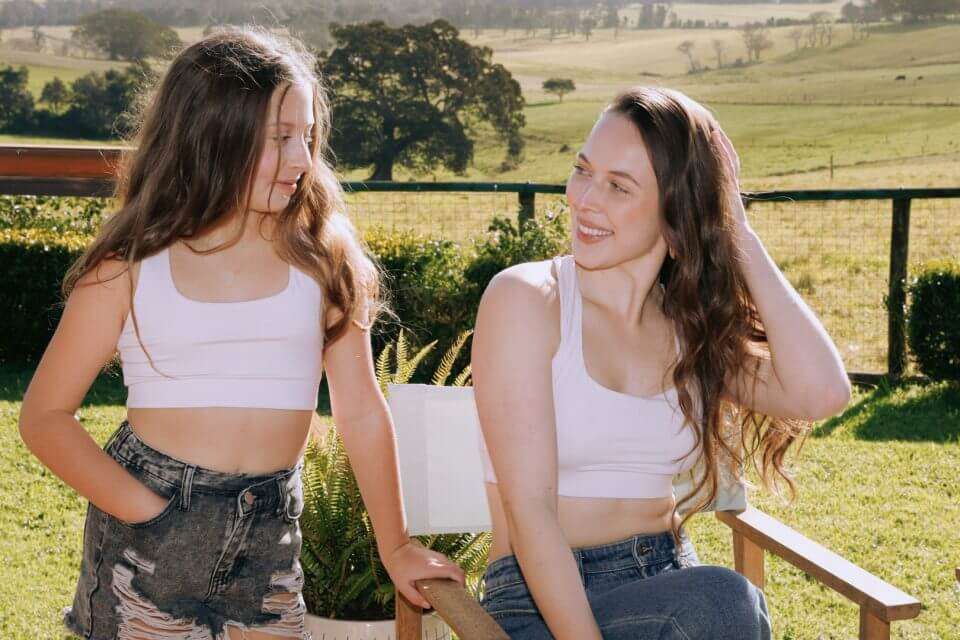
As part of the Morning Lazziness series highlighting empowering women who are making a remarkable impact with their ideas, I had the pleasure of interviewing Caroline Hartline.
Caroline Hartline is an entrepreneur and sustainability advocate based on the NSW South Coast, and a mum of three. She is the founder of Billie Green, Australia’s first sustainable intimates brand for tweens and teens, designed with natural, performance-based fabrics free from nylon and polyester. She also owns an Australian sustainable small business – Ozeano Eyewear, that uses premium, bio-based materials and partners with ocean conservation initiatives. Drawing on her background in marketing, business and humanitarian work, Caroline is passionate about creating healthier, eco-friendly alternatives for young people and families while driving awareness of the hidden impacts of plastics on our health and the planet.
In this interview, she offers a candid look at the realities of entrepreneurship, sharing both the challenges and the victories that defined her path.
What inspired you to start your business, and what problem were you passionate about solving?
I’m a mum of three from the NSW South Coast who started Billie Green after seeing how much plastic is hidden in kids’ bras and activewear. I’m an ocean enthusiast and have a sustainable eyewear brand so I’ve been doing a lot of research about the impacts of microplastics on human health and the ocean. Big brands sell cheaply made products from 100% fossil-fuel based fabrics that harm our health and the ocean, so I set out to create a better alternative. Billie Green makes safe, sustainable bras that grow with young people – putting wellbeing and the planet first.
How has your business evolved since its launch, and what key decisions have helped drive that growth?
Our brand is evolving all the time as we’re taking on feedback from customers, many of whom previously didn’t understand the chemical compounds that are in their kids’ intimates and clothing. We only launched a few months ago but the biggest way we’re changing is how we communicate. We also plan to evolve into a customer-first business, letting customer feedback from the end consumer of our products (the tweens and teens) dictate the design of our new products.
In your view, what truly sets your brand apart in today’s competitive market?
We use next-gen, innovative fabrics such as Lenzing lyocell, Lenzing modal and combinations of these with organic cotton. No other brand in Australia has used these premium fibres in kids clothing or intimates. We wanted to go beyond basic cotton because cotton doesn’t have the second-skin comfort, moisture-wicking capabilities. We also have Oeko-Tex 100 certification for all our fabrics, and they are free from polyester and nylon. No other brand is doing this because we believe no other brand truly cares about the chemical compounds in their fabrics and the damage this can cause both to human health and the environment.
We have also sustainably designed our products for growing bodies – they have length and room to grow, and some come with detachable straps so young teens can refresh their bras without buying new ones.
What has been your most effective marketing strategy to date, and why do you think it worked so well?
Being a new business, our most effective marketing strategy to date has been Meta advertising to parents of tweens and pre-teens with messaging about what sets us apart from other brands – our seamless first bras, our next-gen fabrics without polyester and nylon. It’s been most effective for us as our website is still young and not appearing high on google searches, but hopefully with some SEO work, that marketing strategy can also be effective, along with google ads.
How do you stay connected to your ideal audience and understand their needs or behaviors?
Our primary audience are the parents and we connect with them via social media (mainly Instagram) and via email once they’ve purchased. We also use google keyword planner and other SEO tools to see what people are looking for in helping their child buy their first bra.
We have plans to connect with teens themselves via tik tok but this platform restricts any discussion on ‘teen bras’ and the like, so it’s difficult to convey what we do. And the fact that social media is no restricted for under 16s, we are not in a hurry to do this.
What’s one branding move or campaign that helped elevate your business to the next level?
It hasn’t happened yet but with some dedicated PR efforts, I’m hoping one of the TV networks will run a story on us as I believe the microplastics issue is gaining traction everywhere. Leading universities and respected organisations like the Minderoo Foundation in Australia are releasing more and more research around human health impacts as well as environmental impacts of plastics, especially polyester.
What does success look like for you, not just in numbers, but in purpose or impact?
Success for me personally, is being able to run a profitable business, doing what I love but also having a positive impact by creating products that don’t harm the earth. I’m also working on an initiative to get plastic (polyester) out of school uniforms in Australia and hope that this sort of work can have great impact.
Can you share a challenge or setback that ultimately became a turning point for your brand?
One of the biggest challenges of the brand so far has been the high minimums I had to order, due to the custom-fabric. This meant I had no start-up budget for building the website or designing the branding. I almost cut our reversible racerback bra from the initial budget which is wild to think about because this has been our best-seller to-date. It’s completely seamless, stitch free and incredibly soft.
What daily habits or rituals keep you focused, creative, and grounded as a leader?
I try to exercise for 45 minutes per day no matter how busy I am. I alternate days between a fast walk and using the pilates reformer machine.
Sometimes I work late into the night and this can sometimes help me mentally, so that I am organised for the following days. This has been essential for me to prevent the overwhelm as I have 3 kids aged 3-12, so my time is so limited.
How do you approach innovation and risk in your business strategy?
Innovation and risk have been central to our business strategy. Innovation in terms of new age fabrics that most people haven’t heard of, and risk in terms of upfront costs and also running a purely online business. I mitigate these through messaging and having generous returns & exchanges policy. I am definitely a risk taker, but I did a lot of research in the lead up to creating my business, so it feels very calculated.
What advice would you give to someone starting a business in today’s fast-changing digital world?
I always have two pieces of advice for new starters:
Be willing to get in front of the camera, embrace AI and continuous learning, particularly with platforms like Meta ads where algorithms and best practice is constantly changing.
Make sure your business has a niche, or at least can be marketed to a niche. I also own an eyewear brand Ozeano, and although we’re a sustainable business, eyewear is a very saturated market so it’s hard to get cut through when there is a lot of competition.
Where can our audience connect with you and learn more about your work or offerings?
Please check out our website and follow/DM me on Instagram.
I also have the eyewear brand, which has won awards for sustainability.
