


As part of the Morning Lazziness series about empowering women who encourage and do incredible things with their ideas in society, I had the pleasure of interviewing Lindy Hockenbary.
Lindy Hockenbary—aka “LindyHoc”—is the bridge between education and technology. With experience in instructional technology, professional development, and curriculum design, Lindy helps educators unpack the effects of emerging technologies—especially artificial intelligence—on curriculum and instruction.
Her journey began in a technology-equipped classroom, where she first blended instruction with innovation. Since then, she’s supported educators around the world, authored A Teacher’s Guide to Online Learning, and collaborated with EdTech companies to ensure their tools align with the needs of K–12 educators. In recognition of her leadership in this space, she was named a 2025 Women in AI honoree by ASU+GSV.
Lindy’s work is grounded in helping kids, which has led to a passion for making technology literacy accessible and meaningful for every classroom. Her mission is to empower educators with the confidence and clarity to navigate the evolving intersection of technology and pedagogy.
What inspired you to become an entrepreneur in the AI industry, and what led to the creation of your current venture?
My journey started in the classroom, not Silicon Valley specifically, in a tiny rural Montana classroom that was filled with “old school” desktop computers with huge towers and deep monitors. Laptops in schools weren’t a thing, Chromebooks didn’t exist, and AI was not a word spoken in schools. Since my classroom was a computer lab, I always had a 1:1 environment ,and using technology as a learning tool always came naturally to me.
Fast forward several year,s and I had fully immersed myself as a K–12 technology integration specialist. I quickly realized that teachers were going to need guided support learning to use technology as a key part of their curriculum and instruction. LindyHoc.com was born—I became the bridge between education and technology.
Fast forward several more years and AI is the most transformational emerging technology we have been presented with as humans. As a K-12 educator, I watched AI tools flood the education space without any real guidance on how to use them effectively. Teachers were panicking about ChatGPT, while students were already using it for homework. I was already supporting educators with emerging technologies, so I easily stepped into closing the gap between AI innovation and educational implementation.
As a woman in tech and entrepreneurship, what unique challenges have you faced, especially in the AI space, and how did you navigate them?
The biggest challenge? Being taken seriously in both spaces. In tech, I’m “just” an educator. In education, I’m “techy.” I learned to embrace this intersection as my superpower and always focus on the pedagogy. I never teach educators what I call “point and click” training—my trainings are always connected to instruction and curriculum. I’ve built credibility by focusing on results—real teachers using my strategies with real students. Recognition like being named a Leading Woman in AI by ASU-GSV validates that education technology deserves a seat at the innovation table.
How do you manage the intense demands of building an AI-driven business while maintaining personal well-being and balance?
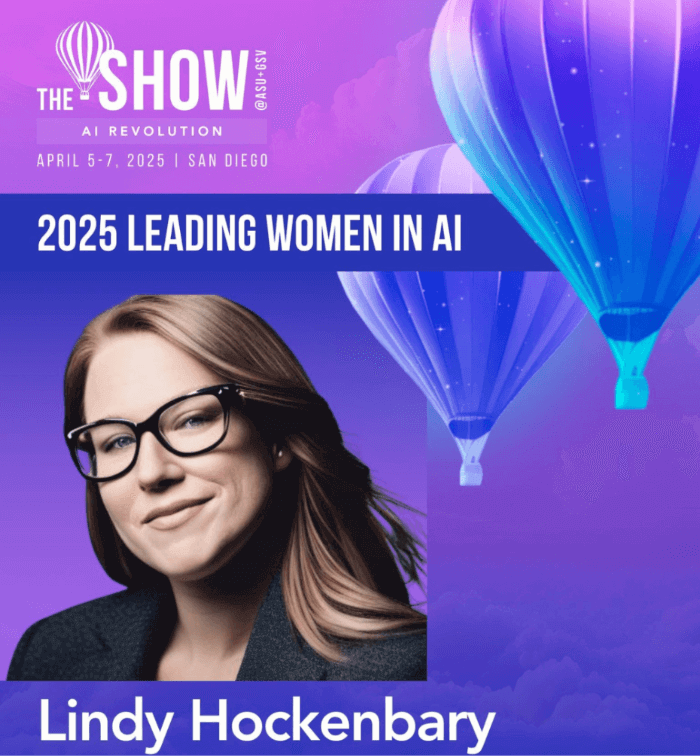
I tell people that I know that AI is moving fast when even I am challenged to keep up with the changes! It is my job after all! The only solution is to practice what I preach about AI—it’s a tool to save time and enhance, not replace, human connection. I use AI to streamline what I call the “drudgery work,” which frees up time for the high-touch work I love: creating resources and training educators.
What networking strategies or communities have helped you most in building meaningful connections in the AI and tech ecosystem?
I’ve found the most value in niche communities at the intersection of education and technology. Groups like ISTE (International Society for Technology in Education) and FETC (Future of Education Technology Conference) have been incredible. But here’s my secret: I don’t just attend events—I contribute. I present, share resources, offer practical advice, and connect with people. When you lead with generosity, authentic relationships follow. Also, don’t underestimate the power of engaging meaningfully on social media. That’s where many of my best partnerships began.
How do you approach mentorship—both receiving it and offering it—and how has that influenced your growth as a founder in this space?
I always say that I wasn’t taught how to run a business in teacher prep school! Therefore, I have been on the receiving end of some amazing business mentors over the last eleven years. I also purposefully seek out mentors who challenge my thinking—not just those who agree with me.
Mentorship is reciprocal though, so in return, I help educators and K–12 EdTech founders navigate the steep learning curve that is EdTech and K–12 education.
What strategies have proven most effective in acquiring customers or clients for your AI product or service?
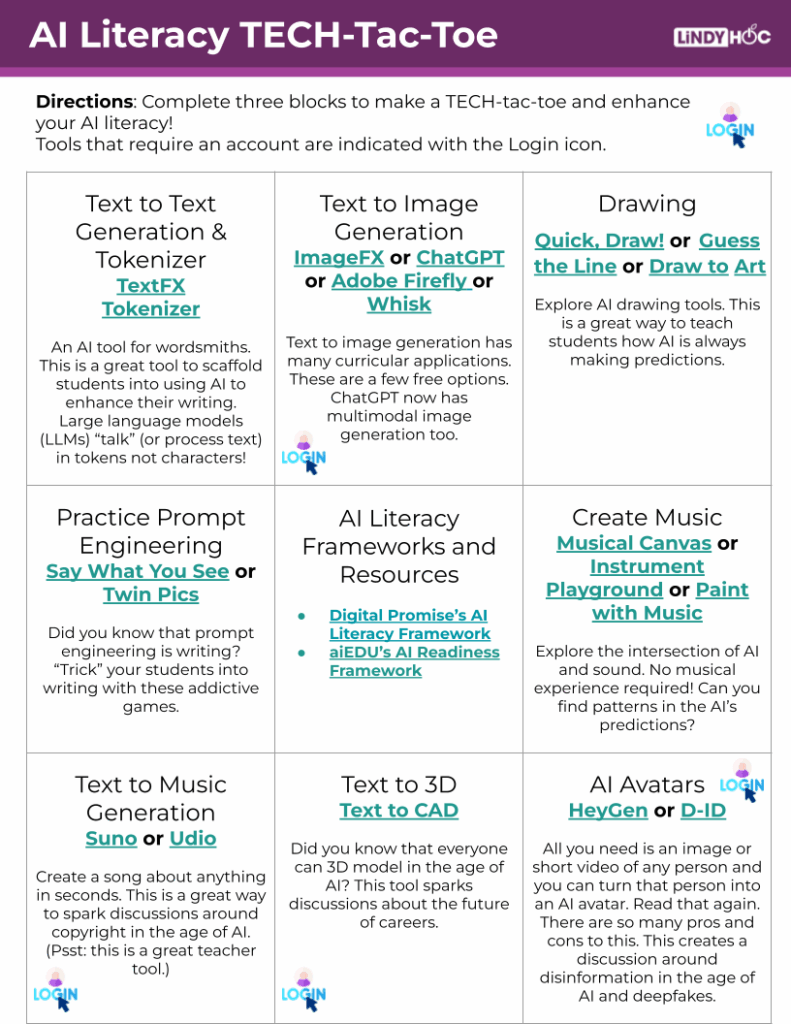
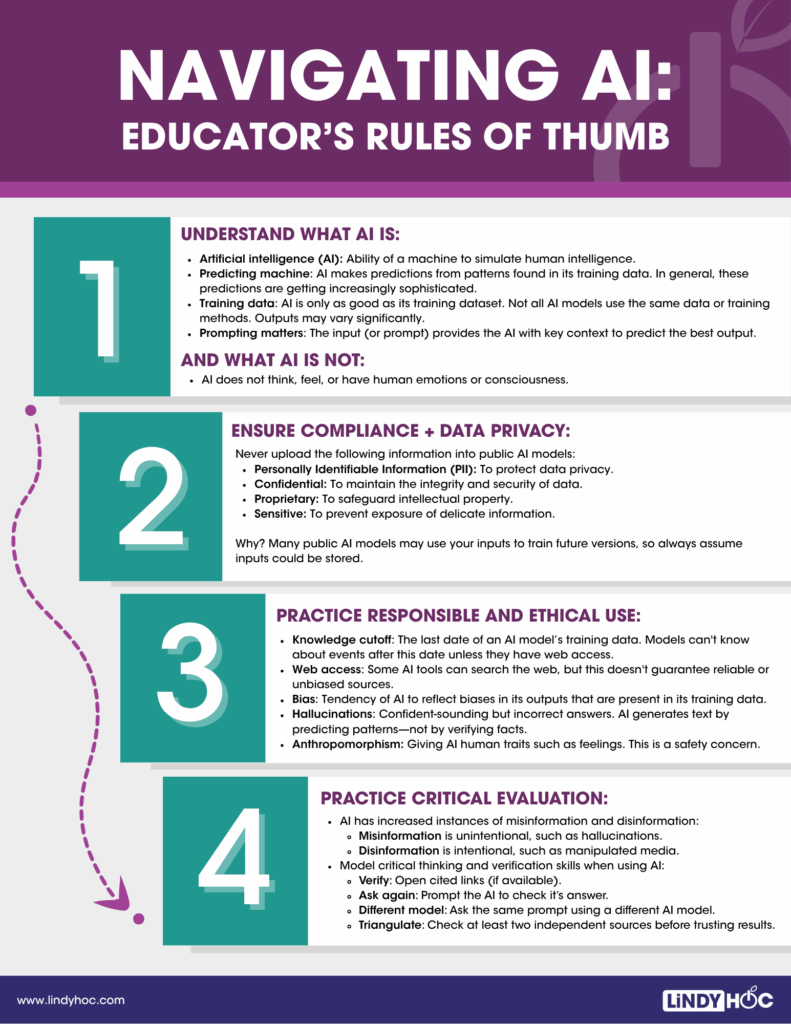
Content marketing and events are everything for me. Instead of cold outreach, I create genuinely helpful resources for educators—like my “AI Literacy TECH-Tac-Toe” game or “Navigating AI: Educator’s Rules of Thumb” infographic. Helpful templates, ideas, and strategies keep educators coming back for more.
My customers are educators, so I go where they are: education conferences. Word-of-mouth in education is powerful—teachers trust recommendations from other teachers.
Which marketing techniques (digital, content, events, etc.) have worked best for your brand, and how do you measure their impact?
Again, content marketing is huge for me. From authoring A Teacher’s Guide to Online Learning to my monthly newsletter, I focus on sharing genuinely helpful resources. My newsletter has been a game-changer. I have a mighty audience with a consistent 50% open rate, which I am told by those that know way more about marketing than me that that is unheard of! Also, being consistent with social media postings. Smarter Queue was a game changer for me to ensure I was posting consistently to all my social channels.
Honestly, I am still working on tracking impact. However, when I have people come up to me at conferences and events and tell me that they are appreciative of my work I know that I am making an impact far past what I can measure.
Can you share a major setback or roadblock in your AI startup journey, and how you strategically overcame it?
Early on, I tried to be everything to everyone. I was the expert on every EdTech tool. I was spread too thin and needed to niche. In the last three or four years as my focus went almost solely to AI in education, I feel like my voice has been found. I am coming into my own. Suddenly, my messaging became clearer, my content more targeted, and my impact more measurable. Sometimes the best strategy is saying “no” to opportunities that don’t align with your core mission. Finding a niche is key.
What’s one piece of advice you’d offer to women who are just beginning their entrepreneurial journey in AI or emerging tech?
Don’t try to sound like everyone else in the room. Your perspective as a woman is not a limitation—it’s your competitive advantage. The AI space needs diverse voices and approaches. Start with a problem you are passionate about solving. For me, that was helping teachers feel confident instead of overwhelmed by technology.
Is there a quote, mantra, or philosophy that consistently guides your decisions as an AI entrepreneur?
Human oversight is critical. I always ask: Does this help educators and students become more capable, creative, and connected? If AI makes us more human—more empathetic, more innovative, more collaborative—then we’re using it right. The moment technology becomes the master instead of the tool, we’ve lost the plot.
Here is our main question. “What Are The 5 Things You Need To Overcome Self-Doubt and Build Confidence?” (If possible, please share a story or example for each one)
1. Start Small, Win Big
You aren’t going to get a keynote gig with no other speaking experience. Start by volunteering to present at events and conferences. Gain experience and work your way up. Now I keynote events, but it started with three teachers in a school library.
2. Just Do It! As Nike says, just do it! Focus on impact over perfection. I am a perfectionist and it used to hold me back. Now, I know I have to start somewhere and it is better to just start rather than waiting for perfection. For example, I look back at my first blog post and wonder what I was thinking. However, as Taylor Swift says, “there wouldn’t be this if there hadn’t been you.” I wouldn’t be where I am today if I hadn’t had wrote that first blog post.
2. Share Naturally
Set a goal to start sharing your work naturally little by little. Make a social post with an insight you have or a picture from your daily work. Write blog posts that relate to your daily work. Use what you already have. A game changer for me was when I started sharing resources that I had made for myself. I didn’t think anyone else would find them valuable but boy was I wrong! Your expertise grows as you share it. Again, start somewhere and… just do it!
3. Connections are Everything
Make connections with as many people as possible in your field. You need people who believe in your vision, especially when you’re struggling to believe in it yourself. Also, never underestimate the power of connections for business opportunities. The most random connections have lead to the best partnerships for me.
4. Embrace the Imposter Syndrome
I used to think I wasn’t “technical enough” for AI or “business-minded enough” for entrepreneurship. Then I realized: my unique perspective as an educator IS my qualification. The AI space needs people who understand learning and teaching, not just algorithms.
Ok, we are nearly done. You are a person of great influence. If you could inspire a movement that would bring the most amount of good for the greatest number of people, what would that be? You never know what your idea can trigger.
I want to inspire a movement of AI literacy for all. Just as we once fought for universal literacy, we now need universal AI literacy. This is about critical thinking in an AI-infused world. I envision every student graduating high school able to evaluate AI outputs, understand bias in algorithms, and use AI tools ethically and effectively. This movement would democratize access to AI’s benefits while building the critical thinking skills to navigate its challenges.
How can our readers further follow your work online?
- Website: LindyHoc.com
- Newsletter: Subscribe at lindyhoc.com/subscribe for monthly EdTech tips and AI literacy resources
- LinkedIn: Lindy Hockenbary
- Other social media: @lindyhoc
