

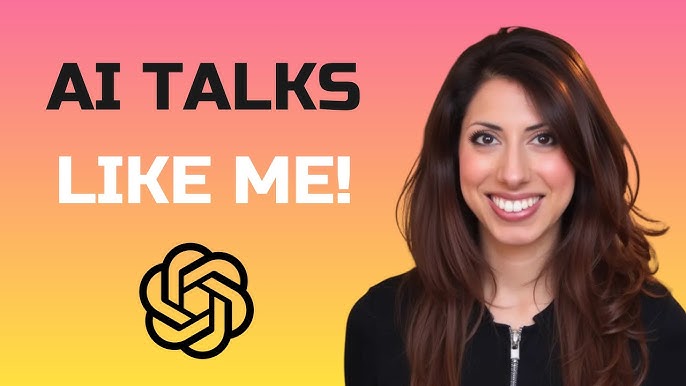
As part of the Morning Lazziness series about empowering women who encourage and do incredible things with their ideas in society, I had the pleasure of interviewing Selda Seyfi.
Selda Seyfi is the founder of Quantum Lane AI and a seasoned consultant with 20 years of experience helping businesses streamline operations and drive innovation. At Quantum Lane AI, she supports companies in integrating automation and AI in ways that are grounded, efficient, and genuinely useful. She also writes Maximize Your Minutes, a newsletter with over 2.3k subscribers, where she shares insights on productivity, AI, and the real-life challenges of balancing work, tech, and family in today’s fast-paced world. Selda lives in Surrey, UK, with her husband and two children.
What inspired you to become an entrepreneur in the AI industry, and what led to the creation of your current venture?
I was on maternity leave with my second child when I reached out to my boss about returning to work, only to learn my position was no longer available. It was honestly pretty demoralizing at the time.
But then I discovered ChatGPT and was completely blown away by what it could do. I started playing around with building my own GPTs and even taught myself some basic coding to see what was possible. That’s when I realized I wanted to start an agency helping other businesses build AI solutions – basically turning what started as a tough career moment into something much bigger.
As a woman in tech and entrepreneurship, what unique challenges have you faced, especially in the AI space, and how did you navigate them?
The biggest challenge is honestly just juggling everything as a mom. I have a 6-year-old and a 2-year-old, and parenting is already a full-time job. Starting a business in such a fast-paced industry when your attention is constantly pulled in different directions is incredibly tough.
The other challenge is that I’m not your typical person in this space. Most of the voices you hear talking about AI are men, usually young tech bros working in dark rooms with purple backlights, grinding away all hours of the night. Meanwhile, I’m working from my kid’s playroom, making pasta at 5:30, and eating leftovers off their plates. I literally can’t keep my eyes open past 9 pm because I’m exhausted from everything else.
Don’t get me wrong – there are plenty of young women in AI who can work around the clock building amazing things. But that’s just not my reality right now, and that’s okay. It’s a different world with different challenges.
How do I navigate it? It’s really a family team effort. My husband also has a demanding job, so we constantly swap responsibilities. When I’m working, he’s with the kids, and vice versa. We’ve had to create a setup that works for our whole family, not just my business.
How do you manage the intense demands of building an AI-driven business while maintaining personal well-being and balance?
I’ve had to accept that at this stage of my life, I can only dedicate a certain number of hours to the business because my children are more important to me than building a company. But maintaining some level of well-being is absolutely non-negotiable.
My saving grace is a 17-minute meditation every morning after the kids go off to school and nursery. Those 17 minutes before I start work help me completely reset and center myself for the day.
I used to work out much more than I do now – there’s just no time for it. So I try to balance what I can between mental, physical, and emotional well-being. I check in with myself weekly to make sure I’m hitting at least a couple of those areas, even if I can’t manage all of them at once. It’s about being realistic with what’s possible right now.
What networking strategies or communities have helped you most in building meaningful connections in the AI and tech ecosystem?
I’m part of several AI communities on Skool, and honestly, I couldn’t have done this without them. I’ve met some really incredible people in this space – yes, a lot of them are men, but there are some amazing women out there too.
One thing I made a point of doing was actively seeking out where the women in AI are, because there aren’t that many of us. But the ones who are here and working with this technology – I want to connect with them, get to know them, and support them however I can. It’s been really important for me to build those relationships intentionally.
How do you approach mentorship—both receiving it and offering it—and how has that influenced your growth as a founder in this space?
Mentorship is really important to me, and I’m actively looking for someone who can guide me through setting up and running a software company. My background is 20 years in management consulting, so this tech startup world is pretty new territory for me.
I’d love to find a mentor in this space who can help fill those knowledge gaps. On the flip side, I’m definitely interested in offering mentorship to others – though with my current time constraints, it would be challenging right now. But it’s absolutely something I want to do more of in the future once things settle down a bit.
What strategies have proven most effective in acquiring customers or clients for your AI product or service?
My network has been by far the most effective way to acquire clients. When you start out as a young consultant, they always tell you that your network is your most valuable asset – it really is all about who you know. I’ve been building and maintaining those relationships for 20 years, and I’m not about to stop now. Most of the work I’ve landed so far has come through my network, and I think that’s going to continue being my main strategy going forward.
Which marketing techniques (digital, content, events, etc.) have worked best for your brand, and how do you measure their impact?
To be honest, I’m still figuring out what works best for me. There are so many different marketing approaches out there, so I’m trying a few different things to see what sticks.
Speaking at events and conferences has been really effective, and creating company-specific demos has worked great too. As for measuring impact, I keep it pretty simple – I track how many leads I get from each activity and whether they turn into actual conversations. That tells me what’s worth my time and what isn’t.
Can you share a major setback or roadblock in your AI startup journey, and how you strategically overcame it?
My biggest roadblock was not understanding the full solution development lifecycle of an IT project. I could figure out how to build the actual solution, but then I’d hit a wall when it came to getting it implemented in a client’s infrastructure. That’s where my consulting background didn’t help me at all.
The way I overcame it was, once again, through my network. I connected with some really knowledgeable people in my AI communities who actually knew how to handle the implementation side. I relied on their expertise and learned a ton from them. It’s a perfect example of why building those relationships is so crucial.
What’s one piece of advice you’d offer to women who are just beginning their entrepreneurial journey in AI or emerging tech?
Don’t quit during those first 2-3 months when you feel completely lost and have no idea what you’re doing. That confusion isn’t a sign you’re on the wrong path – it’s actually a normal part of the process. If you push through that uncomfortable period, clarity will eventually come, and you’ll start to see what you’re supposed to be doing. Things get easier until you hit the next challenge, and then you just work through that one too. The key is recognizing that feeling lost at the beginning is completely normal.
Is there a quote, mantra, or philosophy that consistently guides your decisions as an AI entrepreneur?
When things get really tough, I remind myself: “This is when most people quit.” Just saying that to myself usually stops me from actually quitting. It helps me remember that the hard moments are exactly where I need to push through, because that’s what separates the people who make it from those who don’t.
Here is our main question. “What Are The 5 Things You Need To Overcome Self-Doubt and Build Confidence?” (If possible, please share a story or example for each one)
You’re always going to have self-doubt because it’s human nature. I’m honestly still figuring this out myself, but here’s what’s working for me so far:
- Find someone who can really listen to you. My husband is incredible at this. When I’ve tried to work through self-doubt on my own, sometimes it works and sometimes it doesn’t. Having him as a sounding board to remind me of all the things I’ve accomplished makes a huge difference.
- Create a ritual to catch yourself before you spiral. I’ve learned to notice when I’m feeling off but can’t pinpoint why. That’s my cue to take action before it becomes a bigger problem. My go-to is visiting my favorite natural spot, spending time there talking to myself, and remembering all the great things I’ve done and what I love about my life right now.
- Accept that mistakes are okay, but don’t dwell on them. I give myself permission to have a proper rant for 10 minutes to half an hour when something goes wrong, then I move on. What’s done is done. Wallowing doesn’t help anyone, so I try to get through that processing time as quickly as possible.
- Log all your little wins and milk them for everything they’re worth. There’s something called the reticular activating system in your brain – when you focus on something, you start noticing more of it everywhere. I use this to my advantage by celebrating small victories. If someone lets me merge in traffic, I’ll think “What a lovely, thoughtful person!” and really milk that positive moment to keep myself in a better mood.
- Remember that everyone else is figuring it out too. When I’m doubting myself, I remind myself that even the people who seem to have it all together are probably winging it half the time. Nobody has a perfect roadmap, especially in something as new as AI. We’re all just doing our best with what we know right now.
Ok, we are nearly done. You are a person of great influence. If you could inspire a movement that would bring the most amount of good for the greatest number of people, what would that be? You never know what your idea can trigger.
I keep thinking about what kind of world my kids will inherit and what jobs will even exist when they grow up. If machines really do take over so many roles, our children are going to need completely different skills than what we were taught.
I’d love to inspire a movement around preparing kids to be entrepreneurial thinkers – not necessarily business owners, but people who can create opportunities for themselves no matter what the world throws at them. Skills like learning quickly, thinking critically about whether an idea is actually solid, and being able to adapt when everything around them changes.
I don’t have all the answers yet – these are honestly just seedlings of thoughts. But I think about this all the time as a parent. What other skills will they need? How do we teach resilience and creative problem-solving? How do we prepare them for a world we can’t even fully imagine yet?
Maybe that’s the movement – getting parents, educators, and communities to start having these conversations now, before it’s too late. Because our kids deserve better than just hoping they’ll figure it out on their own.
How can our readers further follow your work online?
I write a regular newsletter called “Maximize Your Minutes” with 2.3k subscribers, where I share my thoughts on the intersection of AI, productivity, and health. I’m also very active on LinkedIn, so feel free to connect with me there. I’d love to continue the conversation about AI, entrepreneurship, and navigating this space as working parents.
