Home Blog Page 369

This is The Most Enjoyable Way to Avoid Overeating

We typically think of overcoming overeating as serious drudgery involving boring restrictions – and how long can anyone stick to a goal that way?

Here’s a game-changing perspective in which overcoming overeating results from actually bringing more natural pleasures into your life.

Overeating can provide temporary relief from emotional pain, anxiety, and even boredom. We keep eating because we want the fleeting and immediate pleasure that food brings to last. But what we are really craving is a lasting pleasure, the kind that fills our soul. 

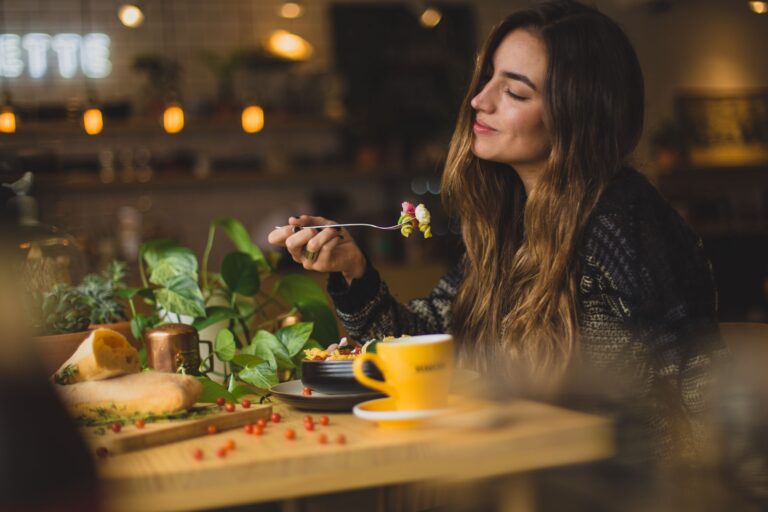
Food is designed to be pleasurable. So once we begin to notice how pleasurable healthy food choices are, we can substitute them for more and more unhealthy food choices, creating new pleasurable good habits that don’t leave harmful effects on our bodies as junk food does.

Over time, new neural pathways are formed because of the neuroplasticity of our brains. So the new delightful habits of eating fresh fruit instead of cake become more deeply satisfying, especially since any negative repercussions do not accompany the pleasure.  

And yes, when we enjoy this healthy food, it does “crowd out” the room in our stomach for the unhealthy stuff. But in general, when we are overeating, it is not our bodies that are hungry – it’s our souls.  

So to fill the emptiness within, in addition to subbing in healthier food choices, we can also add more lasting pleasure into our lives by spending time in nature, stretching, practicing gratitude, learning ancient wisdom, dancing to music we love, being creative, and spreading kindness. And with this awareness, we can actually get in the habit of reaching for one of these non-food pleasures instead of a big bag of potato chips when we are feeling lonely, bored, or stressed.

When we fill up our days with a variety of the abundance of things in this world that can bring us greater levels of pleasure, the emotional pain also gets crowded out. And we are not distracting ourselves by adding more spiritual pleasures to our lives.

We are fulfilling our genuinely deep needs. Food addictions, with the temporary comfort from emotional pain that they provide, are the distractions.  

With the conscious awareness that people overeat because they want more lasting pleasure in their lives. The person who feels like overeating is empowered to bring more lasting pleasure into their lives through an abundance of pleasures greater than the fleeting comfort from junk food they were habitually using (with many deleterious effects) to try to experience a lasting pleasure.

People can get in the habit of realizing that if they need more pleasure in their lives, there is no scarcity – which is what they fear – and then they are empowered to bring more lasting pleasure into their lives in a great variety of other simple and attainable ways instead of eating junk.

As we get in the habit of asking ourselves, “Is it my body that is hungry or my soul?” When we feel like overeating, we will start reaching for a much greater variety of joyful and more meaningful pleasures instead of being stuck with food being the most salient kind of pleasure in our lives. And one day, we will notice that those bags of potato chips and chocolate bars have stopped calling our names so loudly.

Widespread food addictions are messaging us that our souls are starving. There is a gnawing emptiness inside. What we are genuinely craving is the lasting pleasure found in spiritual nourishment since we are all spiritual beings housed in physical bodies. And we need spiritual nourishment, just as we need physical nourishment, throughout each day in order to thrive in life. 

Addictions develop in order to fill the gnawing emptiness inside, but what we are craving- is a lasting pleasure. That’s what fills our hungry souls and lets them shine.

 Yo-yo dieting persists because people try to stop overeating through temporary physical means, trying different kinds of diets repeatedly. We have been trying desperately to solve a spiritual deficit through physical means when it is spiritual nourishment that hits the spot. 

 When you feel like overeating to self-soothe, ask yourself this one question that creates a mindfulness moment, “Is it my body that is hungry – or my soul?” And with loving awareness, you will know the answer. Then you will be able to provide yourself that very moment with more lasting pleasure than the food you are overeating in order to try and make the pleasure keep lasting. You may want to step outside to feel a gentle breeze, turn on some music and start stretching, or call or text someone lonely. Whatever works fill the emptiness inside and let your hungry soul shine with the nourishment it was genuinely craving.

Research has shown that it takes over 200 repetitions to develop a new habit, but when done joyfully, the new habit synapses can rewire in just 10 repetitions. In other words, the most efficient – and most enjoyable – way for a new healthy eating habit – or any worthwhile habit – to form is to do it by bringing greater and more lasting pleasure into one’s life! So the next time you feel like overeating, instead, try filling your hungry soul with lasting pleasure!


4 Simple Steps To Perfecting The Art Of Forgiveness

0

Regardless of who you are, where you’re from, or how many years you’ve been on this earth—you’ve been hurt by a loved one before. Even if you’ve been blessed by the best relationships, even if you’ve always tried to do and say the right things, and even if you’ve only surrounded yourself with those who inspire you, we are all imperfect. And despite our best efforts for perfection, sometimes we hurt others (or get hurt). 

That’s where the art of forgiveness comes in. 

The value of forgiving people goes beyond bringing healing to a situation. When you learn to forgive both yourself and others, you grow and make peace with the past, allowing yourself to move forward without regret or fear.

Here are a few steps to perfecting this art of forgiveness:

1. Recognize what is (and isn’t) your burden to carry

When it comes to forgiving others, you must pay attention to what is (and what isn’t) your weight. You cannot accept blame for something you didn’t do, just as you can’t accept the people around you to pardon you for what you did do.

Take responsibility for the parts you played a role in and understand that others may or may not take responsibility for themselves. You can’t force someone to be accountable; you can only improve yourself and grow from this moment forward.

2. Stop trying to control situations that you simply can’t

Forgiveness isn’t about making a situation perfect, especially because you can’t make people act, feel, or think a different way. When you’re attempting to forgive and move on from a situation, recognize how you feel might not be universal—and that’s okay. Focus on yourself (as that’s the only thing you can change).

3. Give yourself time and space to heal

Forgiveness doesn’t mean you have to quickly go “back to normal” or “move on” as if nothing ever happened. Give yourself time and space to heal, to let go, and to move past any bitterness before you engage back with that person/people again.

4. Recognize when you need to walk away 

Just because you forgive someone doesn’t mean they need to stay in your life. It’s okay to walk away, especially if a situation is unhealthy or toxic. Forgiveness isn’t solely about giving that person closure. Sometimes, it’s about you and your wellbeing, too.

Same-Sex Connections: Perfectly Splendid

Same-sex relationships between women aren’t new. More than a century ago, before same-sex marriage was ever considered, intense and romantic friendships among women were common. Although little was said of the exact nature of these connections, romantic friendships, sentimental friends, or Boston Marriages, as they came to be called, described the love relationships women shared. Though they couldn’t commit to one another legally, they combined households, lived together, and supported one another in committed bonds.

Society appeared to condone these relationships as long as a woman didn’t dress in masculine attire. If women dressed in womanly clothes, the assumption was that they were not sexually aggressive, and two unaggressive females together would not violate men’s assumed property rights to women’s bodies.

Leading clandestine lives

While there have always been secreted clusters of lesbians, many who were partnered kept their personal lives private. The idea of women with women was not only taboo to men but, as late as the 1990s, to many women as well. When the first edition of my book, Married Women Who Love Women, came out in 1998, women discretely purchased copies and hid them under their jackets or changed the book covers so no one would see what they were reading. One woman told me that she bought several copies because, not wanting anyone to find it after she read it, she threw it away. And then she wanted to read it again, and again.

More open, same-sex relationships

We have come a long way since then. So much has come to light about same-sex relationships among celebrities, and lesbianism in general, that it is no longer a conversation to be avoided. Women, who may have preferred being with women, but who had hidden their desires, began to come out. Those who considered themselves heterosexual for most of their lives are becoming more aware that they have other options besides the traditional male/female relationship. Many women are also coming out later in life. Busy being wives and mothers, they had little time to think about themselves until their children were off to college or out on their own. Others said that once their biological urge to have children had been satisfied, they simply discovered, often to their own surprise, that they preferred being with individuals of their own sex. 

Breaking away from accepted stereotypical behavior

For some women, the idea of breaking away from the more accepted male/female relationship was terrifying. I was doing a workshop on writing and referred to the format of my book Married Women Who Love Women. One attendee stood up, said, “I think that the whole thing is disgusting,” and stormed out of the room. Three years later, I was doing the workshop again. A woman came over to me and said, “You probably don’t remember me, but I was the woman who ran out of your class a few years ago. I just wanted to tell you that I’m living with another woman now.” 

Don’t take it personally

If you say something, the way a person reacts to it says more about who she is than about you. It wasn’t the idea of my book, or who I was, that frightened this woman; it was her own reaction to it.

Turning to women

Women understand each other and care about the same things. We don’t need our feelings explained for us to know why we feel what we are. We are physically comfortable with one another, touching, hugging, walking with linked arms. In “women-only spaces,” our energies rise. Whether in school, at a gym, or at a conference, there is no feeling of being judged. We feel free to let our hair down, to let our inner child come forth. So it isn’t a huge leap for best friends to move to a sexual relationship. 

The sexual part of same sex relationships

Although same-sex relationships are about more than the physical, sex is obviously an important aspect. I attended a panel discussion aimed at helping straight women understand their lesbian sisters. I asked this group how many actually felt skyrockets going off the first time they were with their significant other. Less than a dozen hands went up in a room of about 80. Later, one woman approached me timidly and said, “I think I felt it with my third husband.”

The following week I attended a lesbian discussion group and asked the same question. Almost every hand went up. That was not a surprising find.

Lesbian tend to have better sex

When asked to rate their sexual satisfaction and how often they had an orgasm, in study after study, women who identify as lesbian consistently rate higher than straight women. Women are generally more patient. They don’t see sex as a race to the finish. And they know that the best orgasms come from stimulation and not penetration. Sex is connecting in a physically pleasurable way, and it doesn’t have to end in intercourse. Physical intimacy between women, outside a sexual scenario, is normal. Conversation can be a form of foreplay. Cuddling can be another. But when women come together, open communication, tenderness, and nurturing, become a part of the intimate life that continues into the bedroom. Each knows what makes her feel good, and therefore, what would make her partner feel good. 

Although sex is an integral part of most same-sex partnerships, most of the lesbian-identified women I interviewed said they connected with their significant other emotionally first, and then sexually. And why wouldn’t they? Women’s feelings for others of the same gender are natural.

Why Women Become Great Leaders

Cleopatra, Marie Curie, Indira Gandhi, Angela Merkel, Florence Nightingale, and Margaret Thatcher are only some of the history’s outstanding female leaders. They made progress in politics, social change, and medical innovation despite the male-dominated spheres in which those women flourished.

Feminine insights and mindsets let them achieve their goals, through a few female contemporaries rose as high in society decades and centuries ago. Gender bias was a formidable problem that lessened over time.

Female Leadership is a more acceptable reality today. There are reasons why increasing numbers of women reach such heights.

There’s scientific evidence that women make great leaders for biological and intellectual reasons. Female brains are built to focus on communication, memory, plus emotional and social connections. 

Women Want Everyone Involved

Women tend to create allies who help them to achieve goals, aka shared victories. That’s excellent for the mental health of their minions. Men focus on perception plus counter-productive competitiveness, limiting their odds of being effective authority figures/leaders. They’ll stake out territory, frustrating an employee’s or colleague’s access to information and sabotaging or preventing decision-making roles. The motivation is too often a desire for exclusive, unshared, goal-achieving glory. True leaders, however, foster success from the top down and bottom up of their organizations, guiding grateful people inside and even outside those groups. It’s a feminine mindset. 

Less successful people tend to behave tyrannically, alienating underlings who might consequently sabotage the tyrant’s efforts. Authoritative, power-grabbing figures aren’t genuine leaders. Women rarely fill such roles. Women avoid making enemies or weak yes-men of people.

Members of the female-led organization usually give what they’re able and receive what they need, a sort of Marxism that can’t succeed in too-large groups.

As the article The World’s Most Powerful Women 2019 – Forbes indicates, some women become great leaders by prioritizing staff members and colleagues’ interests rather than alienating stressed-out people with rigid formalities. 

Life Lessons and Ladylike Leadership

Building on the tortuous path they traversed makes some women great leaders. The solution-oriented balancing experience lets them practice making effective decisions, gaining insights into what will or won’t help them achieve goals. Women apply those life lessons to their employment and leadership goals. 

Competition with men fosters inner strengths that help women to persevere instead of collapsing over disappointments or glitches, especially if women must overcome gender bias and blatant sabotage of their efforts by insecure males. That requires resolve. Female leaders in any sphere of life tend to excel at it. That’s how they achieve their objectives.

A maxim indicates that “Women work twice as hard and twice as smart as men to secure half the credit.” Women in minority populations too often must make even more concerted efforts to succeed in the world. Finessing such formidable treks develops and perfects superb leadership skills along the way.

Struggles fill women with insights about similar challenges to be overcome by underlings and colleagues. They take preventative action while solving existing problems, facilitating success- that insight and consequent compassion-in-action nurture a shared sense of commitment to specific goals. Such bonding promotes the ability to foresee and to face problems together.

Underlings feel safe when revealing organizational problems to a pro-active female boss. Everyone realizes that the information must necessarily be shared and will be gratefully accepted. Males might undermine success by making underlings fear angry responses when problems are cited. Underlings find it safer to remain silent. The problems go unaddressed, sometimes undermining progress until it’s too late for corrective action.

Changing the World to Fit Female Equations

Great female leaders often change paradigms. When social, political, or other expectations cannot contain the entirety of female creativity, women frequently respond to the limitations with an “I’ll change the world with my shortfall” approach.

According to researchers- “Leadership, in the classic sense, demands one to obsessively develop a single career or interest to the point their expertise in that one area serves as a beacon of trust for others to follow who can’t invest that level of sacrifice into one topic. The flip side of this is [that] it demands sacrificing everything else in life to attain that level of expertise. In my psychotherapy practice, I work with many women who are trying to advance their careers. There’s no question women are leaders in the classic sense. What often happens, though, around their late 30’s, is they realize they want more. They want better marriages that were put on hold for the career. They want to get married in the first place. They want children and realize that door is swiftly closing. It strikes me that women are in a unique position where they must decide what sort of leader they want to be. Will they be a leader in this classic sense? Or, will they sacrifice having only one obsession in order to balance a fuller life?

This, too, is a type of Leadership and is more akin to what moral philosophers would call a life of virtue – balancing the many vital needs of life into one harmonious whole. Of course, women are leaders, but it seems that the unique challenge which female leaders put before all of us is figuring out how to strive to live a fuller, more balanced life.” 

How to Create A Meditation Space in Your Home

Whether you are new to the practice of meditation or you are an experienced meditator, you may still enjoy creating a special place for your daily ritual.

Meditation is the time we set aside to connect with our inner self and the energies and wisdom of the cosmos. I like to think of meditation as not just quieting the mind but entering the quiet that is already there. 

Setting aside a space in your living quarters is a perfect way to honor the practice of meditation and designate it as sacred. Meditation is a time to retreat from the hustle and bustle of the day and be at peace with your thoughts and your inner world. When you set aside a special area, you claim it as a priority and send a signal to your subconscious mind that this is a special time and an important practice.

Ways To Create Your Own Meditation Room

If you have a room that you can dedicate to your meditation practice, that is wonderful. Decorate it with soft, neutral colors in hues that are calming for you.

If you want to follow the Five Elements in Feng Shui, know that blues and greens represent health, reds, and purples enhance wealth and prosperity, reds and golds bring fame and recognition, pink represents relationships, earth tones of yellow, gold, and brown suggest earth qualities and indigo and black represent career.

In choosing colors for a meditation room, select the pastel versions of the Five Element colors to balance your life.

How to Create A Meditation Space in Your Home

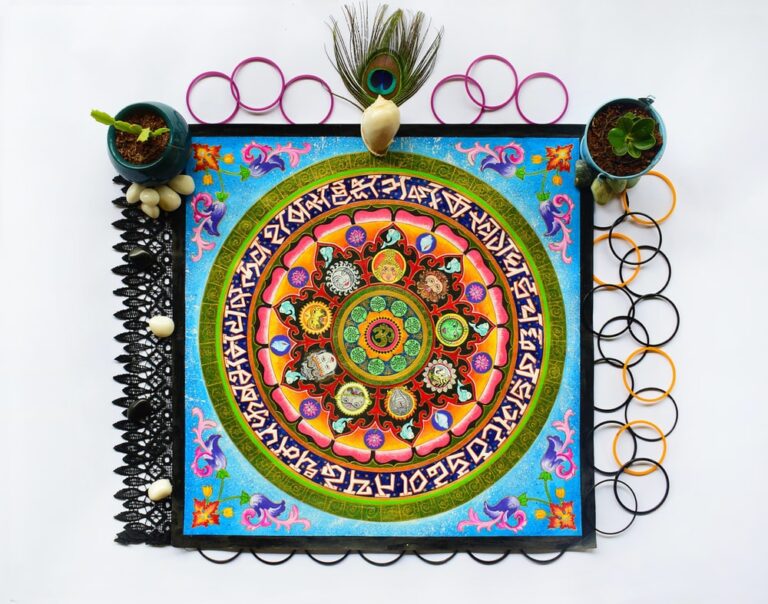
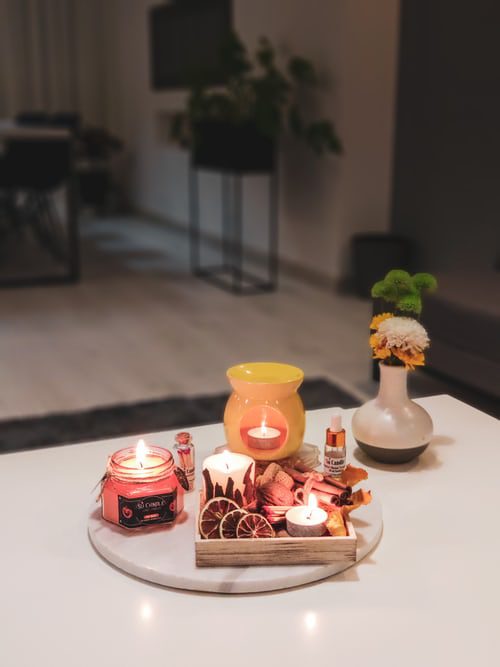
It’s always lovely to have an altar in your special place. I like to recommend representations of the five elements to balance the energies in the room. You can do that by using different colored stones, by using icons that represent the elements, or by having the actual element present. Earth is represented by pottery or dirt, browns, and gold; Fire is represented by red stones, a candle, or a light source; Wood, or Tree can be acknowledged by a plant, something made of wood or the color green; Water is represented by the glass, a mirror, the color deep blue or black. When you have acknowledged the five elements in some manner, you bring a balance to the space and your meditation practice. 

If you don’t have an entire room to dedicate to your practice, then you can use a space, under a staircase, in the corner of a room, in a section of your sleeping room, or maybe a space in your garden. Of course, there’s nothing wrong with the great outdoors, the forest, the beach, or beside a brook or stream. If you want a designated place in your home, you can use curtains, shogi screens, or even a bookcase to cordon off an area for your privacy and quiet time. Fill this space with things that make you feel relaxed. 

Bring in something from nature; that could be a photograph, a painting, a window that overlooks a park, or a garden. Create a balance in your area with the Five Elements. Remove all technology: cell phones, land phones, televisions, and computers. Make sure your space is tech-free so you can just blend in with the quiet. (In Feng Shui, technology represents the element of Fire, and you don’t need extra heat and Fire in your space while you are meditating.)

Choosing a regular time is always a good routine to get into. That way, meditation won’t be the last thing on your mind. It will have a place in your life at a time when you can focus on yourself and your personal and spiritual development. I also like to suggest hanging a sign out that says, “Please Do Not Disturb. Meditation in Progress.” You can get creative with your wording if you like. If you enjoy music while meditating, then have your music source nearby. Keep it low and soothing. If you enjoy burning incense or diffusing essential oils, have those ready, too. Be sure that these accouterments are not a source of distraction but add to the deepening of your process.

Some people like to meditate on a theme. Having a book of inspirational quotes nearby can be a great resource for you. Lift your mind and heart out of your everyday life and shift your attention upwards to contemplate greater thoughts. Infuse your practice with richness and expand your universe by the concepts you focus on. 

Many people use a single mantra to take them into an altered state of relaxation and meditation. Repeating the same word or combination of words over and over helps the mind become still and the body to relax. Pay attention to your breath. Follow its path throughout your body and allow yourself to become a single thought and a single breath. In this space, your body can begin to restore itself. Your blood pressure subsides, cortisol and adrenaline production are lowered, tension is released, and the positive hormones of dopamine and serotonin are secreted into the bloodstream. Your mind and body become one entity, no longer fighting for first place in your consciousness. You drift into a harmonic convergence of spirit and form where you can sense the oneness of the universe and all of creation. This is the Aaaaaah.

When you create your special and private space, you honor yourself and your practice. The space can be as small as a corner or as big as an entire room. The most important part of creating the space is that you have made a commitment to it and have taken the time to value this sacred space as well as set aside a special time for the growth and expansion of your spirit and soul. 

Flu Season Survival Guide: Tips for Combating the Cold

0

Flu season is upon us, and with the pandemic continuing. We know more than ever need to take action to avoid getting sick.

According to a study by the Center for Disease Control and Prevention (CDC), they found that on average, 8% of the American population gets sick from the flu each year.

Clinical Infection Disease study shows that children are more likely to get sick from the flu with a 9.3% infection rate, while adults 65 years and older average a 3.9% infection rate. With this in mind, here are a few ways to help you avoid the flu this season. 

Get a Flu Shot 

There has been much controversy when it comes to the flu shot over the years. While there have been myths about how the flu shot can actually give you the flu or that the shot is injecting toxins into one’s system, these claims have been proven to be inaccurate information. 

The CDC recommends getting the flu shot anywhere between September to October, but if you are late to the game, getting a vaccine at any time during the season will still be a big help.

The seasonal flu shot protects against flu-causing viruses that will be prominent during this season, and usually one-shot will protect against three to four different viruses. 

Due to the pandemic, the U.S. will be promoting and providing flu vaccinations more than ever. In the 2020-2021 flu season, around 198 million vaccines will be available to the public. This is up from 175 million, recorded last year, with some healthcare providers like Health Net hosting free flu shot clinics throughout their area. 

We want to encourage all essential workers, adults age 65 and older, and young children to get their flu shots as soon as possible,” said Dr. Alex Chen, Chief Medical Officer at Health Net.Thanks to the support of LAUSD, we are pleased to provide families a quick and easy way to do this. Health Net is committed to helping people stay safe and healthy during this critical flu season.”

According to researchers, when the flu vaccine is well matched to the current year’s strain of the virus, it can reduce the risk of the flu by 40%-60%. The shot has also reduced hospitalizations from flu complications in children by 60%, so it’s no wonder they are so highly recommended! 

Practice Good Hygiene

Good hygiene benefits too many aspects of your life, but none are more important than keeping you germ and disease-free.

Washing your hands clean is extremely important to prevent the spread of the flu. Be sure to wash your hands frequently with soap and warm water. If you’re not already doing so, keep a portable container of alcohol-based hand sanitizer with you in case you’re in a public area without easy access to a restroom. Just remember to wash your hands as soon as you return home properly.

Whether you’re commuting or working from home, maintaining a strong hygiene routine is recommended. Keeping your body clean, your hair washed, your teeth brushed, etc., helps you feel good about yourself in a time of increased anxieties. Of course, a positive attitude alone won’t make you immune to the flu. Still, it does help alleviate stress, which could otherwise suppress your immune system. Speaking of which…

Feed Your Immune System 

The immune system plays a vital role in protecting you from the flu. It does so by building antibodies that will attack any illness that enters your system. When your immune system is not being taken care of, it will not do its best to fight off illnesses and diseases you may contract. Let’s look at some easy ways to naturally fuel your immune system:

  • Diet
    • As we head toward the holiday season, it can be difficult to stay away from sweets, but your immune system will be much stronger if you do! Focus on fruits and vegetables that are high in vitamins C (citrus fruits, peppers, broccoli) and vitamin D (salmon, tuna, eggs) to help yourself stay on track. 
  • Exercise
    • With quarantine recommendations still in effect, staying active while staying home continues to be important. Increasing blood flow via exercise lends a big boost to your immune system. Just make sure you’re not making any of these mistakes
  • Sleep
    • A good night’s sleep is beneficial to your health in so many ways, and fighting off sickness is no exception. Sleeping allows your body to fully relax and repair itself, optimizing blood flow and reducing inflammation. 
  • Stress
    • As previously mentioned, feeling stressed out can lead you to make decisions that ignore or contradict the above tips, making you more susceptible to infection. If you feel like your stress levels are on the rise, try taking some steps to reduce it

Immune systems work their best when we take care of our bodies. So it’s crucial that we don’t lose focus on our own self-care. 

These are just a few things to keep in mind when combating the 2020 flu season. If you are looking for more details regarding the flu, call your doctor or healthcare professional. And check out some of our other wellness articles for more healthy tips and tricks and upcoming health information. 

How to Be Confident As A Woman

0

Are you ready, ladies? Get out your notebooks, or get your notes app out. I’m about to tell you all the deets in building confidence. I want to make sure you’re paying full attention, so here it is, ok, are you ready? Step 1…

Change your mindset.

That’s it. No, step two. No subscription to Psychology Today. No walk on hot coals. It’s that simple, really. But is it? (She asks, as she sobs into her wine glass in the bathtub.) It can be if you start changing how you look at things around you and accessing that authentic self that I know you have deep down. 

I must admit, if you had asked me about my confidence about 5 years ago, I would have probably told you it was non-existent. I would have totally bought into all that Kylie Jenner lip gloss bullshit (in fact, I think I actually bought one set, and it stained my lips so bad that I knew this wasn’t really “me” deep down). I briefly thought about Botox until I looked at the gouging price tag and realized that I’d just have to suffer in silence with my normal cream. And yes, I too (reluctantly) tried those “body after breakup” diets like Keto, Paleo, and whatever other one-word catchy titles that tried so hard to make each diet feel so “fab, fit, fun,” all the while thinking this would be some magic way for me to gain confidence. But was I feeling fab and fit and fun inside? Was I feeling confident? No. I was still feeling lousy because I was focusing on my insecurities and hiding who I really was out of fear of being judged. I thought maybe I wouldn’t be “cool” like the people you see on TV or in the media. And all of this when I was still just 27! 

Remember in high school when your boyfriend would talk to another girl at cross country practice (or insert any co-ed “mingle” activity here), and you would tell all your friends how pissed off about it you were? Your boyfriend would tell you that she had a homework question about math, and the chances are that it was probably true, but you were just too jealous and insecure to care at the time. You were (naively) not a confident woman. You didn’t believe in yourself (it takes growth, ladies) or your relationship. Maybe that eventually overflowed to present life now with your adult relationships. Women- we need to start believing in what we bring to the table (and no, it isn’t about your IG following). As someone who has worked very hard over the last five years to change my own self-deprecating mindset, I feel one of the most direct ways to become a more confident woman is simply by showing your vulnerable side.

Internal strength.

Although perhaps an unpopular opinion, walking like a “tough girl” all the time can be quite exhausting (and not to mention obnoxious). Who actually likes to pretend that the overbearing Dad from an 80’s movie shouting, “Don’t you cry!” makes women turn out to be confident in the end? That does nothing for anyone’s self-esteem, body image, independence (I could go on)… But what I have learned, not only from my jealous, insecure high school relationships but also from a failed marriage, is that not much can actually break us, women. We are stronger than we sometimes believe. 

So what do we do with that internal strength? Some of the smartest, most confident women I know are not women you see running around town boasting about everything they know or the “look at me” types. No. Sometimes these types of women take risks without telling anyone they are taking them. They are strategic. Confident women are the women who make mistakes, learn from them, and are vulnerable enough to discuss those mistakes in the public eye to building a community to support other women. 

Confidence and dating are two things most of us don’t use together in the same sentence, mostly because it’s safer to sit in our sweat pants swiping on a dating app than it is actually making an effort to go on a real date. (Who wants to actually have feelings anyway?) But changing your mindset about dating is the first key to making it actually work. If you look at dating as something that can actually be fun (who knew) and that it’s ok if not every date works out, it’s much easier to go in with confidence and to show those true authentic colors. 

Be your authentic self.

Lastly, what exactly does it mean to be this authentic self? I believe it means peeling back those layers and exposing who you really are as a person. Not what someone (like your parents) wanted you to be when you were a kid, not what you think society wants you to be (what you see on Instagram), and certainly not what you think will match best with whomever you’re crushing on at the moment. Who you are, what you like, and your beliefs are what define you as a person. When you believe this about yourself and show the rest of the world too, that’s what attracts people. That’s vulnerability. That’s sexy. And that’s confidence. 

5 Skills That Make Women The Best Entrepreneur

When people think of entrepreneurs, they still often think of men. While the world has changed in the last 50+ years, certain individuals’ mindsets and perceptions continue to go into traditional ‘default mode’ when envisioning the gender of a successful business owner or leader.

However, numerous studies have shown that women make the best entrepreneurs. Many people have tried to understand what characteristics women have within themselves that make them so great at both starting and running businesses.

As a female entrepreneur and business owner myself, and someone who has worked with numerous entrepreneurs – both male and female, I have been able to observe firsthand some of the traits that make women entrepreneurs so effective and successful.

1) Women know how to multitask

Being a successful entrepreneur requires multitasking. You must get a lot of things done and are often balancing both short- and long-term goals along with competing priorities. Many women have a natural ability to multitask. Years ago, when most women were primarily in the home, they were accustomed to cleaning the house, cooking, taking care of children, organizing schedules, participating in the community, etc. There was not an option to only do one thing at a time. Women’s minds give them the ability to take care of what is in front of them while handling and remembering everything else that needs to be done. Those qualities translate well when overseeing a business.

2) Women know how to anticipate needs

Most women have inherent empathic strengths. That gives them the ability to recognize and anticipate needs in others. Being a successful entrepreneur requires understanding and meeting the needs (both realized and unrealized) of customers, investors, employees, vendors, and all other stakeholders. When you understand needs, you can then effectively work to meet them. This typically translates into higher sales, customer loyalty, employee retention, great vendor relationships, and happier investors.

3) Women often work harder to prove themselves

Since there are fewer women entrepreneurs than men, the ones who choose to take the leap often work harder to prove themselves. They understand that some people might not take them seriously, may believe they can’t handle being a great entrepreneur if they are balancing running their companies while also having a family, that they may be ‘too emotional’ to handle issues, or too timid to go after opportunities. Given this, many women entrepreneurs focus on going above and beyond and putting in additional efforts to dispel these perceptions. They always make sure to be prepared and follow-through and consistently deliver the best quality in all aspects of their business.

4) Women tend to focus more on profitability

Women tend to take more calculated risks and focus more on profitability. While it has tempered a bit, there was a time, especially during the dot com craze years ago, when investors were willing to support companies who had a great idea, but not necessarily a great business model when it came to making a profit. On the other hand, women want to increase their probability of success and are typically more methodical in ensuring that they have a strong business model and are executing it in a way where they have profits left over to reinvest in the business and give their investors a great return.

When thinking from a generational standpoint, many women homemakers in the past were responsible for managing their family’s finances, especially when it came to running the home. Many women paid the bills and ensured everything was done on time and in an organized way, even when their husbands were working at their jobs and were the primary breadwinners.

These same skill sets easily translate to being an entrepreneur and running a successful business today.

5) Women tend to take more managed risks

Women tend to take more managed and calculated risks because they know that they are often being scrutinized more than men. They understand they are role models as well as entrepreneurs, and the spotlight or story on their business’ success or failure might be perceived differently.

Also, most women’s nurturing side propels them to want to take care of their employees and stakeholders in a way that does not put them in a situation where they gamble recklessly and take on unnecessary risk. This enables women to better understand risks and still capitalize on opportunities to grow, expand, and take their business to the next level, while also showing a level of restraint.

Women make the best entrepreneurs because they know how to multitask, anticipate needs, work harder to prove themselves, focus more on profitability, and tend to take more managed risks.

Having women entrepreneurs makes the business world and society better. Let us celebrate and support women entrepreneurs. They deserve it. They are the best.

Act like a Lady think like a Boss: 5 Tips To Be A Confident, Smart Woman By Lisa Concepcion

Now more than ever, it is so important to teach women how to be more confident, how to feel more confident and smart. I always had an inner confidence. Ever since I was a little girl, I was always friendly, curious about others, open to trying new things, and always upbeat and smiling. 

Anything that came my way was met with an inner knowing that I would be ok, and I could handle it. This sense of confidence is growing more and more rare. 

We live in an incredibly codependent society. I find codependency is an epidemic, and in the past three decades, it has been taught. I struggled with codependency, I set out on a journey to heal and transform myself. 

What follows are some things I did and continue to do to build confidence and smarts. These are a few of the many things I suggest my clients try. When they do these things, they begin to shift into feeling more confident and smart. 

1. Talk to people

Understand that everything you want comes from another person. Smartphones have made us so reliant on technology. If we are lost, we immediately reach for our phones. If we have a question, we don’t ask a person; we Google it. The problem is that our interpersonal skills have suffered. As a Certified Professional Life Coach who helps Type A professionals who struggle with dating and relationships, I see many adults struggling with approaching a stranger to say hello and start a conversation. 

I can see myself slip into my bubble of isolation. Earbuds in, listening to a podcast as I run errands, totally disconnected. I catch myself. 

The exercise I give my clients is one I put into practice daily. I talk to 3 new people each day. I wave hello to people; I say hello to my neighbors. I chat with the grocery store clerk, the server at the restaurant. I talk to people, and it absolutely builds confidence.

Today more than ever, we must flex the muscle of interpersonal communication. We are texting, emailing, commenting on social media, and are not actually listening and speaking with clear intention. The more isolated and disconnected we are, the less confident we feel.

2. Get uncomfortable by trying new things

If the first suggestion above is triggering a sense of discomfort, all the more reason to push through. Feeling the fear, the uneasiness, and then doing it anyway builds confidence. Any time life presents me with something new to conquer. I ask myself to think of a time in the past where something similar happened. 

I made a big long list of the things I had to try to then ultimately master. For example, driving a car was a new thing. Going to school, playing sports, taking tests, going off to college, applying for jobs, going on interviews, getting hired, falling in love, overcoming heartbreak, paying bills, and managing finances. My list went on and on and on. 

Think of when you got your first smartphone, went away to college for the first time, started a new job, moved to a new home. You already had many, many firsts that were all met with resistance. There were fear and doubt. Think about all the times you wondered if you could do something, tried, and it worked out perfectly. Write down all the times you’ve achieved a favorable outcome when you’ve pushed through discomfort to achieve the greater result. 

When I did this, I felt my confidence soar. I felt smart and capable. 

3. Identify your gifts, talents, and the value you add to the various people and aspects of life

When we are little kids, we come to this planet without a doubt. We come with loads of curiosity. As soon as we start walking and exploring the adult protectors who mean well in trying to keep us safe, oftentimes dim our sparkle. They correct us when we are “being bad” or impose their beliefs about who they want to be in order to make them proud. 

What makes you proud of yourself? When was the last time you spoke highly of your accomplishments and deeper than that, your essence; without being grandiose but with a healthy level of self-esteem. 

Are you clear about the value you bring to the world and those in your immediate circles? 

Doing some deep inventory around what your gifts and talents are, what you love about yourself is absolutely a way to generate self-confidence. 

Whenever I do this, not only do I feel more confident, but I feel energized.

4. Set goals and achieve them

When you live life like a hamster on a wheel, confidence will wane. Living a boring, mundane, routine life destroys confidence and may even put you into a low energy sense of hopelessness and victimization. 

When you set goals for each day and tackle projects one by one, the sense of accomplishment adds to one’s confident bank. Simple things like making the bed, doing dishes or cleaning, washing the car are small achievements that add up to more confidence. 

Setting a more audacious goal and taking steps each day to move towards its achievement boosts confidence. 

5. Connect to God or “Source Energy” 

Unfortunately, God or faith in a higher power has been eliminated from society. Spirituality gets enmeshed in religion. 

When we aren’t of faith, we feel alone doing for ourselves by ourselves. When we know, however, that we are eternally loved, divinely guided by God, then this is a never ending ocean of confidence. When we align with our divine inner Godforce, we realize nothing is impossible unless we deem it so.

When you know that a higher power loves and adores you, you confidently go through life with a sense of wellbeing. 

These 5 things are a great way to step into confidence. As you do them, you will see who and what you manifest in your life will start to change for the better. 

A Friend!!!

0

Depression was a friend that came into my life around ten..
At first, I didn’t understand him at all or why sometimes I felt like nothing at all..

I tried to justify his existence in my head with thoughts like:
‘Perhaps it’s just me…after all, no one talks about this on TV’..
‘Kids already call me crazy for just acting free, so maybe really this is just me’…
‘You’re young, and you don’t know what’s going on…like all the adults say— “It’s just the hormones.”

Depression (though he had no formal name at the time) set up residence as I justified my reasons for his stay.
Four years passed, and to my dismay, he followed me to high school
I felt like I had no say

No say
No say
No say

No energy
No energy
No energy

No focus
No focus
No focus

No sleep
No sleep
No—

“Hey, are you okay?”

“Fine. Just tired,” I’d reply behind glassy eyes.

“Are you sure?”

Sheepishly nodding
What would I even say?
No, I’m not okay?
I don’t know what’s going on?
Please help me?

Who would help me?
I couldn’t take the shame
Too exhausted to deal with life anyway
I…

Stopped eating
Oversleeping
Not sleeping at all
Pretending
I was
Completely fine

I’m good at acting
No one can read between the lines
But…

I became tired
Bursting into tears I wailed to my mother
“I don’t know what’s wrong with me!”
And…

Fifteen years later, he still pays visits though…
I got help and I know when to tell him to leave
At twenty-five I’ve found it’s still exhausting to justify his existence to make him seem…
What’s the word?

Real to others.

But…

Others don’t have the luxury of speaking up
They may be
Tired
Ashamed
Scared
Worried
Anxious
Frustrated

So…

Parents
Friends
Colleagues
Peers
Loved ones

Are we listening?