Home Blog Page 368

Unmasked Smile- Hakuna Matata

0

Hakuna Matata’s meaning is rooted from a slang used in the country of Swahili. These words are commonly used in eastern and southern Africa and happily translates to “no worries” or “no problems.”  

While the famous Disney Corp has made it a popular trademark in 1994. A joyful song was written and enjoyed by all ages. What does it mean in today’s world? 

Without a doubt, Hakuna Matata has made a name for itself within itself. To explore its true meaning, one must escape from the world’s daily traumas. Venture into a dreamscape mindset state of mind that treasures are everywhere where everything and anything is at the tips of your fingers. To enrich the quality of life.

Although studies, surveys, and the search for scientific reasoning. To find proof in its true fabrication is astounding. Each case is uniquely different. Self-preservation and its rewards are mesmerizing. But before we go any further. As in any story. There is a beginning, middle, and end. 

Thrilling Transformation

To start. That little voice inside of you speaks a different tone. Just dying to get out and away and asking yourself. Which endless rainbow shall I slide down? The journey and its beautiful views along the way. Where will it lead to? Only to find the twist and turns are as magnificently placed. To find yourself insanely energetic with excitement.

Where the crossroads in life were only brief hallucinations, clouded by mirror effects of the wicked. As most people that venture. One may ask if there is a risk. No risk. No glory.

Now that the determination and drive to continue to begin to spark into a roaring blaze. It’s time to find someone with the same passion and share the experience together. Spreading the fascinations of Hakuna Matata. You may even create your own song and new lyrics.

Hakuna Matata is so much more than one could ever dream of. No riches, monumental award, or any popular event can replace it.

Cultural Hacks

As some people find it evil, nonexistent, and against religious beliefs. Within those societies and cultures have their rights to choose and shall not be condemned against. Their practice of traditions has made them who they are—past down from generation to generation.

Hakuna Matata is obviously from a different ethnic background and would profoundly provide a judgement at the blink of an eye- even to say the words correctly.

So, what is on this road to Hakuna Matata? Since, you now know where it’s from and how it can be used. Now comes the truth. Are you ready to fly or stay grounded? Because, Hakuna Matata can make you more than FLY. Ready. 

Obsessive Frenzy

Wait before you get started. Sit down. Relax and close your eyes. Let your imagination run wild and release all that holds you down. Listen to what surrounds you. Taste the air in the wind. Hear the echoes from beyond. Smell the fragrances from afar and feel the wind in your hair.

All metaphors will now present itself. A gift for the taking. As you partake on this journey. You will find there is so much to absorb, for example. Wings are not needed to fly. Run faster than the speed of sound without moving your feet—fall without falling. Battle a war without weapons and be victorious. Be stronger and wiser than any super-hero. The world evolves around every aspect of your imagination. The list goes on.

Fairy tale Conclusion

Hakuna Matata is a world as you make it. No age limitations, no rules, no guidelines, no worries, and no one get hurt. Let the blood flow and hear your heart beating as the hair on your skin begins to calm down. Now, what happens next. What was once untold and self-belief? Becomes your own legend. Now that Hakuna Matata becomes a reality. Planning your next exciting venture gets more exciting. You now have the tools to build and share. But it doesn’t end there. No, No, No.

Explain and decide for yourself is it worth to put on paper and make a journal of it all. For one day, you may need it for future reference. It may not work for yourself. Maybe in need of someone else. As you have captured every step of the way. Fine-tuned it or even tweaked it a little. Maybe even recall specific moments in time and relive it. 

As an old saying goes-“Playing in the rain. Cleanses the Soul”. Enjoying the fruits of mother nature at its best. What has Hakuna Matata done for the world? Awareness. Rather you believe in it or not. You know what it means. It brought purity in your life and pure innocence as we were born with. How pure is it? Like a baby’s first cry, the first drop of rain, and a double rainbow. Something you can only experience once in a lifetime.

In closing, Hakuna Matata is a blessing from above- a gift that is open to all. Accept the world as it is and live the life that you own.

Why and How to Emotionally Detach Yourself from Loved Ones

0

All suffering comes from clinging on…

Whether that is clinging on to someone, who is lost or clinging on to someone whom we should let go…

  • Is it good to cling on to an ex who has left?
  • Is it good to grieve constantly for a partner who has died?
  • Is it good to fantasise about the sweetheart we never really had?
  • Is it good to yearn for the old days with a best friend who went their own way?

Most of us, most of the time, would say “No” to all of these. But all of us at some time will have felt the gnawing bitterness of a loss which was never our choice – or the hopeless wishing we could return a love – or the impending guilt for the pain we are going to bring.

Maybe we are the ones struggling to leave, but we can’t quite bring ourselves to do it, so we give ourselves a hundred reasons why or why not and drive ourselves demented with our own irresolution and uncertainty.

Both situations – not moving on and dithering over making a move – share one characteristic which has us hanging on procrastinating – we are afraid of the unknown.

The nature and extent of that fear is different for each individual in each situation, but if we have lost someone or are contemplating a loss, we grieve, and grief contains anxiety, anxiety about accepting that our world is now, or will soon be, different… and so we go on grieving – we don’t intend it, we just let it happen, because our grief, in a way, keeps us connected with what we know.

If we are the ones contemplating leaving, we stumble around in uncertainty, not wanting to cause pain. (Pain for them or pain for us?) But when we peel away our superficial excuses, again, we find anxiety. Will we be able to find ourselves again? What about that part of ourselves that we gave away to the ‘between us’ when it all started? Will we be able to make a whole person again from what’s left… perhaps left without that little bit of self-esteem we give ourselves if we can believe that we are someone who wouldn’t do the leaving?

Sure, there are practical things too, and the reasoning voice weighs in with “better for both of us” and “in a few weeks time…” and “everyone needs their space” and “we both need to find ourselves,” but the measure of the need to change is not the number of these ‘rational’ arguments we can give ourselves, but rather the level of our anxiety at the prospect of having to find ourselves anew, with that part missing, and carve out a place again in a new world. The higher the anxiety, the greater our stake in the person we are now and in the ‘between us’ staying as it is. But there again, the higher the anxiety, the more it indicates how important the question has become for us.

But does anxiety have to paralyse us?

Of course, in reality, the world doesn’t wait. Life goes on; however hard we try to keep our life as it always was. We can pretend that the loss hasn’t really happened, or that the change doesn’t really need to happen, but such delusion will open up a gulf of incongruence inside us which can only increase the stress we feel, eventually to the point where physically and/or mentally it is unsustainable.

Loss is painful but also productive

In the end, we can only live where we are… at this point and in this place where we have arrived. Each moment marks an arrival and marks the point from which we set out.  

The imagery is both physical and metaphorical. We stand where we have arrived along the path, and in another moment, we will take a new step and arrive at a new point. In life too, the person we are with our history of experiences up to this very moment in our lives, this person has become who they are, with their unique combination of strengths and weaknesses and abilities and vulnerabilities, as a result of all that has happened to them so far, the good and the bad, and so in each moment can only be the person they are.  

No other version exists.  

And so the next step, with all the joy and the pain which has preceded it, and all the joy and the pain which will follow it, is the only step that can be taken.  

It is a kind of fulfillment.

How To Create A Perfect Meditation Room

These days, more and more are practicing YOGA than ever before.

As a meditation and yoga teacher, I am so happy to see this surge from people of all ages trying to learn how to meditate and reconnect to their essence. I also see many individuals making this more complicated than it is. 

Learning how to meditate and create a daily routine that includes meditation can be challenging, so my first tip is to start slowly, baby steps. 

Set up your alarm and meditate 3 minutes a day for 40 days. The most important thing is consistency. Also, many people ask: should I have a meditation room? Of course, having a designated space for meditation is great, but you do not need a meditation room to meditate.  

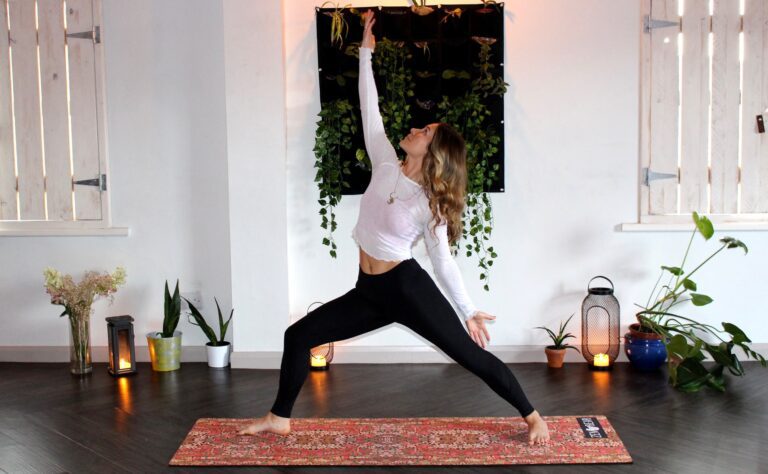
Transforming your bedroom (or any space) into a meditation space.  

You can have a meditation room, but that won’t be the main reason you will meditate or develop a habit of meditating. It took me over 4 years after I had established my Sadhana practice (Sadhana is a Sanskrit word that means daily spiritual practice, like yoga and meditation, for example).

My meditation room is really a multi-purpose space that also serves as my office and filming studio. Your meditation room should be as special as your bedroom. Your bedroom is the temple of your body, and your body is the temple of your soul. It is important that before we start adding more items to your bedroom that you understand that your bedroom embodies your energy, and keeping it neat and clean is just as important. 

What to buy?

If you were to buy only one item, it should be a zafu (round meditation pillow). However, feeling comfortable while meditating is important, so I recommend a zabuton (a Japanese cushion placed under a zafu) and a yoga mat if you want to practice yoga before meditating to prepare your mind. Placement and positioning are another way to harmoniously help the energy flow (check out a Feng Shui Bangua map) but don’t worry if your space does not accommodate the requirements. 

Adding crystals to your room will raise the vibration and help you to concentrate during meditation.

For example, pink quartz can promote healing vibrations to the heart chakra, while amethyst helps to expand the higher chakras (third eye and crown chakras). Another simple idea is to choose light colors linens made of natural fabric. Bringing natural elements (like cotton fabrics) into your meditation space will enhance your meditation experience.

Balancing Earth, Water, Fire, and Air elements

Balancing the four elements (Earth, Water, Fire, and Air) in your meditation space will raise the frequency of your room, so make sure to open the window every day for fresh air and to allow sunlight or natural light to enter the room daily as well. 

Plants bring the earth element to your setting but make sure they are healthy and vibrant. A small fountain will balance the water element in your room and will also balance your emotions. 

Sound can be used to refine the vibration of your space, and playing a mantra 24/7 for 40 consecutive days will set the energy of your room (the Long Ek Ong Kar mantra is always a good choice). Everything is energy, and raising the vibration of your space will improve your meditation experience but don’t forget to do a regular energy cleansing. 

Cleansing your space

To clear out dense energies that may accumulate in your area, you can also burn dry sage while holding the intention to clear your space, or you may prefer using a diffuser with a high-quality essential oil of your choice. A salt lamp is also great to absorb lower vibration energy, but if you don’t have one, a simple hack is to place one grain of pure coarse sea salt in each corner of the room. With all the information above, you are all set, but you may be asking – should I have an altar in my meditation space? 

Should you have an altar? 

You can certainly create one; I personally don’t. Many meditators have an altar, and I think it is beautiful to have one. I have young kids and a puppy in my house, which would make it unlikely my altar stays in one piece. If you plan to have one, here is my suggestion: create an altar with natural items like crystals, plants, and a picture of yourself. Yes, your portrait. Meditation is a dive within oneself, during which time you will get to know yourself; you will, with time, befriend your soul and slowly find out who you truly are. The peace and calm we all seek out by practicing meditation will come when we become more compassionate with ourselves when we truly get to know our own soul. Your portrait will inspire you to get to know your soul on a deeper level. 

Going deeper within

As you go through this process of creating a meditation space, you will also be within and make sure to be kind to yourself in this process. You have already taken the first step by deciding to incorporate meditation into your daily routine. 

As this idea evolves, you will slowly create time in your day, space in your room, and gradually you will see that the light you search for is within. I hope the ideas I shared in this article help you in this journey. 

5 Simple Ways to Eliminate Bloating

The best way to eliminate bloating is to make yourself aware of what you are putting in your body. This is not a quick fix but will work overtime, making the bloat disappear and improving your overall health.

It will be a change in your lifestyle, mainly your eating habits, but you will notice a difference in how you look and feel.

Start with simple carbohydrates.

Eliminating sugar, saturated fats, and simple carbohydrates like flour, pasta, bread, crackers, chips, etc., is a great place to start. Stick to the perimeters of the grocery stores where all the fresh produce, frozen items, and meat are. The items in the middle of the stores are the ones loaded with extra sugars, unhealthy fats, starches, and calories.

They may be more convenient, and you may have to prepare more meals from scratch, but that’s the best way of knowing exactly what you are consuming. You can also eliminate or reduce your alcohol consumption to speed up the process. Do this for several (at least six) months to see how your body responds. This may seem like it takes forever, but consider it an investment in your health as well as your future.

After all, the organs in your body do take a while to cleanse, especially if you have been feeding them unhealthy garbage for years. If simply eliminating the common culprits listed above does not give you the healthy body and lack of bloating you are striving for, you may have an allergy or sensitivity to one or more foods that are not on the list. There are multiple ways to determine what foods you are sensitive to or allergic to.

Food allergies, sensitivities, or intolerances

This is not an anaphylactic allergy, the kind that can kill you quickly, but more of a sensitivity, intolerance, or mild allergy involving your immune system.

Your body recognizes the offending food as a foreign intruder, creating an immune response in many organs. Antibodies formed in response to the immune system’s reaction to the intruder get deposited in many organs, causing a myriad of problems and symptoms. As well as bloating, you may suffer from skin rashes, achy joints, asthmatic lungs, and other issues within different body organs.

Celiac disease, IBS, Crohn’s, and ulcerative colitis

For example, people diagnosed with Celiac Disease have a severe intolerance of gluten. The small intestine is directly affected, while other organs can be indirectly affected. IBS or Irritable Bowel Disease, including Crohn’s and Ulcerative Colitis, are also aggravated by ingesting foods that inflame the digestive tract and other organs.

The conclusive diagnosis of these digestive conditions is determined by a biopsy (a medical procedure) of the affected portion of the digestive tract, but you may suspect you have one of them by analyzing your symptoms. All of these diseases and conditions can cause bloating, a symptom at the top of the list of patients’ complaints.

Wheat and dairy intolerances

Other common foods that people are intolerant of or sensitive to are wheat and dairy products. Both cause mild to severe digestive issues, including bloating, stomach cramps, diarrhea, and/or constipation, as well as non-digestion-related symptoms such as extreme fatigue and depression. Wheat, dairy, and other common intolerances can be detected by simple blood tests or elimination methods.

Blood tests are the fastest way to determine what it is your body is reacting to but can be expensive if not covered by a health plan. Blood tests can be carried out by many health practitioners, including naturopaths. Some pharmacies also offer food allergy testing. An elimination method is free of charge but is less convenient and takes much longer to accomplish since your body takes a while to recover from the damage caused by one or more allergens. Unlike the undisputable blood test results that you receive printed out on a sheet of paper, elimination results are less straightforward.

Food options for intolerances

Fortunately for those that suffer from the intolerances mentioned, the food industry has stepped up to help and make these conditions much more manageable. There are currently many food options to choose from that are gluten, wheat, or dairy-free. Some grocery stores have whole sections devoted to special diets, and online shopping is more common and easier than ever, with delivery right to your door.

Getting started

So, if you want to banish your ever-present or sporadic bloating, take the time and make an effort to discover what you may be overly sensitive to. The better your body feels and looks with the positive changes in your lifestyle, the easier it will be to continue adhering to them.

Fatigue and lack of energy should also be eliminated with this plan, leaving you feeling full of energy and motivation. The feelings you achieve with better general health are a vicious circle; the better you feel, the more you can do.

The more you do, the better you feel! Give the suggestions a try. What have you got to lose, other than the bloating? Oh, and a few other unpleasant and debilitating symptoms.

Teaching Your Kids How to Establish Healthy Relationships

0

As children continue to grow and create relationships with others, it is important to talk to them about creating and maintaining healthy relationships. This helps avoid abuse and toxic relationships that may ruin the wellbeing of your child both physically and mentally.

Here are a few tips to help communicate and teach your kids about healthy relationships.

1. Create an Open Environment for Your Child to Talk to You

Communicating with your child about important topics like relationships requires an open environment devoid of judgments. This fosters honesty and openness on the part of your child while allowing you to truly learn and talk to them in return. When planning to talk to children about healthy relationships, choose a conducive time and a relaxed setting free from distractions or third parties. Listen to your kids when talking and aim to understand rather than just respond.

If you feel like your child is withholding information, make them comfortable by relating to them and sharing your experiences. You can also use real-life examples as you talk them through the dynamics of relations to help them get a better understanding. For success, ensure that you create a close relationship with your child for them to feel free with and around you.

2. Define A Healthy Relationship and Point Out Red Flags

The first step to teaching children about healthy relationships is letting them know what a healthy relationship looks like. Let them understand that healthy relationships involve respect, honesty, and communication. Also, inform them that although compromise is important in a relationship, it should not be one-sided or manipulative. By laying down the characteristics of a healthy relationship, your kids are in a better position to gauge whether or not they should keep holding onto the relationships they are in.

As you define what a healthy relationship looks like, it also points out red flags to look out for, such as aggressive behavior, lack of respect for boundaries, control, and unequal power dynamics: most times, these warning signs signal issues in the relationships that need resolving. However, let them know that the red flags may escalate into abusive behavior and create toxic relationships. In such cases, guide your child on how they can get out of such situations.

3. Teach Your Children About Boundaries

Boundaries in any relationship help prevent abuse and manipulation. When teaching your children about healthy relationships, you need to also talk to them about setting personal boundaries. These consist of what they can tolerate and where they draw the line in a relationship. Boundaries should also be physical and help your child choose how to show and receive affection. An example is teaching your child that for first meetings with someone, a handshake is appropriate and enough. 

The best way to help children define boundaries is by going back to family values and how they apply to the relationships they make, be it platonic or romantic. As you help your child set up boundaries, teach them that other people also have boundaries that they need to respect

4. Be a Role Model

Children learn a lot by watching what other people do. This means that how you act around others will influence your children’s actions and their perspectives about relationships. Be mindful of how you interact with those around you, be it your partner, friends, and family as well as strangers. Children who look up to you will watch your actions and words and strive to behave just like you. As such, if you strive to build healthy relationships, your children will do the same.

Ensure that you are always upholding what you train your child in your daily interactions by treating others with respect, maintaining your boundaries, being honest, and communicating in the right manner. This way, you don’t put your child in a state of confusion by saying one thing and doing the opposite.

6. Seek Help If You Need To

If for some reason, you are unable to spark a conversation with your child, especially teenagers, about healthy relationships, you shouldn’t feel bad about it. Instead, reach out to other parents, friends, or professionals like guidance and counselors for help. You can even refer the children to a third party to talk to them on your behalf. This way, you contribute to your child’s wellbeing without worrying about whether or not you are doing it right. However, it is important that you make it an ongoing conversation and always strive to let your child know that they have an adult they can go to with regards to their relationships.

Toxic relationships lead to a myriad of problems, which may lead to issues like anxiety when interacting with others. By teaching your children about healthy relationships, you set them up to build meaningful relationships with their peers and future partners, which is crucial for their overall wellbeing.

4 Meditation Room Essentials

A meditation room is a room that is designated as a sacred space. A space of self-care, a space where you can be yourself fully and unapologetically.

A space where you can work to become the person you are destined to be. Due to the importance of this space, you must set it up for success both physically and energetically. 

1. Habit cues

Everyone will tell you the importance of incense, candles, statues, pictures, tapestries, and the like, but few people will talk about the habit cues that set you up for success.

Habit cues are the stimuli that prime you to engage in a particular activity or think in a particular way. So take some time to think about the items that cause you to engage in introspection, and that brings joy to your life if they happen to be particular candles or statues, amazing! If not, that’s good too. Simply do what works best for you.

2. All 5 senses

Beyond setting up habit cues, we want to find ways to orient all of our senses in the same direction. Ideally, what you see, hear, taste, feel, and smell will all be pointing you towards the same objective. The way we understand life is through that which our senses perceive. If we are in a room with nice smells, appealing sights, pleasant feelings, calming sounds, and even some yummy food or drinks, it can play a big role in directing all of our energy towards the same goal. 

3. Lesson from organized religion

Understanding the importance of engaging our senses is a lesson I learned from organized religion that I brought into my own personal, spiritual practice (full disclosure, I’m one of the many people who claim to be spiritual but not religious).

When you go to almost any religious ceremony in the world. There are typically ceremonial clothes, incense, fragrances, statues, paintings, stained glass, foods, drinks, music, chanting, places to stand, or sit, and bodily movements such as bowing or prostrating.

Every one of these components is symbolically or traditionally tied to what may be thought of as the divine, higher power, or deeper meaning that is the transcendent truth of this life.

As you look at the culture, you see these ceremonial aspects spill over into daily life, causing a constant reorientation back to the divine. 

4. The only essential

In my opinion, there is only one essential for a meditation room: something comfortable to sit on.

You do not want your body to be in too much pain because it will be distracting and cause turbulence in your mind.

Meditation is a broad word, and there is no one definition, but typically we meditate to find more focus and peace.

If you begin to associate physical pain with the practice of meditation, you will be adding fuel to the already nearly unbearably hot fire, which is the inner battle of making peace with yourself.

How To Burn Your Belly Fat By Eating Dark Chocolate

The earliest records show that the Aztecs refer to chocolate as “the food of the Gods.” Montezuma, the leader of the Aztec people, referred to it as “the devine drink.”

At that time, only the elite and wealthy in their society were allowed to consume chocolate, which was a drink created with roasted cocoa beans, vanilla, and chili peppers.  

Hernan Cortes, a famous Spanish Conquistador, noted, “ a cup of this precious drink permits a man to walk for a whole day without food.” It was soon brought to Europe and sweetened, and thus began our love affair with chocolate.

I am here to share some pretty incredible news, eat chocolate to burn your fat. I have personally proven this to be absolutely true.

Let me share a story some of you may be able to relate to; as someone, who loves to cook, I have struggled with my weight.

When I hit 50, I was almost 240 and saw a heart specialist. I knew I needed to lose weight but was really struggling to lose any weight at all!

One day by a stroke of luck, I read an article on a couple that managed to drop 105 pounds between them simply by incorporating Polyphenols into their diet. They claimed the weight “fell off.” So I began my research.

I discovered polyphenols are a large family of naturally occurring organic compounds characterized by multiples of phenol units. More than 8,000 identified polyphenols are found in foods such as tea, wine, chocolates, fruits, vegetables, and extra virgin olive oil. That “old wives’ tale” that chocolate and wine help you lose weight – is actually correct!!!!

Here is the exciting news! A graduate student from Texas Women’s University conducted a study to identify if polyphenols would inhibit fat cell formation on a cellular level.  The study utilized pre-adipocyte tissue to identify the effects of polyphenols on unspecialized cells into adipocytes or fat cells. Compared to the control tissue that received no polyphenols, the tissue showed a significant reduction of lipid content. They were reduced by 27% to 72%, depending on the dose they received!!

The study results have shown: plant polyphenols have been shown to inhibit adipogenesis, the development of fat cells, and to increase lipolysis, the breakdown of fat cells. This action of polyphenols shows the positive effect plant-based food constitutes on body fat. Regular consumption of natural berry polyphenols, such as blueberries, protects against oxidative damage and reduces fat cell formation.

Bottom line, polyphenols block fat formation and break down fat cells. It was pretty exciting to find this out. I decided to learn more about foods filled with polyphenols and stumbled across the information that one of the most polyphenol-rich foods – was cocoa.

Natural cocoa beans and dark chocolate are some of the richest sources of it. That makes natural dark chocolate ( 85%+ ) a thermogenic food.  

I lost 85 pounds in 8 months, eating it every day!!!!! Let me share an incredible story.  

I was trying to eat as many fat-burning foods as I could to help me lose weight. I uncovered the top five fat-burning foods were:

grapefruit, strawberries, ginger, cinnamon, and cayenne. I love grapefruit, so I knew I would have one a day for breakfast; however, I always struggled with dessert. I decided to try…..chocolate-dipped strawberries!!!! To me, that is a decadent dessert and one I would love to eat regularly. After the first two days of actually dipping the strawberries, I ended up just washing and cutting up the berries and drizzling one servings’ worth of chocolate over the top. I have to admit; I added whipped cream!!!

The very first week – I lost 4 pounds!!!!!!! I loved it so much I ate it every single night for dessert for the next year!!!

Let that sink in. Chocolate drizzled strawberries with some whipped cream, and you can still lose weight!!!!!

A study published in the European Review for Medical and Pharmacological Sciences has revealed that after consuming dark chocolate for just one week, there was a noticeable improvement in markers for cardiovascular disease, and there was a marked reduction of belly fat!  

The study followed 15 women aged 20-40 years old that consumed 100 grams of dark chocolate (70%+) for seven days.

The results concluded: “there was a reduction in abdomen circumference observed.”

Great ways to consume chocolate: 

When looking at a good bar to consume, look at the ingredients. Any bar with sugar in the first three ingredients, don’t get it. What you want to see is cocoa, cocoa solids, cocoa butter, and cocoa powder, with organic bars being better.  

I use bars as an easy way to measure servings. If I am going on a hike/walk or work out, I eat one serving 20 minutes beforehand.

If I am going to enjoy fruit drizzled with chocolate, I again use one serving as a formula.  

In the baking aisle, grab a bag of Ghiradelli 100% natural cocoa powder. I add a tablespoon to my protein shake, which amps up the chocolate flavor and maximizes the burning power of the shake.

A delicious treat – almonds and many nuts are full of polyphenols – mixing natural or salted nuts with dark chocolate chips are great for anyone on the go and is a supercharged fat burner.

A great gift – or way to consume more polyphenols in one bite – handmade chocolate bars. Get yourself a silicone mold for a candy bar. Using your favorite chocolate bar, melt down the chocolate (I use a microwave. I put broken-up chocolate in a glass measuring cup or ceramic mug in the microwave on high and microwave for 30 seconds. Wait a minute. Thirty seconds more and stir.

Remove and throw in more chocolate and stir to melt.) Pour the chocolate in the mold along with your favorite ingredients – strawberries, blueberries, almonds, cashews, pistachios, pecans, macadamia, cinnamon, ginger, and so much more. Put in a plastic bag and store – do not store in the refrigerator – keep in cool, dry place 70 degrees and under.

Organic cocoa powder and milk – almond milk, milk, or any milk product mixed with the powder or pour hot milk over dark chocolate bar pieces and create a luxurious fat burning drink. Boost it with a dash of cayenne and cinnamon. Finish it off with shaved dark chocolate.

Where is the Love? Exploring Elements of Self Compassion

0

Why would anybody NOT have self-compassion? Why is it sometimes so much easier to shower others with compassion? When did self-compassion go out of style?

In this article, we will make an effort to answer some of those questions as we approach the subject of self-compassion and why it is sometimes difficult. 

Why don’t I love me?

Let’s start by briefly touching on 3 elements connected to self-compassion. I challenge you to explore each one with an open mind. 

1. Embrace your self-worth

At first glance, you might think, well, of course, I have self-worth. After all, I am a successful, law-abiding citizen. I value my contributions to my family, friends, and career. But, self-worth goes so much deeper than that. Do you value who you are as an individual? How do you relate to your perceived flaws? Do you believe you are worthy of compassion, not only from others but first and foremost from yourself? 

The funny thing is, there is no guilt or shame in caring for others because they are worth it. They deserve it! Our children, our mates, even our pets all seem to be worth so much more compassion. But oftentimes, that does not hold true for self-compassion. Subconsciously there is a feeling of not being worth it. Why is that? Where did it come from? Now is the time to LET IT GO!

So when did self-compassion go out of style anyway? When did it become dispensable, unnecessary? The truth of the matter is, self-compassion never goes out of style. It is of the utmost importance! The deeper we love ourselves, the more capacity we have to love others. Don’t let anyone convince you otherwise. That includes parents, children, mates, siblings, and friends. And, don’t worry about being selfish or conceited or any of those other crazy notions. Have you noticed the suicide rate lately? The youth of today need to learn the importance of self-compassion. And, we have an obligation to demonstrate for them what real self-love looks like. Acknowledge and boldly embrace your self-worth! 

2. Forgive, forgive, forgive

Oftentimes the lack of self-worth is deeply rooted in an inability to forgive and requires a little extra inner work to rectify, but it is so worth the effort. It is important to move past childhood adverse events and failed relationships. We have all made mistakes in life, some we would really like to forget.

However, holding on to past failures and faults blocks the flow of self-compassion. It also blocks the flow of compassion for others. Life is all about learning and growing and loving.

We need not be perfect to warrant self-compassion. Perfection is not necessary or possible. Forgive yourself and find something new to LOVE about you today and every day.

3. Lighten up a little!

Stop taking yourself and others so seriously. Take a lighter approach to life. Ask yourself will it matter in 5 or 10 years. In most cases, it won’t even matter next month or next week. Life is fleeting. Kids grow up, parents age, and transition; friends come and go. There’s no time to hold on to negative thoughts and emotions. Lighten up and live life to the fullest. In my book, “Think on These Things” – Day 94, I talk about laughter being the best medicine at any age! Unless we can continue to laugh in the midst of disappointments, setbacks, and trials, life will hold little joy for us. We must love ourselves despite the adversities. We should laugh at 90 as we did at 9, and love it! Why take life so seriously? The older we get, the more there is to laugh about. So look life square in the face, love yourself —and LAUGH at your mistakes. I promise you will live a lighter, healthier life.

Now for self-care… 

Self-compassion and self-care go hand in hand. Take some time to review the elements above. Give yourself a rating on self-worth and forgiveness. Practice living a little lighter–on purpose. And then venture into self-care. I trust this article has helped you to realize the importance of self-compassion. Now it is time to prove it by incorporating some self-care into your daily life.

Manage your time in such a way that self-care is a priority. Set up a morning routine that nourishes you mentally, emotionally, and spiritually. You will love it, and so will those around you. 

Consider & Connect

Regardless of your beliefs, you are here on this earth for a reason. There are no mistakes in that regard. You have been given the precious gift of life, and it is not by accident. Now, what will you do?

When you remove the obstacles and the mental blockages, you will realize that love has always been there. It is all around us and inside of us for a reason. Let it flow freely through every aspect of your life.

Simply invite it into your body, your home, your workplace, and your state of mind. The love is here—it is there—it is EVERYWHERE. Connect to it!

Dating and Working: Managing a Healthy Balance Between the Two

Gone are the good ol’ days.

Have you found recently that the lines between our working lives and our personal lives have never been so blurred? Many of us have found ourselves responding to a work email late in the evening or answering a client call when spending time with family. The day doesn’t end at 5 PM, and the weekend isn’t free from work activities. 

With these two worlds becoming more and more entwined, how can we find the time to date? Love it or hate it, dating can almost become a second job. Swap work emails to dating site messages, client meetings to romantic restaurant dinners; it becomes easy to see just how much time and effort you may need to find someone special.

So, we asked 5 full-time working single women how they successfully juggle their careers and love lives.

Katie, Graphic Designer

“My new partner and I have a number of rules that help keep work from interfering in our relationship:

No electronics in the bedroom, no exceptions. It’s scary just how many times we check our phones for a work-related reason. The bedroom is an electronic-free zone; all phones are kept in a different room.

The first 30 minutes after work is spent together. This one sometimes gets difficult to maintain, but we’ve been working hard to make sure we do it. This stops us from just continuing Work when we get home; it encourages us to spend more time together. We say 30 minutes, just so it sounds manageable with our workload, but we find we have so much fun or so comfortable that it quickly becomes 1 or 2 hours.”

Glenda, Business Owner

“Yeah, when I first started up my own business, I didn’t have a single second to go out on the dating scene. I dedicated all my time to work. My business partner and I were setting up a number of hairdressers across our local area, the days were long, and we never had time to ourselves.

It wasn’t until I had a panic attack that I realised something had to change. I was at home, very relaxed, and then suddenly started struggling to breathe; I didn’t know what was happening. I thought it was a heart attack. The doctors told me it was likely a panic attack due to the stress I was putting myself under. At that moment, I decided to make a conscious effort to find time to enjoy personal things, seeing friends, family, and, of course, dating.

It was very difficult at first, but after a while, I found ways to manage both my work life and my social life. One which may seem a little drastic was I bought a second cell phone. 

I was always checking my emails on the few occasions I had free time. One time I had a date walk out on me. When I texted him after asking why he left, he said I kept looking at my phone and ignoring him – I didn’t even realise! I now have my work phone and my personal phone, if I go out, I leave my work phone at home. My colleagues know they can only call my personal phone in an emergency. It might seem a little strange, but it’s surprising just how much I’ve been able to enjoy and be part of my social engagements.

As an A-Type personality, I always like to give everything 100%. I think that was one of the reasons why, at first, I was struggling to date while working. I saw dating as this huge commitment that every message online had to be responded to; every date offer had to be accepted just in case this person was the one! Things became a lot easier when I took the stress out of dating. I allowed things to fizzle out if it took too much energy to keep them going; I gave myself a higher bar about what was working and what was not. I saw dating as a casual endeavour, not something I had to work tirelessly at. I soon found dating to be fun, which naturally led me to find more time to do it.”

Charlotte, Financial Strategist 

“One tip I have to make juggling dating and working easier is to stop thinking that dating is all restaurant or bar dates in the evening. Learn to love lunch dates!

I was a bit cautious at first when someone recommended I take a new potential partner out on a lunch date. It took me a while to realise I was nervous about dating in general and the romance and (honestly) alcohol of an evening date makes things easier. I don’t know what it is, but dating in the evening makes things feel less awkward.

I work with international clients, so I’m working till late evenings quite often. This makes dating difficult, which is why I decided to brave the lunch date. I’m so thankful I did; sneaking off for a quick date at lunch has been so amazing! It’s made the workday more exciting, I’ve managed to meet so many new people, and I still have the same amount of free time. The hour time limit helps when the dates don’t go so well too! A small change, but something I’d highly recommend.”

Anonymous, Chief Technical Officer 

“Work was my second relationship. I would spend countless late nights at the office; I’d constantly be on the phone with work; also work would cause me stress or make me really excited, Work would be all I talk about with my friends. It was my husband.

However, when I turned 40 I reconsidered that relationship. I wanted to figure out how I could still dedicate myself to my job – which I love – but still have time for an actual relationship. The few relationships I had had at that point were only people from work, which always became messy and wasn’t sustainable.

I had to focus on exactly what I wanted from my social life. Was I really using what small time I had well? One way in which I saw myself “wasting” my time was with social media. I was obsessed with work, but I was also obsessed with social media. I would spend countless hours mindlessly scrolling through my feeds, thinking I was being social, when in actuality I was just wasting time. I went cold turkey, cut out all social media and diverted that time in actually being social – both with friends but also with dates.

Over time, I worked on improving my work/life balance. I forced myself to ask ‘am I enjoying this’ when I was doing anything – both at work or at home. I realised how little time I had in a day and if I wasn’t fully invested in something, I wasn’t going to spend my time on it.

One thing I found that was essential whilst dating was to find someone who understood your situation and was actively looking for the same. As a busy person, there might be big periods of time where I don’t see someone I’m dating. I’m ok with this and can maintain a healthy relationship despite it. It’s essential I find someone who feels the same. The few relationships I’ve had where the other person tries to convince themselves they can make that work eventually fail. They start to resent the time not spent together and things fall apart. Make this the most important dealbreaker of your dating preferences.”

Sarah, Property Manager

“I’ve always struggled with balancing work and love life. I think I’ve gotten better at it as the years have gone past, but I don’t think I’m totally out of the woods.

What has worked well for me is scheduling? Not only in my work life but in social life, everything is scheduled. My Google calendar is my everything. It has every work meeting, every scheduled hour of some activity, every social event, and every date. If I’m in a relationship at the time, it has every date night or just a block of time to spend with my boyfriend, however, we decide to spend it. Granted, this won’t be for everyone, but a tight run schedule works wonders for me. I know exactly what’s happening when, and it allows me to put sufficient time into finding someone.”

5 Reasons Why Female Leaders are More successful

Lady boss, female founder, boss babe—you’ve probably heard these phrases, these titles, these badges of honor for women who are running businesses, growing their platforms, and making waves in their industries.

As a female entrepreneur, maybe you love these phrases for what they’re intended to be: empowerment-focused. Or, on the flip-side, maybe you’re sick of hearing them and would rather just be called “boss” or “founder.”

Regardless of where you fall with these titles, as a woman, you value yourself and the women around you for who you all are: bold, resilient, emotionally in-tune, and compassionate.

Reason #1: Women are bold

Because of our natural drive to excel (and often outperform our male counterparts), we are driven to succeed. We are willing to step out of our comfort zones to try new things, be willing to engage in difficult conversations to have breakthroughs, and stand up for what we believe in a society that often tries to tell us what we should or shouldn’t be.

Reason #2: Women are resilient 

One of the reasons women make the best entrepreneurs is that we rise in the face of adversity. That’s not to say men don’t, of course, but women are continually striving for more of a place at the table. Regardless of how many times we’ve been knocked down, we will continue to brush ourselves off, get back on our feet, and fight.

Reason #3: Women are emotionally in-tune

One of the biggest female strong suits is our ability to truly see one another—both sexes. We resonate with the feelings of others. We are quick to have compassion for different experiences. And in every situation, we consider all perspectives in order to bring open communication, clarity, and connection to the spaces we occupy.

Reason #4: Women are compassionate

We understand that everyone comes from a different background, from a different story, and from different trauma. As women, we are able to see beyond the surface of the underlying pain or reasoning behind someone’s decisions or choices.

Are our male counterparts able to do this? Sure! But as women, our compassion is often what guides our decisions. For us, there is no defining line between our hearts and our heads—we follow both with unmatched fearlessness.