
Home Blog Page 367

The Scientific and Spiritual Benefits of Pranayama

0

As I sit down to write this article, a wave of “to do’s” enters my brain. I am filled with a checklist of things needing completion, making it hard to be in the present moment.

So, I STOP and BREATHE, using the 4-7-8 technique. Most people use this right before bedtime, but it helps me when I have a lot of “to do’s” swirling around in my head. I breathe in for a count of 4, hold my breath for a count of 7, and exhale for a count of 8. This technique is derived from Pranayama or yogic breathing. It helps me come back to the here and now. I repeat this twice and instantly feel more present to the words showing up on my screen.

My mind becomes clearer. I am ready to share my knowledge of Pranayama, the science behind it, and the spiritual benefits. Now don’t let that word “spiritual” deter you from the article.

Let’s take the word spiritual and relate it to mindfulness — you know that sense of calm you get when you are challenged but able to navigate through it. That deeper connection to yourself and your emotions. It’s like tapping into higher consciousness. Let that be your definition of spiritual. 

Are you ready to dive in? Before we start, STOP and BREATHE.  Breathe into your low belly and observe it expand. Inhale into the sides of your waist, allowing it to flow up into your heart. HOLD it at the top. Now exhale the breath back and down. Enjoy. 

You just experienced a Pranayama technique called 3-part-breath; it’s that simple. Notice how more open you are to reading this article and clearer your mind is. Prana is a Sanskrit word meaning life force, and in this sense, breath. Yama is a Sanskrit word meaning reigning in or control.

The two words combine to mean breath control. BKS Iyengar once said, “Breath is the king of the mind.” Knowing this, imagine how applying Yama or control of your Prana/breath, benefits YOUR mind. I could mic drop right there, but let’s continue our exploration.

The Science Behind Pranayama

Your mind regulates so much in your body, including your health. If we can find a way to reign in our mind by using our breath, our physical health is directly affected. Below are a few scientifically proven areas of benefit when pranayama is used: 

  • Daily Pranayama improver our Quality of Sleep
  • It reduces stress
  • Pranayama Overall Improve the Brain Functioning
  • Keep us and lung healthy

How does it benefit so many different areas of our body? Let’s keep it simple.

Quality of Sleep: Focusing on your breath increases oxygen to your brain. When you are unable to fall asleep, it’s usually due to a reaction of your brain overworking or stress keeping you up. Practicing pranayama before you go to bed allows you to transfer your focus from the day to the breath. It gives your mind a much-needed break from everything executed throughout the day and permission to relax. If the breath can calm and relax you before bed, it can certainly play a role when you experience daily stressors.

Reducing Stress:  Connecting to your breath stimulates your parasympathetic nervous system, that calm place in your mind. Taking a moment to breathe takes your mind off your stressors and into the present moment. As the brain reduces stress and oxygenates your nerves, your overall brain function directly benefits.

Overall Brain Function: Scientific studies have proven when you focus on the breath you can tap into mindfulness. This alleviates a fight/flight/flee response and supports making executive decisions. Continuing this process over time increases how your brain functions. It’s as if your brain is getting love notes from your breath throughout the day rather than chain letters from stressors in your body. Which one would you want it to receive? The love note, right?! Pranayama is a love note to your brain. 

Lung Capacity: When you think about breathing, you tend to think about two areas of your body– your nose and mouth. But do you ever consider your lungs? As you focus on your breathing the lungs are getting a workout. Imagine them like your bicep. The more curls you do with your weights, the stronger it gets. The same goes for the lungs. As the lung capacity increases, it reduces upper respiratory complications. 

Stop and breathe! Let’s explore the Pranayama technique from earlier in this article. Breathe into your low belly and observe it expand. Inhale into the sides of your waist, allowing it to flow up into your heart. HOLD it at the top. Now, exhale the breath back and down. Repeat that for a few more rounds of breath.

Pranayama Techniques

That breathing technique is 1 of 8 Pranayama techniques called Dirga or Three-Part-Breath. Each breathing practice has three elements–inhalation, retention, and exhalation. It is recommended that these breathing techniques are done seated upright in a comfortable position. We could go down the rabbit hole of each breathing technique, but then you may lose your attention or your mind gets carried off into your own to-do list. You can explore them below when it’s best for you. 

  1. Dirga or Three-Part-Breath
  2. Ujayyi or Ocean Breath (you have probably heard this in a yoga class)
  3. Nadi Sodhana or Alternate Nostril Breathing
  4. Shitali or Cooling Breath
  5. Bhramari or Bee Breath
  6. Bhastrika or Bellows Breath
  7. Viloma or Wave Breath
  8. Kapalabhati or Breath of Fire

Pranayama and Spirituality or Mindfulness

You are probably eager to start a pranayama practice now that you understand how it impacts your body scientifically. You may have already googled a few of the techniques listed above. But it’s important to take another moment to STOP AND BREATHE as we venture into spirituality or mindfulness. 

Pranayama helps navigate life’s moments of unease, building a bridge between the mind, body, and breath to create harmony. It’s not always easy to take a moment to breathe as our world is full of movement and action.

As you read this article, there are strategically placed little breath reminders for you. Take a moment to reflect on how those little reminders made you feel. What ideas come to mind? Were you able to sense peace or tranquility? All these practices help us as a mirror to show us what is truly important and what we truly need.

Pranayama is able to let you connect to your higher Self. The more you experience these moments, the easier they are to tap into when life’s challenges come. It purifies our soul. 

Often feel stressed? Here’s what it does to your eyes

0

Stress helps us to fight or flee a challenging situation. It helps us to focus all our energy to give us action at the right time.

Everyday stressful conditions might include things like work stress, psychological distress (like depression and anxiety), and anger or hostility. 

Do you often feel tired? Too much to get done?

When the conditions subside, stress reduces, and our normal body maintenance takes over. 

However, if we remain in stressful conditions for long periods, stress can significantly affect our health. 

This includes increased vulnerability to disease. This includes conditions like diabetes, irritable bowel syndrome, and heart problems. 

Stress can affect our behaviour. For example, we are altering our food choice, physical activity, and adherence to medications. 

Imagine never taking your car to get serviced. You red-line the accelerator at every stop-light. Of course, you fill it up regularly. However, your engine begins to suffer. Increased friction leads to engine heat, friction, and wear. You risk damaging your car without maintenance. 

Prolonged stress may also affect your eyes. Have you ever had:

  • Dry eyes
  • Itchy eyes
  • Stingy eyes
  • Sore eyes
  • Gritty eyes
  • Filmy eyes
  • Burning eyes
  • Watery eyes
  • Light-sensitive eyes

If you said yes to any of these, you might have dry eyes. 

Stress affects the normal functions of things in our eyes and body. That is, it puts things out of balance. 

Did you know that there are over two thousand components that make up our normal tears?

Normal tears are different from emotional tears. Normal tears help to keep our eyes moist and our eyesight clear. Emotional tears happen when we are upset or angry.

Stress changes how smooth and regular our normal tears are. This makes our tears more vulnerable to drying, for example, to airflow, wind, air conditioning, or wearing a face mask.

One study found that dry eye disease was more prevalent with increased stress. This may be due to increased awareness of pain, increased systemic inflammation in the body due to stress or depression, which can increase the risk of dry eyes.

Stress can also affect sleep quantity and quality. Reduced sleep means that our bodies don’t get time to repair and recharge. People with poorer sleep quality tend to have a higher risk for Dry Eyes. Sleep deprivation can reduce the quality of normal tears. 

Stress may also interrupt the normal blink frequency and quality. For example, if you’re in a stressful situation and need to find an answer urgently. You’re more likely to stare until you find what you need. Reduced blinking leads to increased evaporation.

How do we treat stress and dry eyes? 

Mindfulness may be a useful option to improve dry eyes. Mindfulness often involves closing your eyes and focusing your mind on breathing. When the eyes are closed, our eye muscles and eyelids relax. Our lids provide a perfect cushion for the normal tears. The front of our eyes feels fresh again. One study showed that people with diabetes reported lower depression when practicing mindfulness.

Warm compresses for dry eyes may also help to reduce stress. Patients tend to put them over their eyes for between twelve to thirty minutes per session. Some warm compresses are done with the eyes open. Others with the eyes closed. Warm compresses tend to feel relaxing.

Prolonged stress can be bad for our overall health, including our eyes. It can lead to dry eyes. The effects can range from slight irritation to pain that is intolerable. Learn more about dry eye treatments at the Dry Eye Directory.

Is Your Mattress Ruining Your Sex Life

0

We all know that your body needs to rest on average, eight hours per night, to renew your energy for the next day. Without a good night’s rest, our bodies and minds will not perform optimally. For anyone who’s ever had a bad night’s sleep, you can notice it in all the various areas of your life.

Negative effects of a bad night’s rest can be seen in multiple areas of your life and in your health as well. You may experience pain, especially in the back and neck, or mental health problems, like increased stress and anxiety. All of these are often related to not getting an appropriate amount of rest.

There are many consequences to not getting quality sleep, but did you know it could also affect your sex life? This is why it is important to have a quality mattress, as it can help you to get quality sleep and help you in maintaining or even improving your sex life.

If you have a poor quality mattress, it might be ruining your sex life. If you want to improve the quality and quantity of your sex life, you might want to start looking at a new mattress that fits your needs

For example, did you know that one of the many problems that come from a lack of rest is reduced quality and frequency of sexual experience with your partner? A study published by the Brazilian Association of Sleep claims that poor sleep can often decrease feelings of sexual arousal. 

In another study by the Journal of Sexual Medicine, female study participants were found to have decreased orgasms as a result of low quality sleep. Additionally, the lack of sufficient sleep was also found to be associated with arousal problems. If you or your partner have been experiencing these problems, it may be because of your mattress.

Libido and Orgasmic Feelings Increase with Quality Rest

As we’ve discussed, both studies showed that poor sleep could affect arousal, but what of the opposite? Another study in the Journal of Sexual Medicine examined 171 American women over the course of 14 days. During this time, it was found that those women who received adequate rest experienced a 14 percent increase in libido. 

As it seems, poor rest can definitely affect your sexual desire and orgasmic potential. On the other hand, a good night’s sleep can help to increase your libido. But what does any of this have to do with your mattress?

How a Mattress Affects Your Sex Life?

An old mattress can give you trouble when you are trying to improve your sex life. Some common problems associated with an out of date mattress are:

  • Increased allergies
  • Waking up in the middle of the night
  • Overheating
  • Back or neck pain
  • Waking up tired
  • Sore muscles
  • Difficulty falling asleep

If you are having these or other problems with your sleep, it may be your mattress. 

For example, if you find yourself waking up and feeling stuffed up and because of that you aren’t getting adequate sleep, it may be because of a buildup of dust and dust mites in your mattress. While you can avoid this with proper maintenance, by the time that you notice the allergies, it is likely too late to do something about it.

If you are trying to improve your sleep and, by association, improve your sex life, the best thing you can do would be to find a new mattress that adequately meets your needs. There are many different new mattresses on the market today that can meet not only your needs but the needs of your partner. 

These new mattresses can help you to get better quality sleep, which will help you to have more frequent and satisfying sexual relations with your partner. 

How to Pick a Mattress for an Improved Sex Life?

If you want to know how to pick a new mattress to improve your sex life, you should consider the following things:

a) Size of Mattress

The first step to choosing a mattress for improved sex with your partner is to consider the space that you both will need for both sleep and sex. You should find a mattress that is spacious enough for both you and your partner’s bodily measurements. While a couple with small body measurements might do well with a full-size mattress. Those with larger frames will likely need a queen or a king. 

b) Type of Mattress

Another consideration that you need to keep in mind when looking for a new mattress to enhance sexual experience is the type of material available. There are many types of mattress materials available, and each has its own benefit in terms of comfort and adaptability. 

The following options are the most commonly available mattress choices:

  • Memory Foam
  • Gel Foam
  • Hybrids
  • Innerspring
  • Latex

You can make these choices based on how you sleep. Do you want a mattress that will isolate a movement, or do you need one that is very firm? Do you sweat a lot during the night, or are you always cold? Whatever your needs, there is a type of mattress available for you. 

While it may not be as simple as choosing the mattress that is on sale, with the help of many mattresses company comparison tools, the choice is easier than it has ever been before. All you need to do is consider the needs of both yourself and your partner to make sure that you choose the right mattress. This will improve the quality of your sex life and your sleep.

Mindfulness and Meditation with Spiritual Wellness Guide Coltrane Lord

0

Meditation is a great way to stay mindful and focused, especially during times of uncertainty and chaos, it helps you stay connected to your truest self, and it can change your life for the better in miraculous ways. Buddhists believe that the practice of Meditation cultivates the mind, so we can receive the truest wisdom of existence.

Mindfulness is the experience of being fully present and aware of the “now moment” without judgement or attachment to the stories that can cause us fear, stress, or anxiety. The “now moment” is the only reality there is, so getting to this place is important for living a fulfilled and blissful life.

Benefits of Meditation

From a holistic viewpoint, the underlying cause of disease in the body is unprocessed fear that leaves us stressed and anxious. When we experience illness or any disease in our physical bodies, we have a hard time staying mindful, present, or in a state of bliss.

Meditation is thought to shower the brain’s neurons with feel-good chemicals like serotonin that help dissolve stress and depression. Meditation is also known to help boost your immunity by activating the immune-linked region of the brain.

“Meditation makes the entire nervous system go into a field of coherence. The highest levels of performance come to people who are centered, intuitive, creative, and reflective – people who know to see a problem as an opportunity.” Says one of my favorite teachers and friend, Deepak Chopra.

Why Meditation is Important?

A daily practice of Meditation helps to tap into the gap between our thoughts – this gap is the portal to the Quantum Field of infinite potential, where inspiration and intuition come easy. Scientists describe the Quantum Field as a flowing essence throughout all of space. This essence is a field, like the electric and magnetic fields. This field is not only the Quantum Realm; it also mirrors our very soul essence that transcends the blocks we might have stored in our subconscious minds. When we add an intention into this field of infinite possibilities, it ripples out to give rise to waves of light that potentially lead to matter or the manifestation of our soul’s desire.

Calming the “monkey mind” through Meditation gets us closer to a mindful way of moving through life. According to a National Science Foundation article, the research found that the average person has approximately 12,000 to 60,000 thoughts per day, 80% of which are negative thoughts. Meditation has proven to increase the length of the space between our thoughts, reducing the number of negative thoughts that inhibit or block us from mindfulness, focus, and our deepest desires.

Best Meditation Practices 

Focus, or being in “the zone,” has roots in the term Zen, meaning “of no mind,” which was a Japanese pronunciation of the Chinese transliteration “chànná” of the Hindu word “dhyāna,” which means reflection or Meditation. Essentially, to have a focus is being in a state of Meditation. Our zone of genius is accessed through Meditation. With daily practice, you end up in a state of moving meditation throughout your day, and the synchronicities come to you with grace and ease.

It’s fairly easy to start the practice of Meditation. All you need is ten minutes (or more) and a quiet place.

Here are the 5 easy steps to start a meditation practice for mindful awareness and focus:

  1. Schedule in 10 minutes first thing in the morning (right after you wake up and relieve yourself, but before you even brush your teeth!) or late afternoon. Challenge yourself for 21 days to make it a positive habit. Your body and mind will thank you for this new skill.
  2. Set your timer for 10 minutes (increase by a minute each day (20 minutes in the morning and 20 minutes in the late afternoon is great).
  3. Sit up with your back against a wall or straight in bed, in a chair, or cross-legged on the floor (using a pillow for support). The alignment keeps you awake and opens your spine, which is connected to the energy portals in your body.
  4. Set an intention for your day. It could be as simple as focusing on the word “gratitude.” You can ask a question like, “what is my purpose?” Or, you can think about a desire. This will add that ripple effect into the gap of potential. The key is to set your intention using general terms, adding the energy of love and gratitude. Lightly present your intention, then let it go. The more we grasp onto details, the more we are attached to the outcome. Detachment allows your intentions a bigger field to manifest from.
  5. Focus on your inhale and exhale until your timer stops. You can include a mantra or affirmation at each breath. For example, say to yourself “I am” as you inhale, “enough” as you exhale, or any affirmation you need at the moment. Keep it simple. REMINDER: Gratitude opens you up to the synchronicities of the Universe.

When you meditate, a window of potential opens up, and you slip into the space of infinite possibilities to create your destiny with mindful awareness where the benefits are vast. I hope to see you in the gap. 

Lose weight By Keeping A Track of your Calories

0

At Intent91, a crucial tip for successful weight loss our clients use is tracking their calorie intake. Tracking your calories enables you to calculate a calorie deficit. There are a number of apps that help track your calories, but we recommend using MyFitnessPal.

Calorie Deficit

The science behind losing weight is simple – to lose weight. We must operate in a calorie deficit, aka we must burn more calories than we consume. This sounds simple, right? But of course, there are many barriers standing in the way of people achieving a calorie deficit. Therefore, the list goes on for tips to achieve weight loss. 

Of course, personal training is an excellent way to achieve structure and guidance with your workouts, yet training only gets you so far, and nutrition is just as important.

There are hundreds of ‘‘get lean quick’’ or ‘‘special juice’ juice’ diets, in the market, these diets are not sustainable and, therefore, in the long run, will not enable you to achieve your fitness goals.

However, I’ve found that keeping it simple works best; therefore simply tracking your calories into your daily routine will enable you to start to achieve a calorie deficit. 

Tracking your Calories 

Tracking your calories is extremely important for achieving any fitness goal, whether that be muscle gain or weight loss. And, when it comes to weight loss, tracking your calories can be the key to unlocking your weight goals. Especially during the initial stages when you are finding your feet with potentially new foods or a change in your diet.

As suggested earlier, losing weight requires a calorie deficit. And the easiest way to understand and set goals to achieve this, you must calculate how many calories you are consuming. Now, to effectively track your calories, there are some crucial factors to keep in mind.

1. Honesty

We’ve all been there, forgotten about that extra beer we had or that extra piece of cake just happened to slip your mind. However, for tracking to truly work and enable you to set goals whilst working out, you must be very honest.

2. Precise

Another important factor to consider when recording your food and drink intake is making sure you are precise and very specific. For instance, let’s say you record eating a slice of toast, which equals 75 calories but really you had a slice of toast with butter and jam, you could be looking at 200+ calories, almost double.

This example portrays how misconstrued your food consumption can be if you are not precise and very specific when using it.

3. Consistency 

Now, the good news is you do not need to keep tracking calories for the rest of your life! But we do suggest keeping it until you are consistently achieving a calorie deficit, which may take longer if you have completely changed your diet.

Alongside this, it is important to keep tracking for the full week – not just weekdays. We often let things go at the weekend, which is absolutely fine in moderation, but if you are drinking and eating lots every weekend and not recording this, then there is no point in tracking for the rest of the week.

Conclusion

Overall, losing weight can be a long road, but consistency and accountability is crucial. The tips for losing weight go on, but tracking calories can be a very effective way of achieving a constant calorie deficit to enable the success of losing weight.

Keeping a track of what you eat complements your personal training sessions and fitness classes very nicely and makes you achieve your personal fitness goals.

However, not everyone’s goal is to lose weight; therefore, if you workout for alternative benefits such as the positive mental side effects, then keeping track of your calorie intake is not necessary. 

What is Spiritual Bypassing?

0

Spiritual bypassing stems from an attempt to live a better life. 

People don’t spiritually bypass on purpose. It’s a result of looking for a different way to feel. To the ‘seeker,’ spirituality provides a set of positive reinforcement mechanisms that shape their existence.

For many people, spirituality is a path to empowerment after many years of wandering lost through life. New age spirituality, in particular, provides a general framework of positive affirmation, self-acceptance, and non-judgment. These are beautiful pursuits.  

It’s when spirituality is followed dogmatically that spiritual bypassing can become a burden.

My teacher states that spiritual modalities often ignore emotional realities. Spiritual bypass leaves people confused and stuck. With a perception of how their spiritual path intends them to be, many people are left unable to process their emotions. As such, emotion is even further repressed. 

A Mask for Underlying Emotions

Spiritual bypass becomes a mask for underlying emotions. Those people who end up spiritually bypassing are really looking to cope with discomfort that stems from unresolved patterns and habits stemming from formative times in their lives. They are looking for something to make them feel better – like a balm for their soul. 

For many, spirituality provides a context that creates a framework for safety. In that framework, seekers understand the permitted behaviors, attitudes, and beliefs. 

From that perspective, spiritual bypassing serves an important purpose. It regulates the nervous system, allowing the seeker to feel at ease and to be safe in the world. From a polyvagal-informed approach, this place of safety is where everything seems possible. 

When someone challenges our spirituality, which mobilizes the nervous system, the seeker now feels unsafe and needs to be hypervigilant. “I must pay great attention and ensure my system of security (spirituality) isn’t under threat.”  

That’s the really interesting part: people who spiritually bypass have found an effective tool to keep their nervous system regulated. 

Difference Between Spiritual Bypassing and Astrology

Astrology is often a source of spiritual bypassing. 

However, astrology and spiritual bypassing are by no means the same.

Astrology provides a system to understand how the earth relates to planetary positions. It provides excellent explanations for what’s happening in the world. Astrology, just like Reiki or Yoga or Vedic philosophy, provides a lens through which people choose to see the world.

However, some followers of astrology overlook free choice.

While the planets and stars may fall into certain patterns, each and every one of us still has the capacity to shape our existence. Astrology helps to interpret the world. The daily astrological predictions may indicate you must befriend shadow. That isn’t to say you must go to the dark side. Instead, it provides a clue about how you might look at the world. How do your experience and patterning impact your interpretation of the world?

People who attribute everything to planetary alignment have found an effective outlet to avoid feeling deep, uncomfortable emotions. 

The Antidote: Awareness

Spiritual bypassing is a sincere attempt for people to express themselves in new and positive ways. It stems from a desire to understand the world and our experience in it. 

It’s when individuals are unable or unwilling to look deeper, to address habits and patterns, that spiritual bypass becomes an issue. Without the capacity to address emotions, seekers will find themselves on a perpetual quest for comfort, which will only come when they accept that discomfort is the greatest teacher. 

The 8 Chakras: A Meditation Unlike Any Other

I’ve been a huge advocate and have been practicing meditation for the past 3 years now to help with my overall mental health. I wanted to change up my meditation routine and try out some different types of meditation I had never tried before. I started to do some research online when I came across Dr. Joe Dispenza and his chakra meditations. I had heard of the chakras before, but I had no idea what they were. So I went and bought his book called Becoming Supernatural.  

The Power of Chakra Meditation

I started reading and learning about the power of thought and meditation to make drastic biological changes in your body and open your mind to the unknown (also known as the quantum field).

When I say drastic biological changes, I mean stories about how people have used their chakra meditations to overcome stage 4 cancer, eliminate diseases, get their dream job, etc. I’m not much of a skeptic, but these seemed a little too good to be true even with all the scientific studies he used to back it up. Of course, I had to try it.

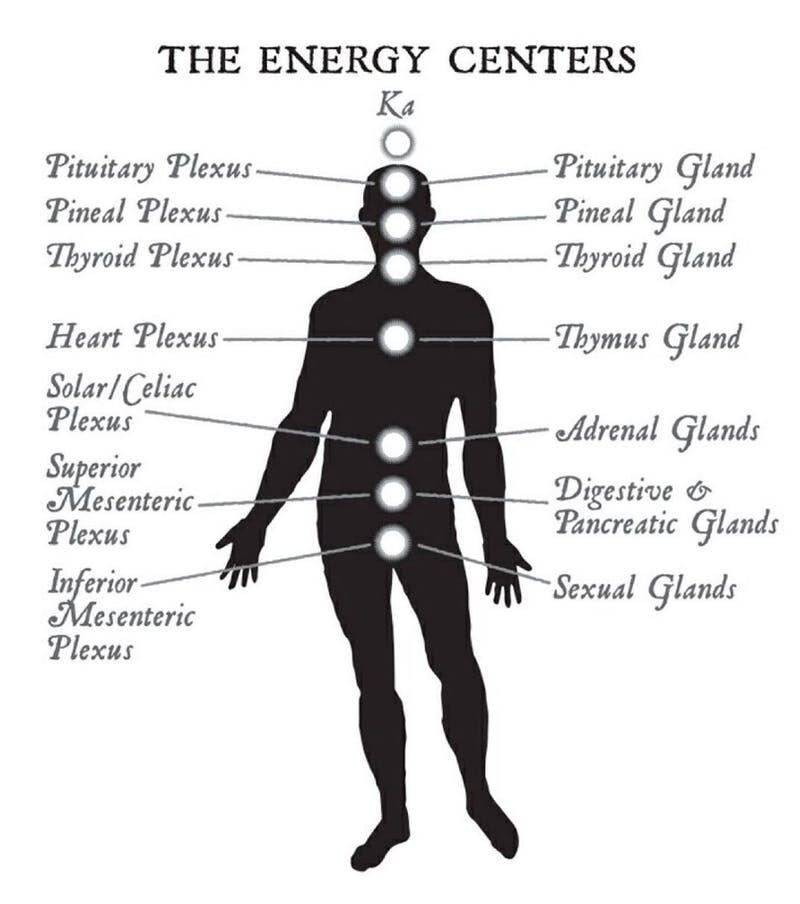
I bought the meditation he created called “The Blessing of the Energy Centers.” He calls the chakras energy centers. What the meditation does is take you through each one of your chakras/energy centers and move the energy into the highest energy center.  

The 8 Chakras (Energy Centers)

The 8 Chakras: A Meditation Unlike Any Other

The first center is the Inferior Mesenteric Plexus, which is located at the sexual glands. The emotions associated with this center are sexual depravity, sexual anxiety, sexual addiction, sexual confusion/pain, and trauma from molestation. This is the lowest of energy centers, so the meditation starts by activating this center by placing all attention on it.

Next, you move to the Superior Mesenteric Plexus, which is located at the digestive and pancreatic glands. The emotions associated with this center are guilt, pain, shame, unworthiness, lack, and victimization. To move energy upwards, the meditation has you activate this center by placing all attention on it. You don’t want to be in this energy center.

The third center you move into is the Solar Plexus located in the adrenal glands. This is one of the more widely known energy centers. Its associated emotions are competition, control, impatience, ego, and self-aggrandizement.  

These first three centers will shrink the field of energy for your body, so it’s important to keep moving upwards into the 4th energy center, the Heart Plexus. The heart is a very important one because when activated, it will help keep the emotions of gratitude, appreciation, thankfulness, inspiration, freedom, kindness, selflessness, compassion, love, and joy. You can start to feel it here but gets even better as you move onto the next 3 centers, which are the thyroid plexus located in the throat, the Pineal Plexus located in the center of your head, and the Pituitary Plexus located at the top back of your head. Next is the last but most powerful energy center of all.

Dr. Joe Dispenza labels the 8th energy center as the Ka, but it goes by many different names. The 8th energy center, when fully activated, will make you feel divine love, spiritual connection, and transcendence. While I know this may sound kind of loopy, it’s not. I had a crazy experience while doing this particular meditation.

My Shocking Experience 

The first five or six times I did this, my stomach would start to feel very nasty right at about the 7th energy center. It wasn’t a feeling like I was going to puke, but it was a very distinct nasty type of feeling. The first couple of times, I thought it was just a coincidence, but it kept happening at the same point every single time. I started to research online to see if anybody had experienced this and see if anybody knew why. What I found blew my mind!

I found this on Dr. Joe Dispenza’s website:

“Once someone begins facilitating the frequency of wholeness, as the cell becomes more whole and less imbalanced, it’s going to go through a host of chemical, biological, and genetic changes.

When this occurs, and a person really elevates their body’s frequency…Because there is a change in energy and frequency, the body begins to transmute, and this causes the flu-like symptoms for many people.”

This meditation didn’t cause flu-like symptoms for me, but this explained the nasty stomach feeling. My body was releasing and eliminating toxins from my body because of the energy shift I was creating in my body from the meditation. After doing the meditation several times, this feeling eventually did go away as there were fewer and fewer toxins to dump each time.

I never understood the powers these chakras/energy centers had, but I hope this article has helped you understand the powers they indeed do have. I think it’s time to go meditate!

Preparing for and Dealing With The Loss of a Pet

When you bring a pet into your life, they become part of the family. You get to take care of them every day, share moments together, and in return, they give you unconditional love. The hope is for this relationship to continue as long as possible. There will come a time when you will have to say goodbye to them and must deal with the loss of your pet.

I have been so fortunate to have had lots of pets over the years, ranging from dogs, fish, and a cat. My childhood pets include Rassie, Diamond, Bennie, Boots, to name a few. 

As an adult, I always wanted the companionship of a fur buddy. When I got my first “real” job and apartment, I soon adopted a little schnauzer-mix puppy named Silver. Fast forward 15 years. Silver and I are still together, but through the years, our family has grown to add a husband, two sons, and a few Betta fish.

So many great memories and time spent together, but what happens when it is time to say goodbye to one of your pet family members? 

Earlier this year, we lost our pet Betta fish, Pete. He had been with us for about a year. It was a sad time for our family, especially our 7-year-old. We also realize we have fewer days ahead of us than behind us with Silver. She is on meds for seizures and dealing with all the issues facing an almost 16 years old dog. How could we find a way to go on without our beloved Pete the Fish, and how can we prepare for when it is time for Silver to leave us? Here are some tips to prepare for the loss of a pet and to deal with the loss once it has happened. 

1. Take pictures

Even before selfies became popular, we always tried to take family pictures. Just like when there is a new human baby, we take pictures whenever a new pet joins the family too. We consider our pets part of the family, so we include them in our pictures and family videos too. It helps to capture those special moments and everyday ones too. I love looking back at old photo albums and reminiscing on times past. It is nice to snap a few shots with your pets as well. This way, they will be included in your family history.

2. Celebrate Gotcha Day and/or Birthdates 

We may not always know a pet’s “birthdate,” but we can celebrate the day we brought them home, also known as their “gotcha day.” There may not be a big party or a cake, but we acknowledge the day and usually give a special treat. Once they are no longer with you, you can always remember that day. Mark it on your calendar and reflect on the special times you shared with your pet baby. 

3. Have a ceremony

After the initial sadness or shock of the loss of a pet, I found it is so helpful to have a small ceremony to celebrate their life. Growing up, we buried our dogs in the yard and marked their grave with their name on a marker. When Pete passed on, we each gathered around and shared a memory of his time with our family before giving him a “burial at sea.” One of our sons used to play hide-and-seek with him, while I shared how he enjoyed watching me cook because his tank was near the kitchen. We had our little boys draw pictures of him to share. For us, it was a good closure to spend that time together, focusing on the loss of our pet fish. 

4. Add a new family member

When you are ready, go ahead and welcome a new pet. You can never replace the pet you lost, but it can do your heart good to share your home with a new family member. A few months after Pete went fishing heaven, we added our newest fish, Oscar. We are looking forward to getting to know him as we did, Pete. 

We never know how many days any of us have together, and that holds true for your fur babies and pets. Make the most of the time you have together, take some pictures along the way, and create memories that last. When they pass on, have a little celebration of life for them and do not forget their birthday or gotcha day. Once you are ready, I encourage you to share your heart and home with a new pet to make some new memories with. 

How Different Love Languages Can Cause Hurt & Problems in Relationships and Marriages

You may have heard about the five love languages, or maybe you haven’t? It’s been years since I heard about love languages, but I thought it was some pseudoscience. However, my friend started to talk about these five love languages and how it had helped him with his communication skills. Then I had to look it up, and this theory by Gary Chapman has been supported through some empirical research.

The theory is that everyone has their own language about love: how we feel and experience that we are being loved and valued and vice versa, how we show our love to other people. 

The five love languages are divided into the above: 

  • Words of affirmation
  • Quality time
  • Receiving gifts
  • Acts of service
  • Physical touch

These are the main languages, and either you are the type who feels you are loved through supportive & kind words, service/actions, gifts, quality time, or through physical touch. Of course, you can score very high on more than one, like quality time and physical touch, for example, but science says that everyone has a primary love language. 

How different love languages can cause hurt?

In a relationship where couples have very different love languages, it can cause many conflicts & disagreements. I have an example from one marriage where the woman put a lot of time and thought into gifts for her husband. He had told her many times that he only wanted her and preferably naked with a red ribbon. She always took those comments as a joke and continued with the stream of gifts, sorry avalanche of gifts! I advised them to take the test to understand each other better. 

After taking the test, she saw that her husband had scored highest in quality time and physical touch & actually, her highest score was also quality time. The gift part was at the bottom of her husband´s scoring, with only 1 point. That was a real eye-opener for her, finally. After that, they began to emphasize spending more quality time together and to spend less time & money on gifts. 

Knowing your love language is essential for everyone, especially couples. Even though you are not in a relationship or marriage, you can also apply it to your kids or your parents (there are different tests for kids). How does your child feel loved? Does the child always hug you, ask you to play, or gets positive reinforcement through words of affirmations or gifts? 

The last time I witnessed an argument between siblings was because the brother wanted to be hugging (physical touch) his sister (a lot). Whom nota bene did not share his interest in this daily hugging. These were real disputes that created a lot of conflicts between those siblings. On the other hand, the sister was always asking the brother to spend more time with her (quality time).

What about your parents? Is your father/mother the type of person who always hugs you, does something for you as an act of service, or does he/she express himself/herself through words or gifts? Whatever it is, it is interesting to think about how others show their love to us and vice versa. 

When the love languages are very different in relationships, it can hurt our feelings & create uncertainty. 

Take the test on my website: https://mindtherapy.dk/en/category/blog-en/

Ask your family members to take it as well. It might lead to less conflict and strengthen our relationships as we better understand how our spouse, mother, or siblings feel loved and valued.

Finally, join me on Instagram if you are interested in posts about mental health: https://www.instagram.com/mindtherapy.dk/

8 Proven Psychological Hacks That Can Make Life Easier for You

In these fast-paced times, things can get very overwhelming, very fast. It’s easy to find yourself going through the motions and surviving. But that’s not what your life should be about; you should truly live and not just survive.

Practice psychological tricks to make life easier, and your days will be much more fulfilling. Among these, a few hacks are the following:

1. The Power of Eye Contact

If you have trouble maintaining eye contact but would still wish to do, then go for looking between their eyes. It will still look like you are maintaining eye contact since your eyes will not converge inward.

Establishing and maintaining eye contact during conversations will help the other party to open up more. Look directly into their eyes, and especially when you are having a one-on-one conversation. The contact will be the subtle coax, and they need to open up.

If you find yourself locked in an awkward eye contact situation, the best thing you can do is to keep your eyes locked on even if your first instinct is to look away. The better if you can smile while at it. It will ease the tension and avoid any lingering awkwardness.

2. Nod while speaking

In addition to maintaining eye contact, nodding while you speak is one of the most effective psychological tricks to make others agree with you. Most people will interpret the nod as a sign of your authority and sincerity on whatever subject matter. Again, most will mirror this trick by nodding back at you, in agreement, of course.

3. Speak to Yourself

Speaking to yourself regularly is one of the psychological tricks to make life easier if you suffer from anxiety. Tell yourself that you should feel anxious or feel a certain way in some situations, and that’s exactly what will happen. Similarly, it will work out well if you tell yourself not to feel as anxious.

Practice positive reaffirmations to boost your self-image, which will translate into the confidence you need to go through your day. Speak to yourself in the third person.

4. Limit the Choices

Examine your behaviour patterns when you are faced with a decision and have to choose from several options. More likely than not, making this decision becomes increasingly overwhelming when you have many choices. Make your life easier by making a deliberate effort to limit your choices. You can move forward faster when you don’t spend time trying to weigh the pros and cons of every available choice.

You can apply the same principle when dealing with others. Think of your kids who are picky eaters. Instead of “what would you like for dinner?” limit their choices to the few meal options, you are actually willing to make.

5. Work on Your Power Language

Expansive gestures and postures are primary elements of the power language. Using this language more frequently will help bring out your dominant self and boost your confidence. You will have what it takes to deal with others and different situations.

It is worth noting that people will recognize and pick up on your power language manifestation. Coming off as dominant will help others to recognize your authority and respond accordingly.

6. Warm over Cold Handshakes

Yes. Something seemingly so small as making sure your hands are warm before going in for a handshake is one of the psychological tricks to make life easier.

How? A warm handshake promotes such a friendly and welcoming atmosphere, setting the tone for your interactions. On the other hand, most people subconsciously link unfriendliness and distrust with cold hands. It’s, therefore, no surprise that the other person may be so quick to pull away and dissociate if you give a cold handshake.

7. The Peg System

Memory is one of the fundamental cognitive skills, without which you may end up making a mess of things. Imagine driving all the way to the grocery store and coming out with only a few of the items you intended to buy because you couldn’t remember the rest. It is such a waste.

The mnemonic peg system is a memory aid that works by creating mental associations between two concrete objects in a one-to-one fashion that will later be applied to to-be-remembered information. The peg is essentially involved linking nouns to numbers, and it is common practice to choose a noun that rhymes with the number it is associated with. These will be the pegs of the system. These associations have to be memorized one time and can be applied repeatedly to new information that needs to be memorized

The peg is essentially a hook onto which you will store information that you need to remember. Every time you think of the peg, which can be anything from a number or alphabet, you’ll remember the details associated with the peg.

8. Start Small

Ever noticed how easy it is to get people to agree to bigger things after some time agreeing to the little ones? That is the Foot in the Door (FITD) psychological trick at play. This technique works on the basis that small favours will create a bond, such that agreeing to bigger ones is that much easier.

Hopefully, these 08 psychological tips and tricks to make your life easier will help. It is recommended to try these and see if your life has changed for the better.