

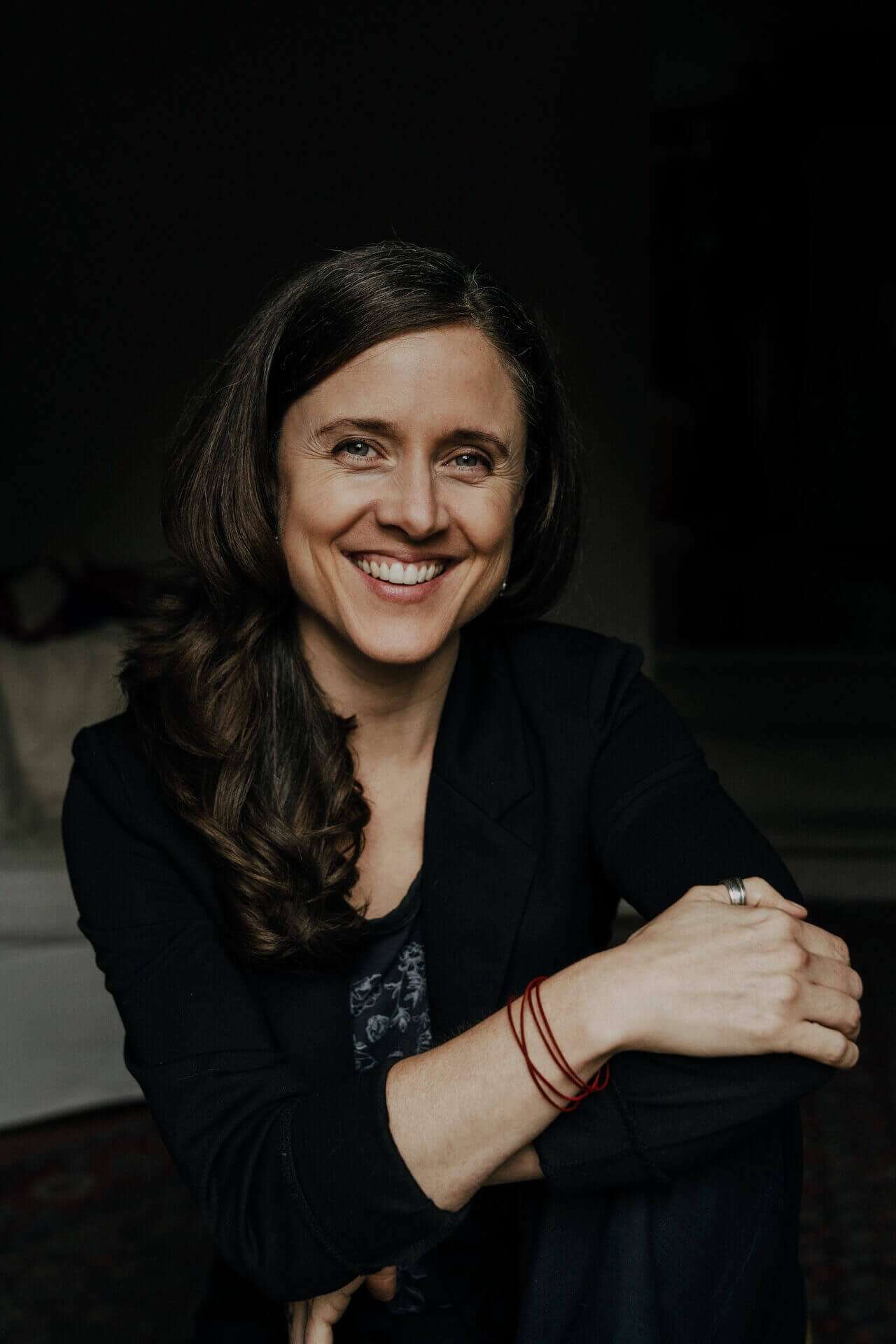
As part of the Morning Lazziness series highlighting empowering women who are making a remarkable impact with their ideas, I had the pleasure of interviewing Jo-Anne McArthur.
Jo-Anne is an award-winning photojournalist, sought-after speaker, photo editor, and the founder of We Animals. She has visited over sixty countries to document our fraught relationship with animals and is the author of three books: We Animals (2014), Captive (2017), and HIDDEN: Animals in the Anthropocene(2020). Jo-Anne is the subject of the acclaimed Canadian documentary, The Ghosts in Our Machine, and her photographs have received accolades from Wildlife Photographer of the Year, Nature Photographer of the Year, Big Picture, Picture of the Year International, the Global Peace Award, and others. Jo-Anne enjoys jurying photo competitions and has done so for World Press Photo, Big Picture, and others. She hails from Toronto, Canada.
In this interview, she reveals the mindset shifts, bold moves, and lessons that helped her turn ideas into impactful online businesses.
What inspired you to start your business, and what problem were you passionate about solving?
I founded We Animals because I wanted my work as a photojournalist to have greater impact. For years, We Animals was a personal project, but I realized that the stories I was telling needed to reach farther. I transformed the project into a non-profit organization with a stock site that could host my work and make it freely available to anyone advocating for animals. Today, that stock site holds the work of more than 175 photographers, and through fundraising, we’re able to carry out investigations and tell animal stories on a global scale.
Animals are often invisible to us. We see them as products—packaged in grocery stores or woven into clothing—but rarely as living beings with lives of their own. Our mission is to change that by making their lives visible, so they can be considered, respected, and protected. Photojournalism has a unique power to reach people in ways that words alone sometimes cannot, and we use it as a tool for change.
How has your business evolved since its launch, and what key decisions have helped drive that growth?
Early on, I received some fun and invaluable advice from Seth Tibbott, the founder of Tofurky: “When building a company, fire yourself from as many things as possible, as soon as you can.” As We Animals grew, I raised funds to hire people with the skills I didn’t have: bookkeeping, accounting, web development, operations, and so on. “Getting the right people on the bus” has been key to our growth and success.
What began as a solo project with me making all the decisions has become a collaborative effort. Today, we make choices about shoots, stories, and expenses as a team, each person bringing their expertise and institutional knowledge. That shift has been transformative. The old adage is true: teamwork really does make the dream work.
In your view, what truly sets your brand apart in today’s competitive market?
We created a new genre of photography: Animal Photojournalism. Traditional photojournalism focuses on the human condition, while wildlife and conservation photography center on wild animals and the species we aim to study and protect. But these genres exclude most of the animals humans use every day—those in farms, laboratories, zoos, aquaria, for entertainment and for work.
Animal Photojournalism fills that gap. It includes all animals, making visible the lives that are usually overlooked. At We Animals, we’re not only pioneering this genre, we’re working to normalize it, and our brand is built on that (evolving!) expertise.
What has been your most effective marketing strategy to date, and why do you think it worked so well?
Animal advocacy is fuelled by passion, with good reason. Billions of animals suffer at our hands each year, and the need for change is urgent. At the same time, communicating about this reality can be deeply challenging. People often resist messages that confront their traditions, cultures, or daily habits. That’s why our approach has been to meet people where they are, speak with kindness and honesty, and avoid telling them how to feel and what to do.
Instead, we focus on creating powerful visuals and stories that invite people to look, and not turn away. By approaching this work – and people – with openness and authenticity, we’ve been able to engage audiences in a way that feels both accessible and compelling. Our strategy has worked because it’s rooted in truth and empathy, and it’s about subject matter that is rare to see but nevertheless essential. Our work is seen as new and a bit strange, but we play to those strengths!
How do you stay connected to your ideal audience and understand their needs or behaviours?
We focus on identifying audiences who are most open to engaging with the topics we document. And by working with partners in specific regions, we’re able to connect with their communities and reach people who are most likely to be receptive. We try to understand our audience’s perspectives, and reach them in ways that resonate.
What’s one branding move or campaign that helped elevate your business to the next level?
Here are two!
The first is our book HIDDEN: Animals in the Anthropocene, a groundbreaking project featuring the work of 40 photographers documenting the hidden lives of animals worldwide. It’s an unflinching form of conflict photography—about animals—and since its 2020 publication, it has won awards and been exhibited globally, establishing our credibility and reach.
The second is our 2025 partnership with The Humane League on The Real Cost of Eggs: The World’s Largest Egg Investigation. This unprecedented project spanned 37 countries and demonstrated (to us, and others) the impact of strategic partnerships.
Both initiatives showed what We Animals is capable of: creating bold, meaningful work that resonates globally.
What does success look like for you, not just in numbers, but in purpose or impact?
I particularly like this question because so much of what we do as storytellers is difficult to quantify. While our work does help policymakers and campaigns curb or end cruel practices, much of our impact is about shifting cultures and ideas over time. Our global investigations and stories reveal our complex relationships with animals, spark ethical and cultural shifts, and nurture the human capacity for compassion and change.
Success for us is seeing these effects unfold every day around the world. We witness it in the use of our images, the feedback we receive, invitations to speak or exhibit our work, and the ways people integrate our work into their own advocacy. It’s a long road, but the fact that people are choosing to engage with and amplify these stories shows that our mission is taking root.
How do you personally define success, beyond revenue and growth metrics?
For me, success is so much about creating a happy, engaged community at We Animals. I’m a deeply relational person and I value the people who work here, and as a founder, it’s an honour that they choose to join our mission. That makes it essential for me and our leadership team to foster a positive and healthy culture.
On a personal level, I also find fulfillment in mentoring photographers and connecting with audiences through speaking engagements. Changing hearts and minds often happens one person at a time, one photographer at a time. The more photographers who embrace Animal Photojournalism, the more people will see and engage with the work they create, and that ripple effect drives real change. It’s great to see that we’ve helped create a lot more animal photojournalism in the world!
Can you share a challenge or setback that ultimately became a turning point for your brand?
When our team grew to about four people, we knew that internal emails were not going to cut it for effective communication. We adopted Slack and Asana, which helped streamline workflows, improve project management, and increase transparency across the organization. It was a learning curve, but one that ultimately strengthened our operations.
Beyond the operational improvements, these tools fostered accountability and a sense of shared ownership over projects. People felt more empowered to contribute ideas, track progress, and see the bigger picture of our mission. That cultural shift was just as valuable as the logistical one; it allowed both our creativity and our impact to flourish.
What daily habits or rituals keep you focused, creative, and grounded as a leader?
Maintaining habits that keep me focused and creative is hard! In a busy, growing organization, it’s easy to be swept up in the day-to-day. I have found that I can let too much time go by without carving out space for the deep creative work that I and the organization need. But this question has the answers baked in: habit, ritual, focus, creativity, and grounding.
Right now, I’m working with a coach for changemakers named Kimberly Carroll. She’s a magician! She’s helping me identify the work habits that don’t serve me, and build new ones that give me the space I need to focus and create. These practices allow me to be a more grounded and inspiring leader, which is kind of presence I want to bring to We Animals.
How do you approach innovation and risk in your business strategy?
The world of film and photography is constantly evolving, be it in technology, subject matter, style, and approach. We stay curious and attentive, learning from what others are doing. I get a lot out of attending industry events like Visa pour l’Image in Perpignan and other festivals, where I can immerse myself in important stories and see how they’re being told. Our photographers and investigators also follow technological changes—from drones to hidden cameras, AI applications, and workflow innovations—to see how these tools can enhance our work.
Our work also carries real risk. Investigative work, often using surreptitious methods, and technological security all require careful management. We closely monitor potential risks and take steps to mitigate them. We’re also incredibly grateful to our pro bono lawyers at the Animal Defense Partnership, who guide us on legal matters ranging from fieldwork risks to contracts. Balancing innovation with responsibility is central to how we operate.
What advice would you give to someone starting a business in today’s fast-changing digital world?
Don’t get swept up in the pace of it all. It’s tempting to think you need to be everywhere, all the time, following every trend. But what matters most is grounding yourself in purpose. Why are you doing this work? Who are you serving? For us at We Animals, the answer has always been the animals. We exist to make their hidden lives visible. That clarity has carried us through every change in technology and every shift in the digital landscape.
The other piece of advice I’d give is to build trust. In a noisy world, trust is something that endures. Build trust with your audience by being transparent and consistent. Build trust with your partners by aligning on values. And build trust within your team. Surround yourself with people who complement your strengths and weaknesses, so you can confidently let them focus on their areas of expertise while you focus on yours. That kind of trust not only makes the work stronger, it makes it sustainable. Technology will keep evolving, and you’ll need to adapt, but if your foundation is strong, if your mission is clear, your values are non-negotiable and your team is aligned, you will be able to stay the course.
Where can our audience connect with you and learn more about your work or offerings?
People can reach us at info@weanimals.org. Our website is a valuable resource for animal advocates, academics, journalists, media, and campaigners. We now have over 40,000 visuals that people can use free of charge. We also offer Fellowships, an animal photoujournalism masterclass, and stories about what’s happening in the world of animals. You can also follow us on Instagram and LinkedIn.
