

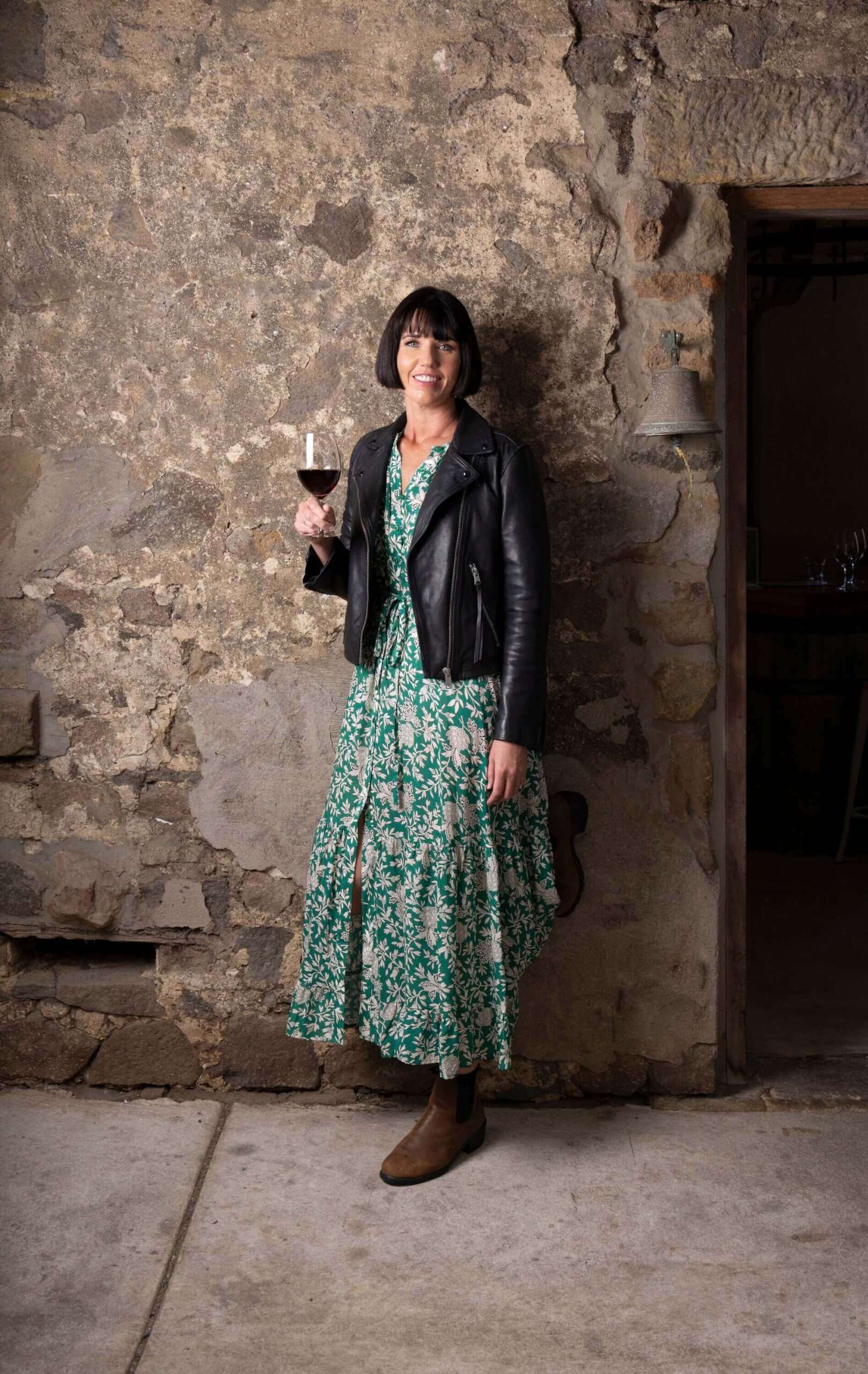
As part of the Morning Lazziness series highlighting empowering women who are making a remarkable impact with their ideas, I had the pleasure of interviewing Libby Cupitt.
Libby Cupitt is the co-owner of Cupitt’s Estate, a family-run winery and hospitality business on the NSW South Coast. She has helped grow the estate from a small cellar door into a destination known for small-batch wines, a farm-to-table restaurant, boutique stays, and events that celebrate the South Coast lifestyle. Libby is especially passionate about the wine industry from championing Italian varietals like Fiano, Vermentino, and Sangiovese to creating experiences that connect guests with winemaking. She also contributes to the wider visitor economy as a Director of Destination Sydney Surrounds South and as President of the Shoalhaven Coast Wine Association, where she supports regional collaboration and growth. Her leadership combines sustainability, storytelling, and a strong connection to place, positioning Cupitt’s Estate as one of the region’s most celebrated destinations.
In this interview, she delves into the challenges, successes, and wisdom she has gained from over a decade of transforming online businesses.
What inspired you to join the Cupitt’s family business, and what problem were you passionate about solving?
Cupitt’s Estate is nestled between Milton and Ulladulla on the stunning NSW South Coast. A winery, restaurant with luxury accommodation onsite, Cupitt’s Estate is surrounded by rolling vineyards, the Burrill Lake wetlands, and the Budawang Mountain ranges, it’s magical.
I sometimes joke that I married a family business, but I definitely chose to join it officially. I met my husband Tom at university in the early 2000s, while I was studying town planning and working in hospitality on the side. In those jobs, I loved the feeling of exceeding people’s expectations and giving them a great time. In my social life, I loved restaurants and dinner parties even more.
When Tom’s parents, Rosie and Griff, bought the farm in 2001 and started planting vineyards, we didn’t think too much about it at the time, we thought they were adventurous maybe a little crazy as they were somewhat retired but we were young and planned to soon move to London so there was no thought about working in the business then.
We lived and worked in London for five years. That’s when my obsession with food and wine really took off. I researched every restaurant before our holidays, started lunch and supper clubs with friends, and worked through endless bucket lists in London.
We came back to Australia in 2011 thinking we’d just help out for a summer before returning to careers in town planning and engineering. But the more time we spent at Cupitt’s, the more potential we saw. Tom’s parents were carrying a lot, and we realised that with the right structure, we could turn the estate into something truly special.
The problem we were most passionate about solving was how to create a hospitality experience that matched the memorable moments we’d had overseas, an experience that would really stand out in our region. We wanted to build a place where guests felt cared for, where wine, food, and a sense of community came together.
So we threw ourselves in 100%. Tom took on understanding the business finances, I focused on shaping the guest experience, and together we worked every job in the business, sought advice from mentors, and built a team around us. It felt like raising a newborn; you learn everything from scratch and give it your all. Looking back, it wasn’t a strategic career move so much as a passion-led decision to create joy for others and to grow Cupitt’s into the best example of hospitality in the area.
In your view, what truly sets your brand apart in today’s competitive market?
We’ve always been evolving. What started as a small restaurant and cellar door with 15 staff has grown into a business that brings together hospitality, wine, and tourism, three very competitive industries. We stand out by putting wine first and then weaving it into a complete lifestyle experience. Cupitt’s isn’t just a winery or a restaurant or a place to stay; it’s everything coming together to give people an experience they’ll remember.
What makes us different is the way our guests carry that experience with them. When they see our wines on a shelf in Sydney or on a restaurant list, they don’t just recognise the label, they remember the joy of their time on the South Coast. That emotional connection is powerful. Our layered offering allows us to tell richer stories, connect with people in multiple ways, and build loyalty. At the heart of it all is one simple belief: creating joy. Every guest interaction, big or small, should feel memorable and meaningful.
What has been your most effective strategy to date, and why do you think it worked so well?
For us, the most effective strategy has been investing in people. You’re only ever as good as your team, and I can’t imagine our success without the staff who have grown with us on the journey. Hospitality is about people, both those you serve and those who serve alongside you.
Another key decision was to position Cupitt’s as a true destination on the South Coast. We committed early on to being open seven days a week, offering food, wine, and accommodation year-round. That consistency built trust and made us a reliable part of people’s lives, whether locals or travellers.
We also embrace a “fail fast” mindset. We try new ideas, learn quickly, and keep moving forward. That willingness to experiment keeps us relevant and fresh. Finally, we constantly strive for excellence from our guest experience to our wines, which is why we regularly submit to industry awards. The process pushes us to reflect, improve, and benchmark ourselves against the best.
How do you stay connected to your ideal audience and understand their needs or behaviours?
In travel and hospitality, you’re always in conversation with your guests. We stay connected by listening, not just talking. Sure, we use social media, newsletters, and our wine club, but the real gold comes from the floor every day. It’s those chats at the cellar door or during a long lunch that matter most. You see what people light up about, and that tells you far more than a spreadsheet ever will. For us, it’s about building relationships, not transactions, and when people feel seen, they come back or they recommend us to a friend, it’s how and why we built an award-winning winery, restaurant and luxury accommodation villas.
What’s one thing that helped elevate your business to the next level?
Strangely enough, COVID was a turning point. Before the pandemic, Cupitt’s was largely an indoor experience. When health rules pushed us to expand outdoor dining, it completely changed how people experienced the estate, long lunches on the lawn, wine and cheese tasting in the garden. That shift opened up a whole new way for guests to connect with us.
On top of that, with borders closed, travellers who might have gone overseas or interstate discovered the South Coast instead. It put Cupitt’s Estate on the map for a new market, and a lot of those first-time visitors have since become loyal guests. What could have been a huge setback ended up reshaping our brand and elevating us to another level.
What does success look like for you, not just in numbers, but in purpose or impact?
For me, success is about people. I get the most joy out of seeing our team grow, watching shy kids who start with us at school turn into confident communicators, or seeing emerging leaders step up and become true leaders. The way our team works together honestly fills my cup more than anything.
I’m also proud of the contribution Cupitt’s makes to the South Coast as both an employer and part of the tourism industry. We’ve helped create a destination that doesn’t just benefit us but supports local suppliers, wedding vendors, and other businesses across the region. Knowing we’re strengthening the local economy while building something that brings joy to guests feels like real success to me.
How do you personally define success, beyond revenue and growth metrics?
For me, success is about loyalty and connection. Awards are wonderful, but nothing compares to seeing families who have been visiting us for over a decade, or loyal supporters in our Wine Club who’ve been with us from the start. That kind of long-term relationship means more to me than any trophy.
I also count it as a success that, as a family business, we all still genuinely enjoy each other’s company. We work hard together, but still have family dinner every week, and I think that’s pretty impressive. At the end of the day, success is knowing we’ve built something that lasts, not just for our guests but for our family too.
Can you share a challenge or setback that ultimately became a turning point for your brand?
Right now feels like a turning point for us. Over the past year, we’ve done a deep dive into everything we stand for as a business; what we want to be known for, who we want to connect with, and how we express that. That process came from a realisation that we’d outgrown parts of our old identity. The business had evolved, but our brand hadn’t fully caught up.
It’s been a challenge because it forced us to step back, ask some tough questions, and make big decisions. But it’s also been energising. We’re now rolling out a new look and feel across our wines and guest experience, and it feels like the start of the next chapter for Cupitt’s. It’s scary in some ways, but it’s also exciting, because it’s about stepping into who we really are.
We are redefining the South Coast as a destination for wine lovers with a range of New Southern Wines and are now embarking on a bold new chapter for South Coast winemaking with the release of a range of six distinctive new signature varietals: Vermentino, Arneis, Fiano, Montepulciano, Sangiovese and a Nebbiolo. We wouldn’t be in this position if we hadn’t reached that pivotal turning point last year. Wine making is at the core of everything we do and we are proud to say our wines are now available from the Cupitt’s Estate cellar door, online via the Cupitt’s website and in select venues across NSW.
What daily habits or rituals keep you focused, creative, and grounded as a leader?
With three small children, not every day runs perfectly, but I try to keep a few rituals in place. I like to get to the gym early, then walk the dog in the bush opposite our house. Coffee with my husband Tom and a quick chat about our day is non-negotiable, it sets us both up before things get busy. Family dinner with the kids each night and a glass of wine with Tom at the end of the day are two other constants (an occupational hazard, but one I enjoy).
During the week we’ll often do wine tastings with the team, pairing food and wine and talking through ideas. It sparks creativity for events, marketing, or even training, but more importantly, it’s something I love. I think it’s important to make time for the parts of your work that light you up, even if they don’t always move the dial.
On my own time, I always have a podcast or two on the go, and I try to fit in yoga at least once a week. Those little rituals keep me grounded and give me the energy to lead well.
How do you approach innovation and risk in your business strategy?
I’m the one who loves coming up with big, sometimes crazy ideas. Luckily, I’ve got a few colleagues I really trust who run them through the “risk filter” for me. Every business needs that mix, the people who throw ideas around and push the envelope, and the ones who slow things down long enough to ask the tough questions.
When you build a team with both, that’s when the magic happens. You’ve got the dreamers and the detail-checkers working side by side. It means we get to chase bold ideas without completely losing the plot.
What advice would you give to someone starting a business in today’s fast-changing digital world?
Know your strengths and your weaknesses. If digital isn’t your strength, don’t ignore it; start learning and get help while you do. Don’t let it stop you in your tracks. There are so many people and tools out there that can help you get moving while you’re still building your own skills.
My view is: if you can’t beat it, join it. Digital is how people find you, decide to visit you, and stay connected. You don’t need to master it all at once, but you do need to be open to learning and experimenting. And remember, digital is just a channel; what really matters is the story you’re telling and the human connection behind it.
Where can our audience connect with you and learn more about your work or offerings?
You can find Cupitt’s Estate on Instagram and Facebook, that’s where we share what’s happening across our winery, restaurant, accommodation, and events. For more professional updates and thoughts, I’m also on LinkedIn.
