

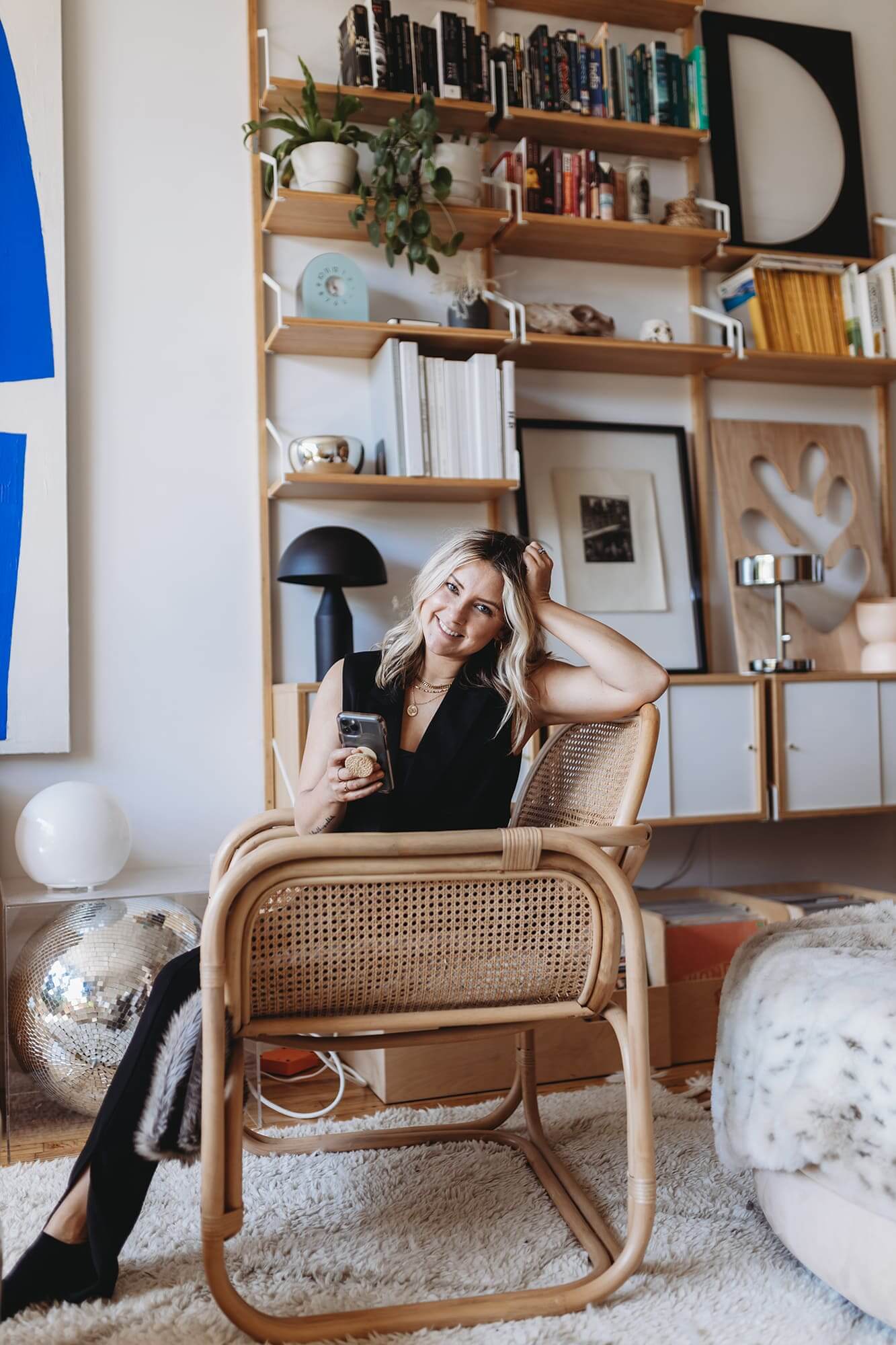
As part of the Morning Lazziness series about empowering women who encourage and do incredible things with their ideas in society, I had the pleasure of interviewing Megan Wilson.
Megan is the Creative Director of Sweet Talk Strategy. She and her team manage social media, public relations, email marketing, influencer relations, content creation, and more for local and national brands and nonprofits.
During her 15+ years in marketing, she has built a robust network, earned awards as a writer, grown her own large online following, and learned the digital marketing space inside and out. She strategizes and creates with impact, quickly developing effective routes to a client’s/donor’s heart and mind to turn them into long-term investors in your brand. Megan is always going to start with a plan and a strategy to help you maximize your investments with our team.
You can also follow her lifestyle blog Sweet Sauce Blog for travel, style, wellness, and beauty inspiration.
What inspired you to start your PR agency, and how did you get your first client?
I started out as a reporter and freelance writer in 2009. I had really hoped to remain a freelance writer, but the landscape of the internet changed the world of journalism very quickly. Many of the magazines and newspapers I was working with were slashing budgets or closing altogether because they weren’t jumping fast enough to the digital advertising model. That meant I didn’t have as much work!
I was eventually recruited into the nonprofit world of marketing and took the first social media classes available and began to learn digital marketing. I started writing stories as a marketing strategy for these agencies, like I was a reporter. These “blogs” and fundraising pieces turned into great media pitches. Reporters could take what I was writing and copy and paste i,t or at least use it as a guideline for their stories. I didn’t mind! The placements were powerful and full of impact. It was really rewarding.
As the years rolled on, I dipped back into freelance reporting while also growing my marketing agency. The world of journalism continued to change thanks to social media, reduced staff sizes, and a shift to a pay-to-play focus. I saw how frustrating it was to navigate to non profits and businesses who didn’t know this world. I decided to put all of my weight into helping them get their stories in print, on air, on the radio, and beyond.
What unique challenges have you faced as a woman entrepreneur in the PR world, and how did you overcome them?
I honestly have found that being a woman mattered less than the fact that I became an entrepreneur long before many of my peers did. That did put me at a disadvantage finding female peers to lean on and learn from. Today, there are female entrepreneurs everywhere! I serve as VP of Marketing for the Richmond Chapter of NAWBO (National Association of Women Business Owners) and really love sharing knowledge and sharing their stories. I think all entrepreneurs, male and female, should have a network to lean on and learn from. It’s essential for a career in marketing, especially.
How do you stay ahead of trends in an industry that’s constantly evolving with media and technology?
I work with a team of creatives, which includes young creatives and interns. I make sure they have their fun on social and beyond and deliver their insights and trends to me as they come along. Sending a pitch to an outlet or brand that features a current trend is always a win–but the timing has to be right. Sometimes we build entire PR events around trends. You need several eyes on the landscape to find them early and take action.
We also knowledge share as much as possible. There is so much to learn and be aware of. From webinars, to conferences, to outlets, to social media, to networking events, it’s important to make notes and download with one another. We often create our own content to share this knowledge for our social and email channels, which helps us begin to own it and put it to work.
What’s your go-to strategy for building strong, lasting relationships with clients and the press?
For clients, we insist that we help them write their own headlines. Anyone with a website, social media, and email list can be their own news outlet. We’re building narratives that can be integrated on social, email, websites, events, AND in the media. No media pitch is wasted if a reporter doesn’t pick it up or we don’t land a placement. That content still becomes a blog post, is featured in emails, and breaks into several social media posts. This helps them streamline their marketing efforts and effectively tell their story across all channels. If we do get a media placement, readers/viewers who land on a client’s channels see the same messages reflected there to drive home our core goals for that month or time period.
For reporters, I know what it’s like to be one so I make sure they have an abundance of details, facts, photos, videos, and anything else they need to be successful. I arrange interviews with clients, introduce them to the right people, and give them talking points ahead of time. I make it as easy as possible to tell a great story. I also constantly connect with them to share updates for different clients to keep them top of mind when they need an expert interview for a specific story or have an empty spot on the morning news they need to fill. They know I’ll respond and prepare them as much as possible. Being reliable and easy to work with has become a regular shining review from our reporter contacts. I believe knowing what makes a good story also keeps them trusting both me and my clients.
Can you share a campaign or media moment you’re especially proud of—and why it stands out?
Every year, I get to work with the Richmond Tattoo & Arts Convention. I first got to know the host Jesse Smith when I was a freelancer because I was drawn to his story as an artist. The next year, he asked me to write about the convention, which is now in its 37th year, and I decided to see if I could help dozens of folks to write about the convention instead. It was a huge success and I’ve been doing it annually every since– seven years now. The event allows me to uplift hundreds of artists, businesses, and nonprofits every year and give them a platform on local, state, and national outlets. This year’s event is October 17-19 and we’re already landing placements and lining up media passes. It’s become a coveted event for reporters, photographers, and videographers to gain access to thanks to a line up of fun, celebrities, food, and so much more.
Which platforms or tactics have been most effective for growing your own brand visibility?
Social media continues to be the best way to show off our work publicly. We treat our social accounts like a portfolio for all to see. From showcasing our latest photoshoots, to client media features, to sharing our expertise it’s where the “lurkers” turn into “clients.”
I also network in person regularly. Marketing is a personal business. Showing up and connecting with people in person builds trust. It is not only good for bringing in new clients but also helps us build connections for our clients. We’re always out finding new potential partnerships and refining our narratives in the field.
Finally, we do great work, keep clients organized, operate with honesty and integrity, and are easy to work with. We find these factors above all make us successful. Many clients come to us with a terrible taste in their mouth from marketing agencies who “stopped caring” “didn’t listen” “never explained anything” or “overcharged.” They are relieved to find someone who cares, manages up (with permission), and brings new ideas and connections to the table freely.
What role has mentorship played in your journey, and how do you pay it forward to others in the industry?
I’ve learned the most from my clients themselves over the years. CMOs, CEOS, and Executive Directors are full of insight and information. I am so grateful to the tools they’ve exposed me to, the freedom they’ve given me to be successful, and the personal connections they’ve intentionally made to make me successful.
As I mentioned before, I didn’t have access to many mentors in my field because I was such an early arrival to digital marketing. I’ve been building the plane as it taken off for years. I now make a point to hire young creatives and mentor college-level interns. I take them to as many events and introduce them to as many people as I can. I make sure they feel safe to ask all questions, personal and professional. Any female mentor is a blessing and I’m proud to be one for so many over the years.
How do you handle high-pressure situations or crises, whether for a client or your own business?
The best way to handle a crisis is to be prepared before it happens. We plan content far ahead so we have the space to press pause and focus on emergencies. Not only is this a benefit logistically, but when we know the brand’s full story for the next 6-months to a year, we can better position the brand’s message in times of crisis. We make sure to know as much as we can inside and out so we aren’t in the dark when the time comes.
When the pressure does get hot, we help everyone focus on the solution, not the problem. Being solutions-oriented changes the atmosphere and gets everyone in a positive team mindset. This is much more powerful and effective in moments of crisis. It’s proof that internal PR is just as important as external.
What’s one piece of advice you’d give to women entering the PR or communications industry today?
There is plenty of business to go around. Focus on finding clients you LIKE to work with. You’ll be more successful in the long run. Find brands you want to build, not just visit for a while. My most successful clients have become 8+ year ongoing contracts. We’ve grown our scope of work because we’ve grown the brand. Reports and influencers associate us with the brands now and know who to call when they need a story in a certain industry. That’s real success and reward.
What are the 5 things you believe are essential to overcome self-doubt and build confidence in this field?
Find out what makes you different and learn how to articulate that to peers, clients, friends, and anyone else you talk with. Focus on what makes your approach special and different from anyone else.
Know your strengths and weaknesses and those of your team. That allows you not to over deliver or force a project when it’s not a right fit. It also allows you to delegate effectively.
Celebrate your successes publicly and internally. Focus on what makes you great and not what doesn’t. You’ll find there’s a lot to talk about.
Make sure to put punctuation marks on big projects and moments to breathe and rest. This will prevent burnout and ensure you are prepared to take on the next big win.
Pour into others. Mentor your team and young professionals. Give advice to peers. Create for a good cause if the timing is right. You’ll build new skills and remember why you love what you do when it’s out of the day-to-day responsibilities.
Is there a quote, mantra, or philosophy that guides your decision-making and leadership as a beauty entrepreneur?
Always have a plan. That grounds and relaxes your team mentally and creates a way to communicate at all hours of the day. This also helps save time and money in the long-run. No project begins without a plan for us at Sweet Talk Strategy.
As a freelancer, I’ve been exposed to many, many more organizations and office scenarios than other folks. We see unsuccessful leadership and incredibly effective leadership. The organizations and businesses that aren’t interested in sharing and collaborating on a collective plan are the ones that unravel. The teams that don’t openly and regularly communicate falter.
Ok, we are nearly done. You are a person of great influence. If you could inspire a movement that would bring the most amount of good for the greatest number of people, what would that be? You never know what your idea can trigger.
I’d like to find a way to mentor as many young women as possible to help them build confidence. I find when we bring in interns, we can teach them how to use apps, how to write press releases, how to find reporter contacts, and more. What’s often missing is the confidence to walk into a room and walk up to a stranger and shake their hand and introduce themselves. I work with our interns to help foster this sense of confidence, but what else can we do at universities, schools, sports, clubs that ensures women are prepared to stand out in rooms full of competition.
How can our readers further follow your work online?
- Visit our website
- I also run a style and travel blog
