
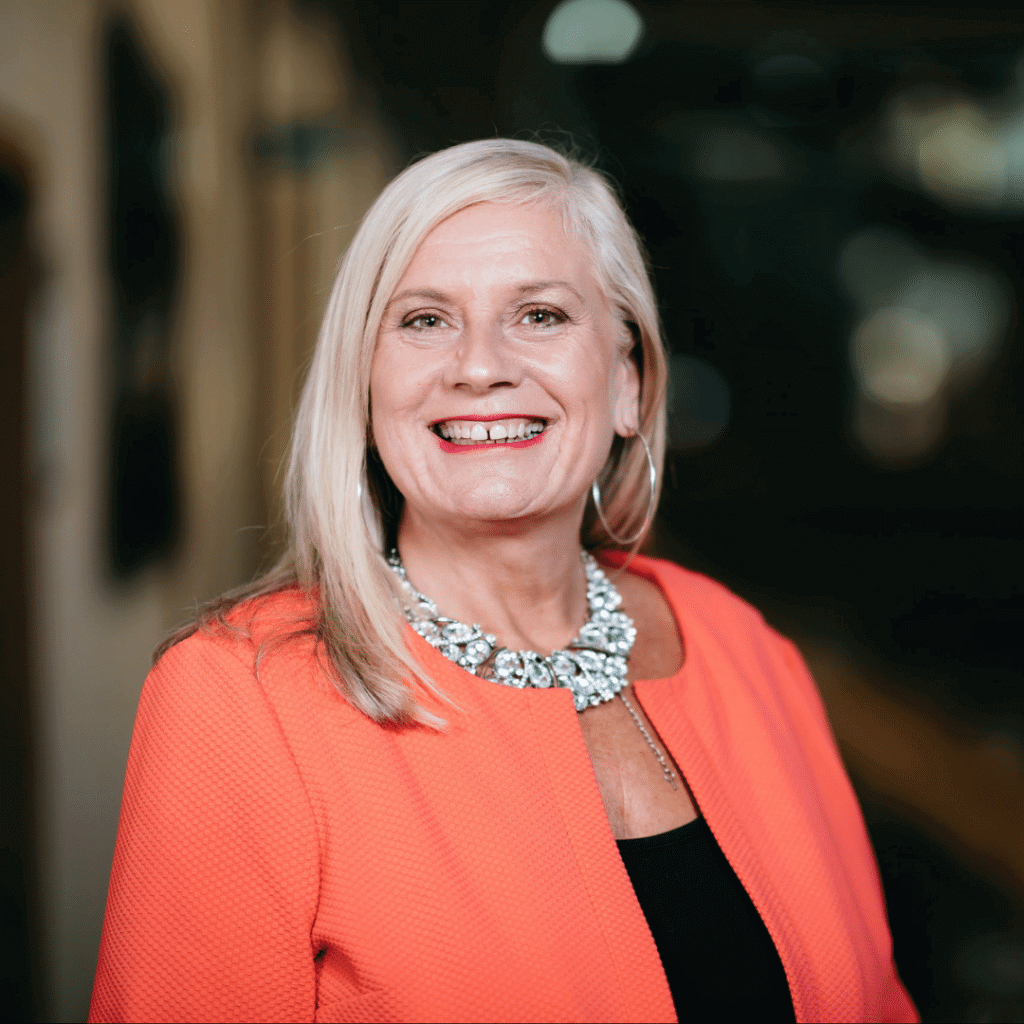
As part of the Morning Lazziness series highlighting empowering women who are making a remarkable impact with their ideas, I had the pleasure of interviewing Alison Edgar MBE.
At age 46, Alison Edgar MBE rewrote her story. After 25 years in corporate performance and leadership roles — from front-of-house management at hotels to sales strategy at major brands — she launched SMASH IT!, a training and coaching platform rooted in behavioural psychology, motivation, and change management. Today she’s known as “The Entrepreneur’s Godmother”, a sought-after keynote speaker, bestselling author, and boardroom advisor. Honoured with an MBE in 2020 for her services to entrepreneurship, she’s also held an Honorary Doctorate of Education and regularly influences entrepreneurial thought at the highest levels.
What makes Alison stand apart is more than her credentials—it’s her ability to smash through barriers. Her bestselling books SMASH IT! The Art of Getting What YOU Want and Secrets of Successful Sales strike a rare balance: practical, relatable, and empowering for everyone from startup founders to corporate leaders.
In this exclusive interview with The Champions Speakers Agency, Alison opens up about why reinvention is one of the most valuable superpowers in business. She shares how SMASH IT! came to life, why intrapreneurship is the growth engine many companies overlook, and how embracing a fearless mindset can transform teams and organisations alike.
In this interview, she reflects on the pivotal moments, hard-earned lessons, and defining wins from her journey in building thriving online ventures.
Alison, you’ve built a reputation as the ‘Entrepreneur’s Godmother’. What inspired you to launch Smash It! training, and how does it stand apart from traditional programmes?
So I think training for me is an interesting topic. I originally set up a sales training company and I focused on sales, but as the business evolved, I realised actually the content is the same in leadership and change, and it’s so integral to everything.
A lot of the people that I do training with are the younger generation, so when it comes to the terminology, a lot of training is dull and boring, revolving on courses that are just dull. And Smash It! is such a contemporary phrase, isn’t it? People say, “Oh, you smashed it!” So I trademarked Smash It! and I own the trademark.
I decided that really it’s time now to put some contemporary things in that do make an impact. And it’s training and coaching, because sometimes training is like a puddle in the hot sun – it just evaporates. But it’s that combination that makes the habit form and changes.
I love to work in the change arena and really get people to enjoy change, embrace change rather than fear it. That was the cause, that’s why I set it up – because what I do works, and it’s just a piece of sort of getting it out to more people.
You’re a strong advocate of intrapreneurship. Why do you believe your intrapreneurship methodology is so important for modern businesses, and how can it transform workplace performance?
I think it’s imperative in business because it gives people autonomy and a chance to create.
One of the things I do in my talks is I bring a picture up and say to the audience, “Who’s this?” Pretty much nobody knows who this man is, but he’s actually Tony Fadell. And I say, “He’s called Tony Fadell, does anybody know who that man is?” And they’ll say, “No, I still don’t know who that man is.”
Then I bring a picture of Steve Jobs. Actually, Tony Fadell was the entrepreneur who developed the Apple iPod. So going from the Walkman to 1,000 songs in your pocket was not Steve Jobs – it was Tony Fadell. And then obviously the iPod developed into the iPhone.
So it’s Tony Fadell’s fault that we spend so much time in screen time! But if you look at that, you know there are a couple of things – I’m pretty sure they didn’t do it right first time. And I think it’s that entrepreneurial space that you give people, the space to be able to create new things.
At Apple they created a real growth space for people to try things and be allowed for it not to succeed. Again, that’s what we see in entrepreneurship all the time, but that doesn’t always happen in bigger organisations. That’s what I try and bring through.
The methodology – I had to come up with a methodology because it’s okay to say, “Oh, you can be entrepreneurial,” but what does that mean to my audience or the people in organisations?
So what we look at is three strands of entrepreneurship:
What would I do if it was my first day? The umbrella question. On our first day, we’re excited, we’ve got our Sunday best clothes on, we’re bringing our A-game. But then a year, two years, ten years down the track, is that energy still there? Getting employees to remember that first-day experience helps to re-motivate them and re-energise them again.
What would I do if it was my best friend? Especially in big organisations, people don’t like everyone they work with, and that’s a big catalyst to the breakdown in communication. I’m a DISC practitioner, so I love psychology and getting to understand the people you work with. If you understand them and why they make decisions, you know how to adapt your behaviour to get the best out of that relationship. It’s about adapting to individuals. People love that part.
What would I do if it was my business? Would you be sustainable? Would you recycle? Would you do things differently? I worked with the European Commission on entrepreneurship projects, and that’s what they tapped into: sustainability, diversity, inclusion, well-being. My research shows the top performers always feel like they’re running their own business, but most people don’t know where to start. Giving them that starting point makes a real difference.
Many leaders struggle with disengaged or demotivated employees. From your experience, what are your top strategies for reigniting motivation and energy within workplace teams?
I think there are a lot of demotivated workplace teams. One of the things is you can’t tell somebody they’re demotivated. If you say, “Are you demotivated?” they’ll probably say, “No, I’m not demotivated, not me.”
It’s about getting them to realise it. When I’m doing a talk or a session under the entrepreneurship model – “What would I do if it was my first day?” – the first thing we do is mindset. There’s a difference between a fixed mindset and a growth mindset, or a first-day mindset versus a 30-year mindset. When you explain that difference, people often identify themselves. Demotivation and fixed mindset go hand in hand.
Once people admit it, you can draw the line in the sand and make the change. If they don’t admit it, it’s really hard. Change is internal, and until people realise that, you can’t make the shift.
Then it’s about working out what motivates them. Today, people want more than money. If you understand someone’s motivators – education, well-being, flexibility – you can use that to re-energise them.
And then it’s about follow-through. A lot of people talk, but they don’t walk the walk. Coaching has to be put in place. Sometimes people aren’t even in the right role or organisation, and you’ve got to know when to move them or let them go.
I use the Kenny Rogers analogy – “Know when to hold ’em, know when to fold ’em.” You can’t re-motivate everyone. A fixed mindset spreads faster than a growth mindset. So you focus on the ones you can re-motivate and make those the catalyst for change.
A company’s culture can make or break its success. In your view, how can businesses cultivate a positive and truly innovative workplace culture that supports both people and performance?
This really comes back to the entrepreneurship model. It’s not about just getting a speaker in to talk – it’s about embedding the change.
During lockdown, I worked with an organisation that was struggling. They were demotivated, had made redundancies, and were spread across offices in Sydney, Hong Kong, the UK, Canada, and both sides of the US. Communication was tough.
We started with the senior leadership team. Too often they say, “It’s them who need to change, not us.” But change has to start at the top and work its way down. Everyone has to go through the same programme, learn about fixed and growth mindsets, and live it.
When leadership models it, people see authenticity. When they don’t, people say, “We tried that and it didn’t work.” But often they only tried it half-heartedly. For real culture change, you go all in – from the top down.
