
Home Blog Page 27

Empowering Sustainability: Meenakshi Singh on Building EcoChoiceHub & SCORR Ltd

0

As part of the Morning Lazziness series highlighting empowering women who are making a remarkable impact with their ideas, I had the pleasure of interviewing Lauren Anders Brown.

Meenakshi Singh is the co-founder of SCORR Ltd and EcoChoiceHub, where she blends her expertise in marketing with a deep passion for sustainability and social impact. Holding dual master’s degrees in Business Strategy, Sustainability, and Communications, she brings a strong foundation for driving authentic storytelling and meaningful engagement within the circular economy.

With a vision to merge purpose with business, Meenakshi has led initiatives that promote transparency, ethical sourcing, and consumer empowerment in sustainability. Through EcoChoiceHub, she has built a platform that connects conscious consumers with sustainably made products, while also emphasizing education and community involvement. At SCORR Ltd, she applies innovative marketing strategies aligned with circular economy principles to shift consumer behavior toward more responsible and impactful choices.

Meenakshi views marketing not just as a business growth tool, but as a means to create trust and nurture long-term relationships between producers and consumers. Beyond entrepreneurship, she is an advocate for equitable and sustainable development, working to ensure that business serves as a force for both environmental stewardship and social good.

In this interview, she discusses her entrepreneurial evolution, from early struggles to the achievements that shaped her online business success.

What inspired you to start your business, and what problem were you passionate about solving?

Having lived my entire life in Mumbai, I saw a beautiful city turn into a myriad of garbage, slums, and unorganized development. I knew the main culprit behind this was the communication and awareness in the people living on the ground level. Hence, we aimed to bring the choices that truly helped the environment to the common man

How has your business evolved since its launch, and what key decisions have helped drive that growth?

Since our launch, ecochoicehub.store has steadily evolved by embracing the principles of the circular economy as the foundation for sustainable growth. Recognizing that real progress comes from empowering individuals and communities, we made it a priority to raise awareness about making conscious, sustainable choices. By curating and promoting eco-friendly alternatives over conventional brands, we’ve helped our customers make informed decisions that benefit both people and the planet.

Key decisions that have driven our growth include:

  • Actively educating our audience on the environmental impact of their purchases, inspiring a community-wide shift toward sustainability.
  • Partnering with brands that align with our circular economy ethos, ensuring our product offerings consistently support reuse, recycling, and responsible resource use.
  • Focusing on transparent supply chains and clear product labeling, helping customers feel confident in the positive impact of their choices.
  • Through these strategies, we’ve fostered an engaged, loyal customer base and contributed to a broader movement where collective, informed decisions have the power to create lasting change.

In your view, what truly sets your brand apart in today’s competitive market?

Integration of Artisanal Heritage: Ecochoicehub.store offers unique, handcrafted items—such as home décor bells made from recycled and sustainable metals—which blend timeless artistry with modern circular design. Many pieces, like chime bells and the “Tree of Splendor,” are not just functional but tell a story rooted in cultural heritage and individual craftsmanship, ensuring that no two pieces are alike.

Holistic Circular Product Range: The platform goes beyond typical second-life or upcycled products by offering categories like ethical fashion, energy-efficient gadgets, eco-friendly technology accessories, and even sustainable finance offerings. This breadth gives buyers the opportunity to make conscious choices across multiple aspects of their lifestyle, from home and wellness to travel and tech.

Empowerment and Community Engagement: Ecochoicehub is committed to empowering customers through education, guides, and an interactive community. This means sustainable living is made easy and accessible, backed up by transparency about supply chain practices, production ethics such as fair wages and safe working conditions.

Transparent, Ethical Practices: Unlike many marketplaces that focus just on the product, ecochoicehub.store highlights fair wages, ethical production, and transparent operations—making these values central rather than supplemental. EcoChoiceHub tries to bring forth focus on all the aspects that can truly contribute to a circular economy.

Focus on Innovation in Circularity: The marketplace actively promotes design innovation, as seen in its products crafted from scrap or discarded materials, transforming waste into unique works of art with both functional and aesthetic value.

These factors collectively position ecochoicehub.store as more than just a platform for resale or recycled goods—it is an ecosystem embracing circularity in product design, supply chains, community involvement, and consumer education, uniquely blending tradition and sustainability for a greener tomorrow.

What has been your most effective marketing strategy to date, and why do you think it worked so well?

The most effective marketing strategy for ecochoicehub and SCORR LTD has been collaborative storytelling and community-driven campaigns across social media. Notably, their partnership campaigns—such as collaborations with artisans and organizations—have resonated strongly with audiences by highlighting real stories of empowerment and sustainable craftsmanship. This approach goes beyond conventional promotion by:

  • Centering content around artisans’ journeys and the impact of ethical production, which builds authenticity and trust.
  • Actively engaging followers with interactive posts (reels, behind-the-scenes, testimonials) that foster a sense of participation in a purposeful movement.
  • Amplifying user-generated content and stories that showcase real people making sustainable choices, creating a community of advocates rather than just customers.

This strategy worked well because it connects emotionally, establishes credibility and transparency, and mobilizes a community whose values align with the brand’s circular and ethical ethos. As a result, the campaigns generate both engagement and loyalty, differentiating them in the crowded marketplace.

How do you stay connected to your ideal audience and understand their needs or behaviors?

We stay closely connected to our ideal audience by fostering an ongoing, interactive relationship across social media channels and our marketplace community. Through collaborative campaigns and authentic storytelling—such as featuring artisan journeys, customer testimonials, and behind-the-scenes content—we create meaningful dialogue that encourages feedback and participation.

By actively engaging followers in comments, polls, and interactive posts, we gain real-time insights into their preferences, values, and evolving needs. Monitoring user-generated content and encouraging our community to share their stories also helps us understand their motivations and behaviors on a deeper level.

This consistent two-way communication builds trust, ensures we remain responsive to what matters most to our audience, and allows us to adapt our offerings and messaging accordingly. This approach not only keeps our brand relevant but also fosters loyalty and advocacy within our circular economy movement.

What’s one branding move or campaign that helped elevate your business to the next level?

One pivotal branding move that helped elevate our business was the collaboration campaign between EcoChoiceHub, SCORR LTD, and Tumhaari Sakhi. This campaign brilliantly fused sustainability, artisan empowerment, and storytelling by spotlighting real craftspersons behind the products and showcasing the tangible impact of conscious consumerism.

By sharing authentic stories and videos featuring artisans’ journeys and the positive changes enabled by our circular economy platform, we connected emotionally with our audience and differentiated ourselves from more conventional marketplaces. The collaborative nature of the campaign also expanded our reach and credibility, engaging communities aligned with our values and turning customers into advocates for our mission.

This branding move not only drove engagement and awareness but also strengthened our community and positioned our business as a leader in values-driven, sustainable commerce.

What does success look like for you, not just in numbers, but in purpose or impact?

Success for us goes beyond numbers and sales figures—it’s about creating meaningful, lasting impact in advancing the circular economy and fostering a culture of conscious and balanced consumption. True success means empowering individuals and communities to make informed choices that reduce waste, support ethical production, and preserve the environment for future generations.

We measure success by how effectively we raise awareness, inspire behavioral change, and build a strong, engaged community committed to sustainability. It’s reflected in the stories of artisans whose livelihoods improve, the growth of a transparent and fair supply chain, and the collective movement toward regenerative practices that challenge the status quo.

Ultimately, success is when our marketplace serves as a catalyst for systemic change—helping nations and their people progress through responsible consumption, circular innovation, and shared environmental stewardship. That sense of purpose-driven impact is what truly defines our growth and fuels our mission every day.

How do you personally define success, beyond revenue and growth metrics?

Beyond revenue and growth metrics, I personally define success as the positive difference we make in people’s lives and the environment through our work. It’s about seeing tangible improvements in the well-being of artisans, customers, and communities who engage with our circular economy platform.

Success means creating trust and meaningful connections that inspire sustainable habits and long-term behavioural change. It is also about fostering innovation that challenges traditional consumption patterns and helps build a healthier planet for future generations.

Ultimately, success to me is fulfilling a higher purpose—leveraging business as a force for good, where every decision contributes to collective progress, equity, and environmental stewardship. This holistic impact is more rewarding and enduring than any financial milestone alone.

Can you share a challenge or setback that ultimately became a turning point for your brand?

One of the most significant challenges we faced was overcoming widespread consumer skepticism fueled by greenwashing. Many people found it difficult to trust sustainability claims from brands, which initially made it challenging for us to gain traction and build confidence in our circular economy offerings.

This challenge became a turning point when we chose to embrace full transparency and authentic storytelling as central to our brand identity. We began openly sharing the real stories behind our products—the artisans who create them, the sustainable materials used, and the ethical practices we uphold. This honest approach helped differentiate us in a crowded market and fostered genuine trust with our audience.

By engaging directly with our community through educational content, behind-the-scenes insights, and collaborative campaigns, we built a loyal and active customer base that values integrity and impact. This shift from traditional marketing to purposeful storytelling transformed a setback into an opportunity for meaningful growth and positioned us as a trusted leader in sustainable commerce.

What daily habits or rituals keep you focused, creative, and grounded as a leader?

As a leader, I stay focused, creative, and grounded by starting each day with clear intentions that align with our mission and goals. This helps me maintain a strong sense of purpose and prioritize what’s most important.

To keep my creativity flowing, I make it a habit to learn something new every day—whether that’s reading, exploring fresh ideas, or engaging with different perspectives—which helps me stay innovative and open-minded.

I also stay deeply connected to our community by actively listening to customers, artisans, and team members. This keeps me grounded in the real impact of our work and reminds me of the purpose behind everything we do.

How do you approach innovation and risk in your business strategy?

In our business strategy, we approach innovation with a mindset of continuous learning and adaptation. We actively seek out new ideas and emerging trends in sustainability and the circular economy, evaluating how they can enhance our offerings and create greater impact. Innovation is not about taking unnecessary risks but about thoughtfully experimenting with solutions that align with our core values.

When it comes to risk, we prioritize calculated, purpose-driven decisions. We weigh potential benefits against possible challenges carefully, ensuring that every step forward supports our mission and maintains the trust of our community. This cautious yet open approach allows us to explore new opportunities while safeguarding the integrity and longevity of our brand.

Ultimately, innovation and risk-taking go hand in hand, and we embrace both as essential to driving meaningful progress—balancing bold ideas with careful execution to foster sustainable growth and lasting impact.

What advice would you give to someone starting a business in today’s fast-changing digital world?

My advice for someone starting a business today is to stay deeply connected to your purpose and values, as these will guide your decisions and help you stand out in a fast-changing digital world. Focus on building authentic relationships with your audience—listen to their needs, be transparent, and create real value rather than just selling products.

Embrace digital tools and platforms to reach and engage customers, but don’t lose sight of the human element behind technology. Be adaptable and open to learning, as change is constant. Test ideas quickly, learn from failures, and iterate often.

Finally, prioritize sustainability and ethical practices from the start. Consumers increasingly expect brands to be responsible and transparent, and building your business around these principles will set you up for long-term success and positive impact.

Where can our audience connect with you and learn more about your work or offerings?

For deeper engagement, we encourage following our collaborative campaigns and conversations across various social media channels like Instagram, LinkedIn to stay inspired and informed about conscious living and sustainable choices. Our audience can connect with us and learn more about our work and offerings through our website, Ecochoicehub, where we showcase our full range of sustainable products and share the stories behind them.

We regularly post updates, artisan stories, behind-the-scenes content, and community-focused initiatives related to our circular economy mission on Facebook and Instagram.

Following us on these platforms offers an opportunity to engage deeply with our brand, stay informed about new products and campaigns, and join our growing community of conscious consumers.

Empowering Women in Hospitality: An Exclusive Interview with Lisa Loebenberg, Director & Founder of London’s Thriving Restaurants

0

As part of the Morning Lazziness series highlighting empowering women who are making a remarkable impact with their ideas, I had the pleasure of interviewing Lisa Loebenberg.

Lisa Loebenberg is the director and founder behind a portfolio of successful bars and restaurants across South West London. A business development and profit growth expert with more than 25 years of experience in the hospitality industry, Lisa has built her career from the ground up—rising from waitress to entrepreneur and respected industry leader.

She currently owns seven thriving venues—soon to be eight—including Exhibit Balham, SW16 Bar & Kitchen, Mamma Dough, and Furzedown Lodge. Known for her hands-on leadership style and operational expertise, Lisa specializes in driving transformation, optimizing P&L performance, and delivering strategies that achieve measurable results.

Passionate about creating vibrant, community-driven spaces, Lisa has built a reputation for blending strong commercial acumen with a deep understanding of customer experience. Her work continues to set new standards in hospitality while inspiring the next generation of entrepreneurs.

In this interview, she talks about the obstacles she’s overcome, the milestones she’s achieved, and the wisdom she’s gained along the way.

What inspired your leap into entrepreneurship, and what personal experiences sparked the idea behind your current venture?

I’ve always loved the energy of hospitality, the way food and drink bring people together and create memories. After years of working in the industry, I realized I was tired of building other people’s dreams. I wanted to build my own. For me, it wasn’t just about starting a business, it was about creating spaces that felt alive, inclusive, and true to my values. Places that combine quality, warmth, and a real sense of belonging.

If I’m honest, I never liked working for other people. I always knew I wanted to run something myself, to see if I could build a business that wasn’t just about ego and could actually be profitable. I was lucky with timing,  I had the opportunity to take on ownership of my first venue Exhibit, without a huge amount of fundraising. That said, It wasn’t perfect, and it definitely wasn’t the “right time,” but I was already involved in the business and I jumped at it. Sometimes you just have to take the leap. A leap that has certainly paid off.

What core problem does your business solve, particularly for women or underserved communities and how does your approach stand out in today’s competitive space?

Hospitality often feels transactional, and for women especially, bars and restaurants can feel unwelcoming or even unsafe. My goal has always been to build venues where everyone feels comfortable, where community is at the heart of the experience, and where staff are respected and supported. We lead with culture and care, that’s what sets us apart.

I’ve spent a lot of time presenting to rooms full of middle aged men who weren’t interested in hearing me. I’ve seen people from marginalized backgrounds overlooked time and again, and I take pride in giving those people opportunities. Early in my career, I was told I had to wear skirts and heels for twelve hour shifts. Now, I prioritize hiring emotionally intelligent managers and team members, because hospitality is deeply emotional work, and it requires people who can truly connect with others.

What were some of the toughest obstacles you faced early in your journey as a woman entrepreneur, and how did you navigate through them?

Access to capital was a huge challenge, but honestly, being taken seriously was even harder. In a male dominated industry, I was constantly underestimated. I’ve walked into bank meetings and been asked if I was there to take notes for a male counter part. I’ve been told women don’t make good managing directors because we’re “too emotional.” I’ve even been told that I only got opportunities because of how I look.

I learned to back myself, do my homework, and show up consistently. Over time, results spoke louder than doubts. Today, I’m 41 years old and own seven businesses. The hardest part now is balance. Progress, not perfection, is what I aim for. People are my number one priority, and every tough lesson feels like paying school fees… expensive, but necessary. My biggest challenge has always been believing in people and sometimes being let down. The trick is to take the emotion out and keep moving forward.

When the going gets tough, what keeps you grounded and motivated to keep pushing forward?

My dog, my husband, my business partner, my gym routine, they all keep me centered. But more than anything, it’s my belief in grit and grace. Resilience isn’t just about pushing harder, it’s about knowing when to pause, breathe, and come back sharper. My team also motivate me. They rely on me to steer the ship, and that responsibility keeps me accountable. At the end of the day, my success only matters if my team is succeeding too.

What daily habits or non-negotiable routines help you stay focused, creatively energized, and balanced as a founder?

I start every day with exercise. It clears my head and sets the tone. Walking my dog is non-negotiable, it grounds me. My mornings are structured and focused, but I also carve out space to think creatively about the bigger picture, not just the daily fires. I’ll admit, I sometimes slip into getting lost in the small stuff, it happens. But I try to pull myself back and ask, “what’s really important today?”

What’s been the most effective growth lever for acquiring new clients or expanding your customer base?

Word of mouth, always. If people feel looked after, they’ll come back and they’ll bring their friends. The product matters, great food, warm service, an authentic atmosphere, but relationships matter even more. That’s where emotionally intelligent team members shine, they know how to build real connections with guests.

What branding or marketing decision had the biggest impact in elevating your business and building trust with your audience?

Owning our story. Instead of trying to be polished and corporate, we leaned into being real, local, and human. People connect with authenticity. That shift in how we presented ourselves completely changed how customers and staff saw us.

At SW16 Bar & Kitchen, for example, we give our teams autonomy. They get to build relationships with guests, shape branding decisions, and even influence the menu. Guests invest in the people they see every day, so empowering the team to be part of the bigger picture has been powerful.

How do you personally define success, not just as a business owner, but as a woman living a purpose-driven life?

For me, success is freedom of choice. It’s being able to design my life, spend time with the people I love, and create spaces where others can thrive. But freedom requires a profitable business, run by people you trust.

Success also means being challenged. I love a challenge, because it means we’re growing. The problems we faced five years ago, I would take in stride today. Each new challenge is an opportunity to level up. That’s why saving Mamma Dough was such a defining moment for me. In 2023, my business partner Emma Willis and I bought the pizza group out of administration. Within a year, we turned a business losing £40,000 a month into one generating a quarter of a million in site level EBITDA. That, to me, is success, facing down the impossible and proving what’s possible.

Can you share a mistake or misstep that taught you a lesson you still carry with you today?

In the beginning, I tried to do everything myself. It nearly broke me. The lesson? Delegate and trust your team. People often surprise you when you give them responsibility. Of course, some will let you down, but you can’t let that stop you from trusting again. The key is to remove the wrong people quickly and move forward with the right ones.

What’s your best advice for women just starting out, especially first-time entrepreneurs feeling overwhelmed or unsure of their next steps?

Don’t wait until you feel ready, you never will. Start small, test, learn, adjust. Build a support system, ask for advice, and don’t let the fear of imperfection hold you back. Progress over perfection, always.

How do you approach risk and innovation, especially when breaking new ground?

I calculate, then I leap. Risk is unavoidable, but it doesn’t have to be reckless. I rely on both data and instincts, they’re equally important. Innovation, for me, is about being brave enough to try something new and humble enough to admit when it doesn’t work.

If you lead a team, how do you foster a culture of trust, inclusivity, collaboration, and growth?

I’m very clear about expectations, but I always lead with respect. Inclusivity isn’t about ticking boxes, it’s about who gets a seat at the table and whether they feel they truly belong there. I encourage my teams to challenge me, to push back, and to bring their passion into the room. Nothing is off the table. That’s how you build trust and collaboration.

What are the top 5 mindset shifts or personal practices that helped you overcome self-doubt and grow your confidence as a woman entrepreneur?

  1. Back yourself. If you don’t, no one else will.
  2. Progress over perfection. Challenges are just you levelling up.
  3. View failure as feedback. Pay those school fees!
  4. Boundaries protect both you and your business. Create structure and time for yourself.
  5. Grit and grace, strength with compassion, are more powerful than either alone.

If you could spark a global movement through your work, what would it be and why is that mission meaningful to you?

I’d build a movement around hospitality as a training ground for the next generation of entrepreneurs. Hospitality teaches resilience, communication, leadership, problem solving. It’s the ultimate school of life. Too often, people see it as a stopgap job. I want the world to see it as a launchpad for future leaders.

What’s a quote, philosophy, or guiding belief that shapes how you lead, create, and live every day?

“Grit and grace.” Push with strength, handle with care. It’s how I train, how I lead, and how I live.

Where can our audience connect with you, explore your work, or follow your entrepreneurial journey online?

You can find me on LinkedIn, or follow our journey on @exhibitbalham, @sw16barandkitchen, and @mammadough. That’s where we share what we’re building day to day.

Scholarly Information in the Digital Age: Exploring Online Databases

0

In today’s fast-paced digital era, students rely heavily on online research databases to complete academic tasks with precision and credibility. With increased academic pressure and the rising demand for credible sources, accessing scholarly content digitally has become not just a convenience but a necessity. For any student seeking assignment help UK, online databases serve as a virtual treasure chest brimming with peer-reviewed journals, research papers, and academic materials that can elevate the quality of their submissions.

Whether it’s academic assignment help, essay writing, or dissertation research, these databases allow students to navigate the academic world efficiently. This guide unpacks everything about using online databases, offering deep insights to support assignment help needs and encouraging smart digital learning strategies.

Why Online Research Databases Matter in Modern Academia?

Before diving into specific strategies and tools, let’s understand why online research databases are so crucial for students today.

 Key Benefits for Students Seeking Assignment Help

  • Access to Peer-Reviewed Content: Trusted research platforms ensure scholarly accuracy, making them ideal for students seeking assignment writing help.
  • Time-Saving and Efficient: With structured filters and search options, you find exactly what you need quickly-perfect when working on tight deadlines.
  • Global Perspectives: Many databases include content from universities and research bodies worldwide, making it valuable for both UK and international students.
  • Variety of Sources: Includes journals, white papers, case studies, ebooks, and more, enriching your academic work.

For those exploring assignment help services, understanding how to use databases efficiently provides a significant edge in research-based assignments.

Types of Online Research Databases for Academic Use

 General Academic Databases

These are the go-to platforms for students across disciplines:

  • JSTOR: Covers humanities, arts, and social sciences.
  • Google Scholar: A freely accessible search engine with scholarly content from journals, books, and conferences.
  • EBSCOhost: Offers a wide range of academic content across science, engineering, business, and literature.
  • ProQuest: Renowned for thesis repositories and multi-disciplinary content-particularly useful for postgraduate and PhD-level work.

Such databases are perfect when you’re pursuing online assignment help that requires up-to-date and credible academic references.

 Subject-Specific Databases

Tailored for niche research needs:

  • PubMed: Focuses on medical and life sciences.
  • IEEE Xplore: A resource hub for electrical engineering and computer science students.
  • ERIC (Education Resources Information Center): Ideal for research in education and pedagogy.

When crafting assignments in specialised fields, using these databases enhances the authority of your arguments, supporting your search for academic assignment help with robust evidence.

How to Use Research Databases Effectively for Assignments?

 Use Smart Search Techniques

Mastering keyword-based search tactics can save hours:

  • Use Boolean Operators like AND, OR, NOT to refine your results.
  • Apply quotation marks for exact phrases.
  • Leverage filters for publication year, document type, or source type.

These tactics allow you to navigate vast databases and identify the most relevant articles quickly-an invaluable skill for those depending on assignment help websites for direction.

 Save and Organise Sources

Keep your references sorted from the beginning:

  • Use tools like citation managers (Zotero, EndNote).
  • Organise PDFs and links into folders for easier retrieval.
  • Always save the DOI or permalink for referencing.

This structure supports clear citation and proper formatting, both essential for university-level submissions and are aligned with expectations in writing services.

Evaluating Sources for Credibility and Relevance

Not everything in an academic database is gold. Students must develop the ability to assess content.

 Questions to Ask When Evaluating Sources:

  • Who is the author? Is the writer affiliated with a reputable institution?
  • Is the content peer-reviewed? Peer-reviewed articles are often required in university-level assignments.
  • When was it published? Outdated content can weaken your argument.
  • Is it relevant to your topic? Always link your sources to your research question or thesis.

Such evaluation makes your work analytically strong-especially when aiming for distinction with assignment writing help or assignment helper support.

Integrating Scholarly Sources into Academic Writing

 Use Evidence, Not Just Information

Quoting from a source isn’t enough. You need to:

  • Interpret the data.
  • Relate it to your thesis.
  • Showcase its significance in your argument.

Whether you’re doing a critical analysis, literature review, or argumentative essay, proper integration transforms your content from informative to persuasive-a major expectation for any student seeking assignment help.

 Avoiding Plagiarism Through Proper Referencing

Every academic institution takes plagiarism seriously.

  • Use citation styles like APA, MLA, Harvard, or Chicago as per university guidelines.
  • Include in-text citations and a properly formatted bibliography.

This ensures originality and academic integrity, aligning your submission with standards followed by any reputable assignment help website.

Common Challenges Students Face with Online Databases

 Information Overload

With thousands of results, it’s easy to feel overwhelmed. The solution?

  • Stick to one or two trusted databases.
  • Create a clear research question.
  • Use filters wisely.

 Paywalls and Restricted Access

Many high-quality sources are behind paywalls.
Solution:

  • Access databases through university libraries.
  • Use open-access repositories.
  • Search for preprints or summaries that are publicly available.

Even students using assignment help services may be directed to access these databases to improve assignment depth and originality.

Best Practices for Leveraging Databases in Assignment Writing

 Early Research is Key

Don’t wait until the last minute. Begin exploring databases as soon as the assignment is announced. This provides ample time for reading, analysis, and reflection-boosting the chances of scoring higher.

Keep a Research Log

Maintain a simple spreadsheet noting:

  • Source title
  • Author
  • Key points
  • Relevance
  • Notes on integration

This not only streamlines the writing process but also reduces stress, especially for those relying on online assignment help.

Complementing Databases with Other Digital Academic Tools

While databases are essential, other academic tools can enhance your assignment workflow. Examples include:

  • Mind mapping tools for brainstorming
  • Note-taking apps like Notion or Obsidian
  • Grammar and structure checkers for polishing drafts

These tools, when used alongside databases, can elevate your assignment quality and efficiency, supporting your use of assignment help UK resources.

Building Research Skills Over Time

Academic excellence isn’t achieved overnight. Using databases teaches you:

  • How to think critically
  • How to build an argument
  • How to assess scholarly merit
  • How to structure an academic paper

These are lifelong skills-far more valuable than just finishing one assignment. Regular database usage, paired with the right assignment help services, lays a strong foundation for academic success.

Conclusion

Digital databases have transformed the academic landscape. They empower students to go beyond textbooks and explore knowledge deeply, analytically, and credibly. Whether you’re studying literature, medicine, engineering, or social sciences, databases provide the kind of rigorous evidence universities demand.

For students looking to refine their research skills, enhance writing quality, and improve academic outcomes, tapping into digital databases is non-negotiable. If you’re navigating complex topics or tight deadlines, consider professional support. A reliable third-party like Assignment in Need can guide you through the assignment process, helping you make the most of scholarly content without crossing ethical lines.

By combining smart database usage with disciplined academic habits, any student-regardless of discipline produce high-calibre work that reflects genuine understanding, analytical depth, and scholarly excellence.

Tracy Leske on Building Oceans 2 Earth Volunteers: Ethical Travel, Wildlife Conservation & Purpose-Driven Leadership

0

As part of the Morning Lazziness series highlighting empowering women who are making a remarkable impact with their ideas, I had the pleasure of interviewing Tracy Leske.

Tracy Leske is an award-winning entrepreneur, conservationist, and passionate advocate for ethical travel. As co-founder of Oceans 2 Earth Volunteers, Tracy’s journey began with a transformative experience volunteering with rescued elephants in Thailand, igniting a lifelong commitment to animal welfare and environmental protection. With her sister Cassie by her side, Tracy turned this inspiration into action, building an organization that empowers people to make a meaningful difference through hands-on volunteering in wildlife and marine conservation.

Under Tracy’s leadership, Oceans 2 Earth Volunteers has received accolades including multiple Gold Stevie Women in Business Awards and the REIQ Community Services Award, and has been featured on Morning Sunrise. Tracy’s proudest milestones range from welcoming the first volunteer to a Victorian wildlife shelter, to expanding programs that document over 50 unique wild turtle sightings and deliver vital citizen science data to the Great Barrier Reef Marine Authority.

Tracy is known for her unwavering integrity, community spirit, and a leadership style grounded in gratitude—not just for recognition, but for the everyday contributions of volunteers who carry their experience into broader conservation advocacy. She believes that sustainable impact comes from combining passion with purpose, and she encourages other young women entrepreneurs to harness the power of the digital world to share their message, connect with changemakers, and build ventures that matter.

For Tracy, success is measured not just by growth or awards, but by the ripple effect of kindness, courage, and real change she helps foster for the planet and its wildlife.

In this interview, she reveals the mindset shifts, bold moves, and lessons that helped her turn ideas into impactful online businesses.

What inspired you to start your business, and what problem were you passionate about solving?

The spark for Oceans 2 Earth Volunteers came when my sister Cassie and I volunteered with rescued elephants in Thailand. Witnessing their resilience and the impact of ethical care, we were moved to create opportunities for others to make a real difference—ensuring every volunteer experience genuinely benefits animals, the environment, and local communities. We wanted ethical travel to be accessible and purposeful, countering exploitative tourism and providing authentic ways for people to be part of meaningful conservation.

How has your business evolved since its launch, and what key decisions helped drive that growth?

We began with one wildlife shelter in Victoria and have grown to offer marine, animal, and environmental programs Australia-wide and beyond. Each step of expansion was deliberate—always choosing partners who share our ethical standards and only selecting projects with tangible and ethical impact. Our decision to focus on citizen science and direct conservation efforts has made our marine programs not just immersive, but truly valuable for contributing to the protection of vulnerable species and habitats.

In your view, what truly sets your brand apart in today’s competitive market?

Our unwavering commitment to ethics and transparency. Every program is designed first and foremost for the welfare of animals and ecosystems, not profits. We ensure that volunteers receive honest information, that our actions are accountable, and every project leaves a positive legacy. We’re proud to be a woman-led, values-driven family business making real change in conservation, with volunteers as part of our extended family.

What has been your most effective marketing strategy to date, and why do you think it worked so well?

Storytelling—sharing real-life impact stories and authentic volunteer experiences has been incredibly powerful. Whether it’s a turtle sighting, a beach clean-up, or a heartfelt testimonial, these personal stories foster genuine connections and inspire our audience to take action. People want to know their time and energy create ripples of change, and we show them exactly how.

How do you stay connected to your audience?

We stay connected to people who aim to travel with purpose and contribute meaningfully to conservation and those volunteers who have donated their time freely to join one of our programs, whether it’s working at a wildlife shelter or surveying the Great Barrier Reef. For us, it’s not just about one trip; it’s about fostering a community of changemakers who carry their experience with Oceans 2 Earth Volunteers far beyond the project itself.

The stories and feedback our volunteers share are invaluable—they help us understand what inspires them and what global challenges matter most to them.  Many of our alumni stay involved by spreading the word, returning to new projects, or collaborating on fresh conservation initiatives.

What’s one branding move or campaign that helped elevate your business to the next level?

Our game-changing branding move was the launch of our ethical calculators—EthicCheck and GreenGauge.  In an industry often clouded by glossy voluntourism marketing, these tools gave our brand a unique voice of radical transparency.

Instead of asking people to take our word for it, we built interactive calculators that let volunteers measure the ethics of a project or their own travel choices—factoring in animal welfare, environmental sustainability, community benefit, and financial transparency. Each project on our website now carries an Ethical Score, derived from these calculators, so volunteers can see exactly how impact is measured, not just promised.

This shift elevated our business by transforming branding into proof. It positioned Oceans 2 Earth Volunteers as a thought leader and disruptor in the sector—where marketing isn’t just storytelling, but an invitation for travellers to make informed, values-driven choices. For our audience, it signalled that we’re not selling an experience—we’re safeguarding their ethics and their impact.

What does success look like for you in purpose or impact?

Success, for me, is when a volunteer leaves one of our programs not only knowing they’ve made a hands-on contribution to conservation, but also feeling changed in their outlook on the world. It’s about seeing someone become more connected to nature, developing new habits that support animal welfare and sustainability, and sharing what they’ve learned with others back home.

The real impact goes far beyond numbers. It’s in the stories—volunteers who stay involved in conservation, who start new eco-friendly initiatives in their own communities, or who come back to join us on another project because they want to keep making a difference. 

How do you personally define success?

True success for me is seeing more animals cared for and released back into the wild, habitats protected, and people inspired to make ethical choices in travel and daily life. 

Can you share a challenge or setback that ultimately became a turning point for your brand?

One of our biggest challenges was trying to compete with large, profit-driven volunteer travel companies. They had big marketing budgets, glossy campaigns, and the ability to dominate search and social channels. As a small, ethical non-profit, we quickly realised we couldn’t—and shouldn’t—try to outspend or outshine them on their terms.

That realisation became our turning point. Instead of chasing their style of polished promotion, we leaned into what made us different: radical transparency and authenticity. We built tools like our ethical calculators (EthicCheck and GreenGauge), reshaped our message around being ethical, transparent, impactful, and charity-led, and openly shared fee breakdowns. This reframe turned our size into an asset—showing volunteers we weren’t selling them a packaged product but inviting them into a movement.

What began as a setback—limited resources—ultimately became our strength. Competing on ethics, not budgets, allowed us to redefine what leadership in volunteer travel looks like.

What daily habits or rituals keep you focused, creative, and grounded as a leader?

One of my most important daily habits is practicing personal gratitude—especially for our volunteers, whose dedication and compassion inspire me every day. Taking time each morning to reflect on the difference they’re making keeps me grounded and reminds me why this work matters. I often revisit volunteer stories or messages that highlight their growth or the positive changes they’ve sparked both on our projects and in their own communities.

I also stay mindful that the challenges facing wildlife and the environment are ongoing—the problem isn’t going to disappear overnight. People and development will always put pressure on our natural world, and it’s crucial not to turn a blind eye to the harm being done. Instead, I try to stay engaged and proactive, using this awareness to fuel my creativity and commitment to real solutions. By acknowledging the scale and complexity of these issues each day, I stay focused on growing Oceans 2 Earth Volunteers as part of the answer, while encouraging our community to keep caring, acting, and never giving up.

How do you approach innovation and risk in your business strategy?

For us, innovation begins with asking: how can we do this differently, and more ethically, than the industry norm? In volunteer travel, the greatest risk isn’t financial—it’s ethical. Cutting corners with animal welfare, transparency, or community benefit can erode trust overnight. That’s why we take calculated risks only when they reinforce our values.

We’ve built ethics directly into our governance framework through our Ethical Standards and Wildlife Codes, which guide decisions as much as traditional business methods. Alongside this, we maintain a thorough and detailed risk mitigation model for all our programs—ensuring volunteer safety, safeguarding communities and wildlife, and protecting the integrity of our projects.

We also apply structured processes to manage risk in growth and innovation. Every potential new project goes through a three-step audit system to assess fit, safety, and alignment with our ethical standards, and we publish annual impact reports to hold ourselves accountable. This approach allows us to remain agile and pioneering while ensuring every innovation strengthens our mission, our credibility, and the trust of our volunteers.

What advice would you give to someone starting a business in today’s fast-changing digital world?

If I could share any advice with young women entrepreneurs, it’s this: build your business on what excites and moves you. Combine your passion with your values—when those two things line up, the work never feels like a chore. Keep learning and surround yourself with people who support and inspire you. Don’t be afraid of setbacks. The digital world gives you countless tools to share your story, connect with like-minded people, and amplify your message far beyond what was possible before. Embrace social media, online communities, and virtual collaboration to build real connections and find your audience wherever they are. Keep experimenting, refine your approach based on feedback, and use technology to turn your passion into genuine impact. Above all, remember that even small actions online can spark big change—so be authentic, keep your values front and centre, and let the digital world help you leave your mark.

Be brave, be kind, and follow your heart. Success isn’t just about awards or numbers—it’s about making a real difference and enjoying the journey along the way. If my story shows anything, it’s that with commitment, passion, and a strong sense of purpose, you can build something meaningful not just for yourself, but for your whole community and the world.

Where can our audience connect with you and learn more about your work or offerings?

You’ll find us at Oceans 2 Earth Volunteers and on Instagram. Reach out any time—whether you want to learn, volunteer, collaborate, or just chat about how ethical travel and conservation can change lives. I always love hearing from people who care!

Vicki Fletcher: From Kitchen Table Startup to 36 Franchises & National Play Festivals

0

As part of the Morning Lazziness series highlighting empowering women who are making a remarkable impact with their ideas, I had the pleasure of interviewing Vicki Fletcher.

Vicki Fletcher is the founder of Little City UK, an award-winning mobile play business, which provides imaginative play opportunities for children under the age of six.

Vicki founded the company from her kitchen in 2017 with a single role-play city set up. The ethos of the company was to create imaginative experiences where children can explore the world around them through immersive, child-led role-play experiences.  By 2020, Little City UK had scaled to multiple regions, with a franchise model enabling the concept to be taken nationwide.

There are currently 36 franchises across the UK, empowering regional operators to replicate the immersive play concept across the country.

In 2025, Vicki launched The Big Play UK, a unique concept which brings together a range of child-friendly activities to create an indoor festival, aggregating local children’s entertainers, interactive workshops (baby signing, first aid, phonics), and themed play zones.

The inaugural Ipswich event sold out both morning and afternoon sessions. More than 600 visitors attended the event. The second Big Play UK event will take place in Bedford in October 2025.

Under Vicki’s leadership, Little City has partnered with a series of high-profile brands, bringing the concept of imaginative child-led role play to corporate events, family fun days and strategic partnerships. Little City UK has partnered with many high-profile brands (including Stokke, Estee Lauder, Sky, Cry Babies, P&O Cruises, Casdon, Usborne Books & Mrs Hinch) to establish child-friendly role-play sessions specifically for corporate family events.  

In this interview, she offers a candid look at the realities of entrepreneurship, sharing both the challenges and the victories that defined her path.

What’s the origin story behind your business, and how does it reflect who you are beyond the entrepreneur title?

The origins of Little City came about in 2017 after I’d returned to work, and it felt like my childminder was spending more time with my children than I was. 

The children were getting into ‘role play’, which is where the idea first sparked from. The mobile element of Little City was born out of necessity, as the overhead costs of a permanent site were astronomical. However, that flexibility has now become our biggest strength, as Little City can be set up anywhere.

My initial plan had been to do it before the girls started school, so I had more flexibility as they were younger, but it’s now eight years on and we’re bigger than ever.

What motivates me is that my franchise team are all people of similar backgrounds. We’re all working parents looking for something flexible, where we can take our children with us to work if required. This shared experience is what keeps us motivated and working together.

Your work blends purpose with business — what’s the “why” that still gets you out of bed on tough days?

The initial why was focused on being able to spend more time with my girls when I choose to and having that flexibility to be with them during the school holidays.

This has developed significantly now that Little City UK has become a nationwide franchise. My driving force now is making sure that I’m doing everything possible to fully support my franchise team. I only make money if they make money, so it’s my job and responsibility to ensure that they have the tools, resources and confidence to do what they need to do around their families.

I’ve always prioritised giving each franchise owner enough autonomy and creativity so they feel like they fully OWN their own business but benefit from the support of the team they’ve built around it, as well as my expertise.

Many brands offer similar services, but few capture hearts — what’s your secret to building deep emotional resonance with your audience?

Everything is about being honest and remaining true to what we’re good at and what we know.

We understand that customer service is our utmost priority. We need to make sure that we’re always going above and beyond what our customers are asking for, whether it’s hiring Little City for party hire, organising toddler groups or any other bookings that we might have.

Every question comes back to one key priority – what can we do to make that event extra special?

That honesty about who we are is why our customers trust us. We’re working parents too, and we’re not here to teach our customers or their children. Instead, we provide safe and reputable imaginative free play spaces which allow children to explore in their own way. Every child is welcome to join Little City regardless of their ability, culture or background, and that’s really important to myself and the entire team. 

What’s been your most effective marketing strategy, and can you walk us through the creative thinking or risk-taking behind it?

We never lose sight of the fact that we are our own customers. That’s why we’re always questioning, “Would we like this?” or “Does that resonate with me as a parent?”

For us, our most effective marketing tactic has been to prioritise the little personal touches that might seem insignificant to some people but are incredibly important to each visitor. We make sure that we remember the names of children who come back to us time and time again. We consider the needs of grandparents and childminders who bring children along to Little City events. If we know that they’ve had a great experience, we can rely on them to promote us via word of mouth and recommendations.

Of course, there are other marketing activities we get involved in.

We love a silly video or two, and we use our social media platforms to explain who we are and what we do. The people on the other side of the screen don’t just want to know about the play opportunities available for their children. They want to get to know us, they want to like us, and most importantly, they want to trust us.  

How do you listen to your community — not just in surveys or analytics — but in ways that help you anticipate their unspoken needs?

It’s all about the ongoing communication that we have with our visitors. As we said, we are our own customer base, and we love to talk directly to the parents and caregivers who attend our sessions.

In every conversation, we’re finding out about their families, their likes and dislikes, their preferences and their children’s needs. We talk to them about what stage their children are at developmentally, and we recognise that parents love to have a chat while having a coffee.

We’re proud that Little City UK has become a safe space where people feel welcome and wanted.

It’s over those ongoing conversations that we can continue to get new insights and ideas, and we love to make new connections and work with other small businesses.

Which campaign, collaboration, or strategic shift felt like a true turning point in your brand’s public image?

The most significant moment in the last 18 months to two years was our involvement in school visits. We’ve always known that imaginative play is an essential part of any school readiness preparation, but previously, we had very little interaction with schools themselves.

However, this all changed, and we’re now thrilled that school visits are at least 50% of our business model. This all started with one local primary school that invited us to visit, coincidentally, it timed with a visit from a professional videographer that they had hired to make a welcome video.

Many of our team members have education and childcare backgrounds, and we use this internal knowledge to speak directly with local teachers and senior leadership teams about their needs. We’ve been able to demonstrate how we can use our mobile cities easily and cost-effectively, making them a great option for early years class visits.

In your own words, how do you measure success beyond profit, in terms of legacy, influence, or cultural impact?

Success for us is about the happy reviews that we get from visitors. It’s not just the reviews we receive parents who tell us that they’ve been anxious to leave the house or attend a toddler group. It’s also the messages we receive from SEND schools about children who wouldn’t usually ‘join in’ but are happily playing with their peers.

We love being able to visit socially and economically deprived schools that’ve tapped into their limited budgets to invite us in. Seeing firsthand how children are desperate to have the chance to play and learn is something that always excites us.

We’ve worked in refugee hotels and seen how children’s faces light up when they get to play with their favourite princess at one of our special events. This is where I know that we’re successful, because we’re helping children build memories and have a positive impact on both the child and the family.

The other side of success is seeing the growth of the franchise business. It’s seeing the confidence grow in each franchise owner, and seeing them (who, like me, had never run a business before) become incredibly creative and passionate about what they do.

What’s a daily or weekly ritual that keeps you grounded and in touch with your brand’s mission, even when business gets chaotic?

What keeps us grounded is knowing that we’ve always got to turn up, even when bookings are quiet and we’re only expecting a few visitors. There will naturally be days when we’re at full capacity, and there will be other days when we’re not making any profit, but we never lose sight of the fact that whoever is there deserves to get the best experience possible.

How do you approach innovation in a way that makes your brand both trend-aware and timeless?

This is where collaboration and communication are essential between the whole team. My children are growing older, and trends are changing compared to when they were preschoolers. That’s why I always talk to everyone on the team. I like to listen to what they say and ask their opinions on things before we launch anything new.

My franchises are across the UK, so I have to trust that they know what their customers want. Some things might work brilliantly in one region, but might not be quite as successful elsewhere, which is why I rely on them to tell me their thoughts and opinions. After all, they are the ones who are directly customer-facing and talking to parents and caregivers day in and day out.

I like to encourage everyone to give me their own suggestions on what they think will work. There’s nothing better than one of the franchise owners coming to me with an idea. We’ll always chat it through, and if we think it will work, we’ll go for it. That collaboration is essential to keeping up to date with what children want and need.

If you could pass down only one piece of wisdom to the next generation of entrepreneurs, what would it be and why?

Building a business takes time and hard work, but as tiring as it is, there’s always time to be honest, respectful and kind to others. It goes without saying that you should never pass off someone’s idea as your own.

But most importantly, it’s about continually listening and learning.

Even if you haven’t yet taken the plunge to start your own business, or you might still be working in a job you don’t like, it’s important to watch what’s going on around you. Working in different environments teaches you so much about running a business. It’s paying attention to what you think makes a good manager, or what software tools you like/don’t like, or what processes are easy to follow – all of that knowledge will become useful later down the line once you’ve started your business.

Winning recognition in your industry is no small feat — what behind-the-scenes decision or move do you believe made that possible?

Imposter syndrome is the biggest hindrance to award recognition. It’s easy to put it off, thinking that awards are for someone else, but it’s important to switch that thought process around. It’s having the confidence to just go for it. The worst-case scenario is that you don’t get nominated, or you don’t win – but the best-case scenario is that you do succeed. That feeling of recognition is really nice, and it’s something that can keep you motivated even during hard times.

How have public recognition, awards, or media features shifted opportunities for your brand in unexpected ways?

We’ve had a lot more visibility in the industry, but those awards and media features have helped us to pick up different bookings and opened up new avenues of income. For example, we’re now heavily involved in corporate away days for some of the UK’s most recognisable brands. I think our awards recognition has played a big part in raising awareness and visibility of what we can do for those potential clients.

Where’s the best place for our audience to follow your journey and explore your work?

We’d love to hear from people. We regularly use Instagram and Facebook, and we’re also experimenting with TikTok. It’s a great way to connect and communicate with customers. 

Silvia Mocsari on Building Honey Heaven: From Hungarian Roots to a Premium Organic Wellness Brand

0

As part of the Morning Lazziness series highlighting empowering women who are making a remarkable impact with their ideas, I had the pleasure of interviewing Silvia Mocsari.

Silvia is the founder of Honey Heaven, a premium organic wellness brand inspired by her Hungarian roots and lifelong passion for natural healing. Growing up in Hungary, she was deeply influenced by her mother’s love for herbs, spices, and honey—timeless remedies passed down through generations. After moving to the UK, Silvia longed for those same natural treasures and, in 2015, transformed that passion into purpose by launching Honey Heaven. Today, she is dedicated to sharing the healing power of pure, organic products that nurture the body, uplift the mind, and honor the wisdom of nature.

In this interview, she reflects on the pivotal moments, hard-earned lessons, and defining wins from her journey in building thriving online ventures.

What’s the origin story behind your business, and how does it reflect who you are beyond the entrepreneur title?

I was born and raised in Hungary alongside my brother, where our childhood was filled with the warmth of family and the richness of nature. My mother was an herbalist and used herbal remedies every time anyone in the house was ill or injured. I would watch, just drinking it all in as she blended her tinctures, creams, and potions, listening as she described what each herb, plant, seed, or flower did.  Honey was a regular ingredient.

My journey has always been guided by a deep passion for helping others—a purpose that inspired me to study medical massage therapy, where I discovered the profound impact of healing and care.

When I relocated to the UK, I found myself yearning for a piece of home. In Hungary, honey wasn’t just a sweet treat; it was a source of wellness, often infused with herbs and spices to enhance its health benefits. I struggled to find anything similar here, so I began shipping honey from Hungary for my own use. It wasn’t long before friends and acquaintances grew curious about these remarkable honeys and their health-boosting properties. That spark of interest ignited a flame, and with the support of my brother, Honey Heaven was born.

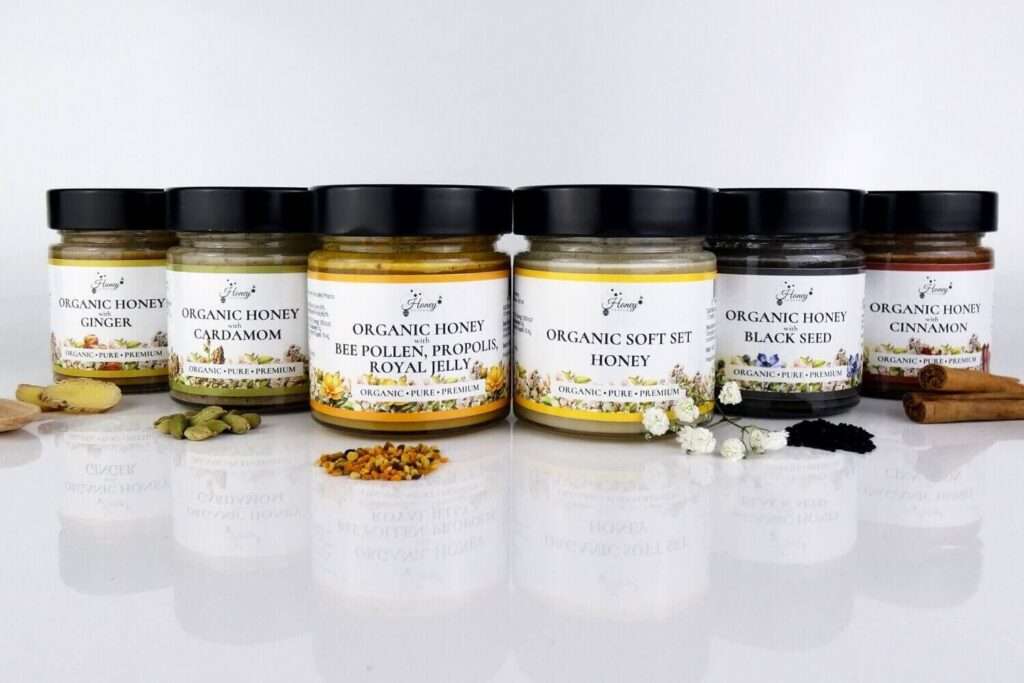
We now sell 16 outstanding varieties of honey boosted with a range of botanical additions, including turmeric, cinnamon, ginger, lavender, cardamon, black seed, CBD and even Mushrooms (in powder form!)  Many are award-winning, and all are delicious!

Our journey into the world of natural wellness became deeply personal when my brother was diagnosed with cancer in 1996. Faced with this life-altering challenge, we searched tirelessly for natural products that could support his fight. That’s when we discovered the potential of CBD oil. Its ability to ease his symptoms and improve his quality of life was extraordinary. 

Determined to provide him with the purest and highest-quality CBD oil, we began manufacturing it ourselves.  Through our efforts, we not only helped him extend his life by an incredible five years—far beyond his initial prognosis—but also discovered the profound impact we could have on others. What started as a mission to support my brother grew into a passion for helping people facing similar battles and other health challenges. Today, Honey Heaven has proudly served over 5,000 customers with our premium CBD oils and health-enhancing honeys.

Though my brother is no longer with us, his legacy lives on in every jar of honey and every drop of CBD oil we create. His courage and determination continue to inspire me every day. Honey Heaven is more than a business; it’s a tribute to his life and a testament to the power of nature to heal and nurture.

Helping others is my purpose and my greatest joy. At Honey Heaven, we remain committed to creating products that empower people to take charge of their well-being, naturally. Whether it’s the golden sweetness of herb-infused honey or the soothing relief of CBD oil, every product we offer is crafted with love, care, and an unwavering belief in the goodness of nature.

Your work blends purpose with business — what’s the “why” that still gets you out of bed on tough days?

What gets me up in the morning is my kids who are my biggest source of strength. They remind me why I keep going, no matter how hard it feels. And my business is more than just work, it’s the legacy I’m building for them, a dream that keeps me focused and driven. Together, that love and purpose push me forward every single day.

Many brands offer similar services, but few capture hearts — what’s your secret to building deep emotional resonance with your audience?

I hope that our customers can still sense how personal the brand is to me and how passionately I care for each and every product.  

What’s been your most effective marketing strategy, and can you walk us through the creative thinking or risk-taking behind it?

In terms of marketing, we are still quite rudimentary due to budget restraints.  We have been working with a PR expert for several years and she has really helped to get the products in front of the traditional media while a social media expert has helped us to push the brand online.  We have found that recipes featuring the honeys have worked well provided the photography is of good quality.  We have also run several competitions with like-minded brands or with magazines and collaborated with influencers at their events to push the CBD products in particular.

How do you listen to your community — not just in surveys or analytics — but in ways that help you anticipate their unspoken needs?

We are still a small brand and so can’t really afford surveys or analytics.  We very much rely on genuine feedback from our customers be that via the website or social media, or face to face at markets, to help us better understand what we are doing well and where there is room for improvement.  The business is still small enough for me or my husband to deal with any queries personally and I think that makes our customers feel heard and listened to.

Which campaign, collaboration, or strategic shift felt like a true turning point in your brand’s public image? 

Silvia Mocsari Honey Heaven

I think the single biggest impact on sales was when the chef, Hulya Erdal, talked about us on BBC Radio London’s Robert Elms’ show.  She specialises in mindfulness, inspiration and healing through the joy of cookery and featured our Mushroom Honey.   It really showed the impact broadcast media can have as we experienced huge traffic to the website and an immediate surge in sales of mushroom honey.   We’re always seeking to repeat that illusive 15 minutes of fame!

In your own words, how do you measure success beyond profit, in terms of legacy, influence, or cultural impact?

Given the reason I set up the CBD side of the business, every time I hear from a customer that using our products has helped them be that with pain or anxiety, I feel good and that all the pressure and hard work has been worth it.  I know that my brother would be proud of what I have achieved in his name both with the fabulous honeys that he loved and the CBD oils that were inspired by his needs. 

Can you recall a moment when a failure became a story worth telling in your press or brand narrative?

I suppose it’s not really so much a failure but the devastating news that my brother, Robert had been diagnosed with cancer.  Dealing with that revelation anyway was hard but the fact that Robert was so integral to the business made it doubly so.  Throughout his illness Robert maintained a positivity that helped to drive me on and ensure the business would be a success; he fully supported the move into CBD and would be proud to see the range that we now stock and the numbers of people we help.  

What’s a daily or weekly ritual that keeps you grounded and in touch with your brand’s mission, even when business gets chaotic?

It’s not so much a daily or weekly ritual but a daily necessity and that’s looking after my two sons!  Ade, my husband is a great help and works really hard on the business too but at the end of the day we are parents, and our children must come first.  Making sure that they get up and get to school on time is the focus of the morning and puts most other things on the back burner until that is achieved!  Very grounding!

How do you approach innovation in a way that makes your brand both trend-aware and timeless?

I’m lucky because I work with natural, botanical ingredients which are very much in fashion at the moment.  My background working with natural ingredients and understanding what benefit each can provide means that I’m always trying to think how they can be blended to work with honey to taste amazing and provide incomparable health benefits.  This has led to our being the first company to bring a mushroom honey to market, tapping into the growing interest in mushrooms and adding them to something unexpected.   We have also just launched a honey with raw cacao creating an indulgent alternative to traditional chocolate spreads that is both delicious and nutritious.

It’s the same with the CBD side of the business where my background in medical massage therapy educated me on the benefits of CBD, and other natural ingredients on the body externally and internally.  CBD has slowly been gaining traction although there is still an educational role to be had in helping people understand the difference between CBD and cannabis from which it is derived.  The latter contains the compound THC which causes the hallucinogenic effects for which cannabis is known but of which CBD contains only minimal amounts.  Instead, it simply provides the feelings of relaxation and stress release that cannabis can bring, as well as natural pain relief.  There are also anti-aging benefits associated with CBD and which we have harnessed alongside other botanicals in our Green Therapy skin care range.  

I hope that as CBD becomes more mainstream and the regulations clearer, we will find that a long established, trusted brand like ours will thrive.

If you could pass down only one piece of wisdom to the next generation of entrepreneurs, what would it be and why? 

I think it would be ‘keep working hard, be consistent and don’t give up, even if things feel like they’re not moving’.   I’ve found that if you keep going, the results will come. So never give up; hard work and dedication always pay off! 

Winning recognition in your industry is no small feat — what behind-the-scenes decision or move do you believe made that possible? 

I’m still eager to learn, especially about the health benefits of herbs and other botanicals.  There is always more to know, and this keeps what we do fresh, interesting and innovative.  Combining this thirst for knowledge and always keeping abreast of what the current market wants enables us to produce products that sometimes the public doesn’t know it wants yet – take Mushroom Honey or Hot Honey (organic Acacia Honey infused with Scotch Bonnet Chilli) for example! 

How have public recognition, awards, or media features shifted opportunities for your brand in unexpected ways?

We very much depend on word of mouth to help sell our products so when any appear in a media article or receive an award it inevitably helps us to reach some new consumers.  The confidence that an award gives to potential customers is remarkable and it is why we don’t tend to do too much advertising but prefer to achieve editorial coverage that people can trust and know is the journalist’s own opinion.

If someone hears your name or sees your work just once, what’s the one message or feeling you hope they leave with?

I’d like them to be confident that whatever Honey Heaven product they are talking about they know that it will be of the highest quality and made with love and integrity.

Where’s the best place for our audience to follow your journey and explore your work? 

Our website is the best place to view our full range of honeys and CBD products.

Empowering Leaders Through PR: Leigh White on Building Confidence, Influence & Impact

0

As part of the Morning Lazziness series highlighting empowering women who are making a remarkable impact with their ideas, I had the pleasure of interviewing Leigh White.

Leigh White is a media expert with over 20 years of experience empowering leaders, experts, and changemakers to amplify their voices, build authority, and drive meaningful impact through strategic public relations. She is passionate about equipping thought leaders and innovators with the confidence and skills to share their stories effectively, helping them build brand influence, impact, and income.

Since founding her media consultancy in 2004, Leigh has designed training programs, led dynamic workshops for audiences ranging from 25 to 300, and coached thousands of clients one-on-one across the USA and Asia Pacific, including Australia, New Zealand, Hong Kong, and Singapore. Her passion lies in transforming even hesitant speakers into confident communicators, ready to pitch and land media interviews.

Leigh’s expertise extends to guiding high-profile executives, entrepreneurs, and marketing professionals in aligning PR strategies with business goals, ensuring consistent media exposure that builds brand trust—without ever needing to hire an agency.

Known for her engaging presentation style, Leigh also consults on government advocacy campaigns to achieve positive social impact. With post-graduate qualifications in PR, Marketing, and Business Management, combined with hands-on industry knowledge, she empowers clients to secure meaningful media coverage—no fame required.

In this interview, Leigh White talks about the obstacles she’s overcome, the milestones she’s achieved, and the wisdom she’s gained along the way.

What inspired you to start your own PR agency, and how did you get your first client?

My move from being an Asia-Pacific Brand Manager in high tech entertainment publishing (video gaming) into creating my PR consultancy chose me, rather than me choosing the path.  

After I started a family, I discovered a lot about myself including that family is my number one value, and at the time flexible work wasn’t as available as it is today.  

I branched out as an independent consultant and found that PR is in high demand because all brands want to build TRUST with PR activity like a media feature, guest speaking or guest writing.  

I began setting up meetings with the CEO’s I already knew in my network and learnt most had in-house PR!  Fortunately, my first client came through my network of friends and colleagues, and it continued that way with work being referred from clients and my network for the next two decades. I began hiring other marketing and PR women who wanted flexible work and that’s how the team grew. 

What unique challenges have you faced as a woman entrepreneur in the PR world, and how did you overcome them?   

As a woman, we tend to carry a disproportionate load of professional and at home responsibilities, the thinking, planning, organising and nurturing, all at once. To avoid burnout I recommend letting your own values guide you when prioritising your week.  

Yet, whether you are a woman or not, being in business will raise a mix of internal and external barriers to success.  

The internal ones can be not feeling ready, and having no choice but to take action, or it can be what we believe about our own potential and how we imagine we are perceived by others. This is at its worst when you’re a newcomer in business, and you get to know the familiar voice of questioning your next move because it never goes away, no matter how successful you become. 

External challenges can be fear of all the uncertainty, will it work, will it fail and maybe that we won’t be taken seriously. Thankfully, once you start taking action in the business you either learn a lesson or you win!   

How do you stay ahead of trends in an industry that’s constantly evolving with media and technology?

It’s important to have a small network of trusted peers and to read industry information from subject matter experts.  

I don’t get on every new fad but I look at where efficiencies can be created. Having experienced huge technological change in my career previously, I am very open to testing and learning.  

Now that I am a PR educator, I teach studies in my programs how to embrace time-saving technologies and also, what to avoid.

What’s your go-to strategy for building strong, lasting relationships with clients and the press? 

From the very beginning in my business I always remained the point of contact for my clients, while the team worked on delivery, so there has always been a deep level of open and transparent communication, the good and the bad days. This high level of trust is particularly important in PR.

Can you share a campaign or media moment you’re especially proud of—and why it stands out?

There were so many proud moments of large scale global launches in the entertainment and book publishing worlds during my career, but what really changed my view about impact is seeing long term social advocacy campaigns pay dividends.  

With my longest standing client, CREATE Foundation, we campaigned for over a decade to advocate and agitate for change in transitioning from the out-of-home care sector and in 2022 we succeeded! The thousands of young people living in the care system (foster, kinship or residential care) have the option to remain with a carer or placement til 21, not have to leave at 18. 

I know this impacted so many lives to have stability and now the legacy I hold is that I teach change makers, experts and advocates how to have the confidence and skills to get their own PR and not need an agency.

Which platforms or tactics have been most effective for growing your own brand visibility?

To build your brand, the first tactical move is that it’s key to define what you stand for. What you are known for, such as what people think of when they are talking about or referring to you, is key to articulating in your communication channels.  

Be clear and consistent with the brand message – I educate change makers to impact the world with their voice.

What role has mentorship played in your journey, and how do you pay it forward to others in the industry?

When I left my stable job and went out on my own, I wish I had understood the power of mentors. I only knew two people who were independent business owners (not partnerships) and even just knowing they could succeed and have a sustainable business kept me going. 

I went on to hire coaches and to find mentorship in reading books, podcasts, and listening to leaders interviewed to inspire and challenge me to go further. If you’re starting out don’t wait to find a mentor, read, listen and watch!

How do you handle high-pressure situations or crises, whether for a client or your own business?    

Any high stakes situation requires careful assessment before taking action. This is the moment to reach out to trusted colleagues or mentors and do your best to move quickly and ideally take control of the situation.

What’s one piece of advice you’d give to women entering the PR or communications industry today?

Don’t listen to the voice of your inner critic, you will never feel ready, just start today with what you have and learn as you go! It worked for me and you can do it too.

Here is our signature question: “What Are The 5 Things You Need To Overcome Self-Doubt and Build Confidence?”

Journalling – by doing this you gain an objective view of your own thoughts, actions and feelings, as well as experiences. In just 5 minutes a day, or longer once a week, you can see it more clearly for what it is and learn or be accountable. Personally I journal daily.

Keep promises you make to yourself – If you don’t even keep promises that you’ve made to support your goals and ambitions, you won’t be able to trust yourself when it counts. On difficult days, you need that self-trust. Your sense of confidence and self-reliance won’t grow until it comes from within.  

Network – This is like planting seeds that will bear fruit later. Stop evaluating the return on this effort in the short term. 

Beginner Mindset – adopt a flexible outlook where you view every step forward as a learning opportunity, even if you’ve never done it before. If it doesn’t work out, you’re not failing. Redefine how you see failure entirely because we only become great by small increments at a time. 

Drop the lack mindset – create a sense of abundance, be ready to give before you ask and stop fearing things won’t work out. There is enough work for everyone. Get used to going outside of your comfort zone, speaking up, setting rates you deserve and investing in relationships for the long term. 

Is there a quote, mantra, or philosophy that guides your decision-making and leadership?

Do or Do not, there is no try. Yoda

Ok, we are nearly done. You are a person of great influence. If you could inspire a movement that would bring the most amount of good for the greatest number of people, what would that be? You never know what your idea can trigger.

I have inspired others to pursue their passion, whatever inspires them, and turn it into an impact-led business or service to create positive change in the world. I believe we are creating sustainable change through giving a voice to one purpose-led leader at a time.  

How can our readers further follow your work online?

Read more and grab free tools here: 

Barista2Go Interview: How Krisztian & Yuliana Are Redefining Coffee Catering Into Sensory Brand Experiences

0

As part of the Morning Lazziness series highlighting empowering women who are making a remarkable impact with their ideas, I had the pleasure of interviewing Krisztian and Yuliana.

Krisztian and Yuliana, Co-Founders of Barista2Go, blended their European–Asian roots and shared passion for sweets, specialty drinks, and unforgettable experiences to reimagine the art of mobile catering. Based in Sydney, their venture brings a premium café experience directly to events—transforming coffee breaks and dessert moments into stylish, memorable highlights.

With Krisztian’s background in corporate events and Yuliana’s expertise as a corporate strategist with a creative flair for food, the duo serves corporate clients, luxury brands, event planners, and private hosts who want more than just refreshments—they want atmosphere, artistry, and connection.

From branded espresso carts to colourful matcha creations and handcrafted artisan sweets, Barista2Go curates every detail to align with each client’s aesthetic, vision, and occasion. Whether it’s a product launch, wedding, conference, or private celebration, their focus is not just on taste but on crafting moments that linger long after the last sip.

In this interview, she offers a candid look at the realities of entrepreneurship, sharing both the challenges and the victories that defined her path.

What inspired you to start your business, and what problem were you passionate about solving?

I started Barista2Go because I wanted to reimagine how people experience coffee and desserts at events. For centuries, food and drink have been at the heart of human connection—scientists even show that eating together triggers endorphins, the very chemistry that underpins bonding and relationships.

For me, coffee and tea have always been more than beverages; they are rituals of connection. My Chinese heritage instilled in me the deep importance of the tea ceremony, a tradition that symbolizes respect, gratitude, and unity during family gatherings. Later, in my 25 years of corporate experience, I saw the same truth in a different setting—business deals and partnerships were often sealed not in boardrooms, but over dinners, coffees, and shared experiences.

I wanted to bring that passion for connection into the corporate catering world and elevate how brands show up at conferences, activations, and events. Hospitality had long focused on service, but I saw an opportunity to add another layer: emotional and sensory experience. People rarely remember information, but they always remember how something made them feel. When a brand can engage all five senses, it creates an impression that lingers far beyond the event.

That vision is what transformed Barista2Go into what it is today—a mobile, premium, and memorable service that goes far beyond “just another coffee cart.” We create moments that spark conversation, ignite curiosity, and turn everyday coffee and dessert into experiences guests carry with them long after the event ends.

How has your business evolved since its launch, and what key decisions have helped drive that growth?

Since launching, Barista2Go has grown from intimate private gatherings to premium corporate activations and large-scale conventions. A pivotal decision in that growth was positioning ourselves not merely as caterers, but as experience creators.

We partner closely with event organisers, brand strategists, and corporate marketers to design emotionally charged, sensory-driven brand experiences. Our coffee carts are equipped with digital displays, giving clients high-impact brand visibility through images and video. On the culinary side, we’ve invested in artisan desserts and culturally inspired flavours—from taro cannoli to strawberry matcha—that can be tailored for unique brand alignment.

These choices have elevated our offering into something far beyond standard coffee catering—transforming Barista2Go into a premium platform for connection, creativity, and unforgettable brand storytelling.

In your view, what truly sets your brand apart in today’s competitive market?

In today’s crowded market, what truly sets Barista2Go apart is our commitment to creating sensory brand experiences, not just serving coffee. We combine premium hospitality with cultural creativity, introducing artisan desserts like pandan waffles and matcha soft serve that spark curiosity and align seamlessly with a brand’s identity.

Our coffee carts also double as high-impact branding platforms, equipped with digital displays for images and video that bring campaigns to life in real time. By blending taste, sight, sound, and emotion, we transform ordinary catering into immersive experiences that guests remember and brands are proud to be associated with.

What has been your most effective marketing strategy to date, and why do you think it worked so well?

barista2go

Our most effective marketing has come from loyalty and word-of-mouth. Every time we deliver an exceptional experience, our clients become our biggest advocates, one satisfied customer often brings several new ones.

For example, we recently partnered with Libertine Perfume to launch their new Matcha & Milk fragrance series. We created a branded matcha latte cart for the event, designed to immerse guests in the scent and flavour story behind the perfume. The activation was a huge success, and the marketing manager was so thrilled that she has since shared her experience with her wider network, leading to multiple new opportunities.

That’s why this strategy works so well: authentic experiences leave lasting impressions, and our clients’ success stories naturally become our most powerful marketing tool.

How do you stay connected to your ideal audience and understand their needs or behaviors?

We stay connected to our ideal audience by working closely with event organisers, brand managers, and corporate marketers, the people who know exactly what impact they want to create. Every project starts with understanding their vision, whether it’s a product launch, a conference, or a brand activation. From there, we design experiences that align not only with the event goals but also with the emotions they want their guests to walk away with.

We also pay attention to the feedback loop that happens in real time at events. Watching guests light up when they try something like our artisan dessert and specifically crafted drinks, tells us what resonates most. Those live reactions, along with post-event feedback from clients, give us powerful insight into behaviours and preferences—helping us refine and innovate continuously.

What’s one branding move or campaign that helped elevate your business to the next level?

One branding move that really elevated Barista2Go was introducing our culturally inspired fusion desserts as part of corporate activations. When we unveiled creations like the taro cannoli and strawberry matcha lattes at high-profile events, it shifted how people saw us. We were no longer just a mobile coffee service, we became known as innovators delivering sensory brand experiences.

A standout moment was our collaboration with Libertine Perfume for the launch of their Matcha & Milk fragrance. By aligning our drinks with their scent story, we created an immersive activation that connected directly with their brand identity. The success of that campaign not only delighted their guests but also positioned us as a go-to partner for brands wanting to create unforgettable, shareable experiences.

What does success look like for you, not just in numbers, but in purpose or impact?

For me, success goes far beyond numbers, it’s about the impact we create through moments of connection. At Barista2Go, success looks like seeing people light up at an event, sparking conversations, and knowing we’ve helped a brand create an experience their guests will remember. It’s about building bonds, whether over a cup of coffee, a dessert, or an activation that tells a story.

This belief also carries into my podcast The Affluent CEO Show, where I share conversations with entrepreneurs and leaders. I’ve always believed that transformation happens one conversation, one event, and one interaction at a time. Success, for me, is helping others rise, whether that’s a client whose brand activation exceeded expectations, or a listener who found clarity and courage from a single episode.

Ultimately, success is measured in the ripple effect of connection: when one moment we create inspires another, and then another, until it becomes something much larger than us.

How do you personally define success, beyond revenue and growth metrics?

I define success as living in alignment with my values, connection, creativity, and contribution. Beyond revenue, success for me is about the moments that can’t be measured on a balance sheet: the smile of a guest discovering a new flavour, the excitement of a client whose brand activation exceeded expectations, or the message from a podcast listener who felt inspired to take the next step in their journey.

To me, success is when the work I do creates a ripple effect, helping others rise, sparking conversations that matter, and leaving people better than when they first crossed paths with me. It’s about building something meaningful and lasting, not just profitable.

Can you share a challenge or setback that ultimately became a turning point for your brand?

One of the biggest challenges we faced early on was differentiation. The market was crowded with mobile coffee carts, and at first, Barista2Go risked being seen as “just another coffee service.” It was frustrating because I knew we had more to offer, but the message wasn’t clear enough.

That challenge became the turning point when I leaned into what made us truly unique: fusion flavours, cultural storytelling, and sensory brand activations. Introducing desserts with a fusion twist, like ube match, not only delighted guests but also positioned us as innovators. Suddenly, we weren’t competing on coffee alone; we were creating immersive brand experiences.

That pivot transformed Barista2Go’s identity and opened the door to larger clients, premium partnerships, and repeat bookings. What started as a setback ended up shaping the brand into what it is today.

What daily habits or rituals keep you focused, creative, and grounded as a leader?

My daily rituals are what keep me anchored as a leader. Every morning, I start with grounding practices, journaling, and visioning, this helps me clear my mind, set intentions, and stay connected to the bigger picture of why I do what I do. These simple yet powerful habits fuel both my creativity and my focus.

I also embody my SHIFT™ framework each day, which allows me to step into the identity of the leader I’m becoming and scale with ease rather than stress. It’s about aligning energy, strategy, and mindset so that growth feels effortless and exponential. By beginning my day this way, I ensure I’m not just reacting to business demands but leading from a place of clarity, purpose, and grounded vision.

How do you approach innovation and risk in your business strategy?

I approach innovation with the mindset that creativity and calculated risk go hand in hand. For me, innovation means daring to introduce something unexpected, like fusing taro into a classic cannoli or creating strawberry matcha lattes for a perfume launch and trusting that curiosity will spark connection.

When it comes to risk, I don’t see it as something to avoid but as something to manage with intention. I test ideas in smaller settings, watch how audiences respond, and then scale what works. This way, every risk is grounded in real feedback rather than guesswork.

Ultimately, my strategy is to keep pushing the boundaries of what coffee and dessert catering can be, while making sure each innovation aligns with our purpose: creating memorable, sensory brand experiences that last far beyond the event.

What advice would you give to someone starting a business in today’s fast-changing digital world?

Don’t be afraid to stand out by leaning fully into what makes you different. In a world overflowing with options, your story and your unique perspective are your greatest assets. Authentic experiences and genuine connections are what people remember; digital tools can amplify them, but they can never replace them.

Most importantly, begin by redefining who you are and what you’re here to contribute. When your business is aligned with your soul’s purpose, growth feels natural and expansive. That deeper alignment doesn’t just build a business, it creates a legacy that fulfills both your vision and your destiny.

Where can our audience connect with you and learn more about your work or offerings?

You can find our website and follow us on Instagram, where we share behind-the-scenes moments, sensory creations, and upcoming events.

Empowering Sensitivity-Safe Beauty: An Interview with Mary Gouganovski, Founder of Mary Grace

0

As part of the Morning Lazziness series highlighting empowering women who are making a remarkable impact with their ideas, I had the pleasure of interviewing Mary Gouganovski.

Mary Gouganovski is the Founder & Director of Mary Grace, an award-winning Australian beauty and lifestyle brand specialising in natural, sustainable, ethical, and cruelty-free formulations for the face, body, and home.

Her journey began over twenty years ago in her family’s beloved small-town candle boutique, where she developed a strong work ethic and discovered her passion for the challenges and triumphs of entrepreneurship.

Mary holds a Bachelor’s in Business and Commerce (Marketing), a Certificate IV in Small Business Management, and a Diploma in Copywriting. A self-taught entrepreneur, community advocate, and budding motivational voice, she now resides in the Southern Highlands of NSW.

Outside of business, Mary enjoys books and movies, is in the process of writing a fantasy novel, and proudly runs on coffee and adrenaline. She loves Autumn and Winter, daylight savings, and lazy Sunday mornings.

In this interview, she reflects on the pivotal moments, hard-earned lessons, and defining wins from her journey in building thriving online ventures.

What’s the origin story behind your business, and how does it reflect who you are beyond the entrepreneur title?

I grew up in a world a lot more simple than the one we’re in today, though I still felt like I was missing out. I’ve always been incredibly sensitive, from such a young age people would joke that I was allergic to life. Everything made me react, made me break out, made my face ache or bleed. I was a young girl in a world full of beautiful things and I couldn’t live in it. Growing up, mum would save up as much money as she could to buy the one set of facial products I could use that would only flare up my sensitivities so much. It would cost her a fortune and it arrived in the mail in the most clinical looking packaging that made me feel like there was something severely wrong with me – just because I was sensitive. Even then, there were only a few products that I could tolerate. I’d be allergic to the rest. I wanted to shift that dynamic, to create a range of products that anyone could love for all the core areas of a person’s life. Bath. Body. Home. I wanted them to be sensitivity safe, beautiful, and affordable. I wanted someone to feel like royalty when using them but to do just that, use them. Not to be afraid because the products broke the bank. 

Your work blends purpose with business — what’s the “why” that still gets you out of bed on tough days?

Honestly I feel like there’s been more tough days than good of late. I’m so passionate about my brand, the products I sell and the message behind Mary Grace that I push through. I try to cut through the noise, the imposter syndrome and the ‘what if this doesn’t work’ emotions and focus on the positive, the fact that we’re making an impact with these products, that we’re touching the lives of people who struggled just like I do. Knowing that I’m changing those lives, that I’m giving a small slice of self care back to people means more to me than I can possibly put into words.

Many brands offer similar services, but few capture hearts — what’s your secret to building deep emotional resonance with your audience?

There is something to be said for connection. Listening to your customers, being open to talking to them, open to hearing what they have to say… It’s easy to achieve but it starts by putting yourself out there. You have to be a little vulnerable, you have to be willing to connect in the first place. Mary Grace is more than just a product, more than just a brand. It’s a family. It’s a place where people know that they can belong, that they’re seen. It’s a series of small steps… I send an email out monthly just saying hi, talking to my customers, updating them on things. My day, my life, what we’re working on, what’s coming around the corner. I do similar things on our social media, I’m active in groups where my brand is sold like TVSN’s Show & Tell Group. I’m available as much as I can for customers to know that they mean more to me than the money they spend on products. They matter to me far more than any sale might. 

What’s been your most effective marketing strategy, and can you walk us through the creative thinking or risk-taking behind it?

I wish I could say that I did x and it generated y. It was never one singular strategy that helped to grow my brand. I always joke that it took me ten years to become an overnight success because that’s really what it’s like. Countless hours, days, months, years of hard work. Of adapting, of looking at trends, cutting through the noise to what works and what doesn’t, listening to what customers want or don’t want from products, evolving, shifting, rebranding, putting yourself out there time and time again and persevering through all the negative remarks or naysayers. I wasn’t afraid to try different products, to expand ranges when needed or cull if it didn’t work. I felt like I was the wack-a-mole game just poking my head out asking “does this work?” only to get hit back down. But through constant trying I found products that worked, I picked up a loyal customer base and the brand started to grow. Slowly, surely, steadily. Like a snowball rolling down a hill, eventually it picked up enough momentum that perhaps now I’m no longer running behind it pushing it constantly. Now I’m beside it, still guiding it where it needs to go but it’s starting to take over, the risk is starting to pay off.

How do you listen to your community — not just in surveys or analytics — but in ways that help you anticipate their unspoken needs?

I actually don’t do surveys or focus groups, I find people so rarely have the time and I never want to be a bother! I am, however, incredibly active in facebook groups, on my social channels and with my customers directly and like to just talk to them. I’ve been present with them from day one. I’ll ask them questions, read reviews that are posted or comments left on posts and really do my best to take on their feedback. It’s actually how I’ve shaped my entire brand up until this point! In fact, both of my best selling product lines were released and shaped by customer feedback! All you have to do is reach out and be open to talking to your customer base. 

Which campaign, collaboration, or strategic shift felt like a true turning point in your brand’s public image?

Towards the very end of 2023, I decided to rebrand Mary Grace. I culled half of our range, from 160+ skus down to about 80, consolidated three ranges of our home fragrance products into one and streamlined the look and feel of the packaging and designs. Elevating the range into a more neutral, clean, modern space. It still has the touch of femininity behind it but it’s a lot more gender neutral now, open to a broader audience and age range. I really feel like that was the biggest turning point for the brand. After that change finished rolling out, I really started to see it grow in leaps and bounds. I also took a lot of things in house, I brought in our email marketing, social marketing, PR and was already doing the graphic design for the products myself but that allowed me to take control of advertising budget and really focus on what I wanted. How I wanted the brand to be presented to new audiences, the look and feel of our marketing efforts, etc. After I took over our social media marketing I started to see sales growth of 200-400%. 

In your own words, how do you measure success beyond profit, in terms of legacy, influence, or cultural impact?

Profit is, of course, something you need to focus on as a business. You can’t operate without it, but it’s never been my core focus. It’s always been about creating a brand that people love, that people can enjoy. I couldn’t imagine being a young woman today, growing up in a world where makeup isn’t just one brand of foundation in four different shades of ‘too orange for your skin tone’. Now, makeup and the application of it is a ritual in its own right. It’s countless steps and hundreds of dollars and if you’re someone that’s allergic or that simply can’t do the things the other girls are doing you aren’t just left out, you’re left behind entirely. Creating a range that absolutely anyone can enjoy is a feat in and of itself but I’ve always said that if I could change the life of just one person, my mission has been accomplished. Along the way, I’ve been able to implement our brand ethos in so many different ways. To be a brand with an impact, which so many are doing these days and it’s so wonderful to see. A singular person, or a singular brand can’t change the world but if every single one of us takes small steps to a better future, the world would be an infinitely better place. To be able to do more than just provide great products, to be able to give back, to help our environment, to make one less product that affects our animals, to be a brand that cares… that’s what’s important to me. That’s what makes Mary Grace so successful in my eyes.

Can you recall a moment when a failure became a story worth telling in your press or brand narrative?

There hasn’t been one singular failure, for me. It often feels like a series of failures. Small, big, anything in between. Sometimes every day. Failures that I just take in and overcome the best that I can. You become very good at putting out spot fires. Business, like life, isn’t just starting at the bottom and working your way up on a constant growth scale. There’s a lot of downs, too. You’re riding waves and holding on the best that you can but every set back makes you stronger. Every no or negative feedback helps you to grow a thicker skin. Everything you do helps you to grow for the better if you’re willing to listen to it and adapt as they come.

What’s a daily or weekly ritual that keeps you grounded and in touch with your brand’s mission, even when business gets chaotic?

I drink coffee and cry. I honestly wish that answer was more profound, that I could say I take time out and refocus on me or that there are tools that I use to help me tackle each day and remember why I do the things that I do but it’s been an incredibly turbulent few years and when you’re a small business doing everything yourself on a shoe string budget? It’s incredibly hard. Some days I barely get through them, others remind me why I do what I do. Most of them end with a beautiful hug from my mum that reminds me every day that no matter what I go through, there’s still so much love surrounding me. You know what they say, if business was easy, everyone would be doing it… despite how tough it can be, it’s still the most rewarding thing I’ve ever done in my life. Holding on to that thought gives me the strength to persevere.

How do you approach innovation in a way that makes your brand both trend-aware and timeless?

Mary Grace underwent a complete rebrand (we had a different name, different look… different everything!!) back in 2018. When the name changed, our direction did too. Not in the sense that we offered different products but now, suddenly, I wasn’t limited by a name. I had all these other avenues open to me. It’s what I had always dreamed of, that change allowed me to bring out the skincare, perfumes and expand on our bath and body ranges. In doing so, I sat down and looked at whether I wanted to go the route of hyped/trending products or timeless. I knew that a trending product would get us much faster growth results but it ran the risk of ending just as fast. Trends come and go. I wanted a brand that had the potential to become a legacy, and the only way to do that was to withstand the test of time. Focus on products that utilize ingredients you know, your parents know, your grandparents know… looking at that ingredients list there’s no confusion, no uncertainty. You think “oh yes, my mum used aloe vera juice on me when I was a kid and it was great!” or “Vitamin C works wonders, I feel safe using that” is the kind of thought process I really wanted my customers to have. It’s slower growth but stronger in the long run.

If you could pass down only one piece of wisdom to the next generation of entrepreneurs, what would it be and why?

Don’t stop, don’t wait. Just fly. I can honestly say, your products will never be perfect – not in your eye. You’ll constantly feel like things can change, be adapted. You’ll feel like it needs to look a certain way, be a certain colour but things go wrong, all the time, nothing ever comes out the same twice – and ultimately, you’re the only one who knows what it should have looked like. To everyone else? They were perfect the first time. Just fly, darling.

Winning recognition in your industry is no small feat — what behind-the-scenes decision or move do you believe made that possible?

I think it’s just perseverance. I have yet to become lucky enough to go viral or have something that instantly skyrockets myself or my brand but honestly even when someone goes viral it’s how you feed those views, those follows, those hooks – after the fact. Recognition is, like everything else in business, a long term game. You have to keep showing up every day. When you want to, when you don’t, you show up, just keep at it. Eventually, that recognition starts to follow. Though, what you’re being recognized for is important. Whether it’s knowledge in your field, your product or both. I had to really stand by my products, have a point of difference the best I could in a saturated industry, be proud of my brand and what I put out into the market – and know what the heck I was talking about. It’s a lot of research, a lot of staying on top of the game but it’s worth it, it’s what helps set you apart. 

How have public recognition, awards, or media features shifted opportunities for your brand in unexpected ways?

They have really helped to get the brand out there but honestly, they’re no easy feat. PR is, or can be expensive and so can awards. Really focusing on the ones that matter, the awards that give you the most impact or the media features that align with your brand, your person, your voice – I feel can make the most difference. Quality over quantity. Since shifting my focus in that direction, I’ve found the awards we’ve entered, or been entered into by customers, have made a huge impact on the brand recognition and brand legitimacy. Every year I’ve won an award in the TVSN Beauty Awards which are nominated based on sales and high ratings of products and winners are chosen based on customer votes. There’s over 200,000 votes each year and taking one of those home just absolutely blows my mind. For such a small business, I cry just thinking about it. Each year, it’s elevated the status of Mary Grace into whole new worlds. These wins have given me opportunities I’ve never even dreamed of. From co-authoring two best selling anthologies, to being flown to Seoul, South Korea to do a presentation at a global trade show. It’s been an absolutely mind blowing few years and I truly feel that being selective about where and how I promote the brand has made all the difference. 

If someone hears your name or sees your work just once, what’s the one message or feeling you hope they leave with?

You matter. The entire mission behind Mary Grace, or my own personal message is that I wanted to create a brand that focuses on inclusivity in a way that has rarely been looked at before. People with sensitivities, people forced to miss out for so long because they can’t use things like the rest of us? We’re no longer the minority. Such a large percentage of the world now has sensitivities… Beyond that, I want you to know that when you’re part of Mary Grace, you’re not just a customer, not just a number on a screen. Not just another order. You matter… You belong… you’re family.

Where’s the best place for our audience to follow your journey and explore your work?

My Instagram is a chaotic mess of behind-the-scenes photos, things I’m working on, and things I love, but it’s where I’m the most active and the best place to see everything that’s happening!

Tiffany Tompkins & Melissa Zissou on Founding Opal & Joy and Empowering Women to Be Perimenoproud™

0

As part of the Morning Lazziness series, which highlights empowering women making a remarkable impact with their ideas, I had the pleasure of interviewing Tiffany Tompkins and Melissa Zisso.

Opal & Joy was co-founded by Tiffany Tompkins and Melissa Zissou, who are passionate about helping women navigate those “WTF is happening to me” moments of perimenopause. Their personal journeys inspired them to create targeted, natural and effective supplements that support the unique challenges of perimenopause. With a strong emphasis on wellness and self-care, their pioneering, clinically formulated products are designed to empower women to be Perimenoproud™.

In this interview, she discusses their entrepreneurial evolution, from early struggles to the achievements that shaped their online business success.

What inspired you to start your business, and what problem were you passionate about solving?

We started Opal & Joy from a deeply personal and urgent place. Perimenopause hit Tiff early, at 38, and her symptoms were relentless. She suffered from depression, insomnia, anxiety, hot flashes, joint pain, weight gain, hair loss, and more. For years, doctors dismissed her concerns, telling her it was “normal” or “in her head.” As any good friend would, Melissa went looking for answers for one of Tiff’s biggest complaints – insomnia. With her background in the cannabis industry, Melissa suggested Tiff try full-spectrum CBD and it helped. But we quickly realized there was nothing on the market that was both effective and designed specifically to address perimenopause sleep disturbances. So, we set out to create it ourselves, with a mission to empower women and end the silence around this stage of life.

How has your business evolved since its launch, and what key decisions have helped drive that growth?

After years of research and development, we launched in January 2025 with three core products: Rest, Relax, and our 100% organic Relief Elixir. We use hemp-based cannabinoids, adaptogens, and Ayurvedic botanicals for targeted, effective support. We committed to eco-conscious packaging using recyclable cardboard tubes and soy-based inks, and we prioritize organic ingredients wherever possible. All of our products are vegan and GMO-free. Very quickly, we realized our mission wasn’t just to sell supplements—it was to spark a movement. Embracing the idea of being Perimenoproud™ became as central to our identity as the products themselves.

In your view, what truly sets your brand apart in today’s competitive market?

We’re not here to jump on wellness trends. We’re here because we lived it. Our formulations are rooted in science, created by women for women, and made with the cleanest, most effective ingredients possible. We pair hemp science with adaptogens and Ayurvedic plants, focus on organic sourcing, and package sustainably. Just as important, we’re changing the conversation around perimenopause.

What has been your most effective marketing strategy to date, and why do you think it worked so well?

Our most effective strategy has been storytelling, sharing real experiences, both ours and those of other women. Whether it’s through our blog, podcast, or social media, our audience connects to authenticity. It works because women trust other women who have been there, not faceless brands making vague promises.

How do you stay connected to your ideal audience and understand their needs or behaviors?

Opal-Joy-Restorative-Sleep-System

We listen, constantly. Our community, email list, and social channels aren’t just places where we post updates, they’re spaces for conversations. We run polls, answer DMs personally, and create opportunities for women to tell us what they’re going through. Our Perimenoproud Posse, made up of women who test our products, gives us valuable firsthand feedback that shapes what we do next.

What’s one branding move or campaign that helped elevate your business to the next level?

Launching our slogan, Be Perimenoproud™, has been important for us. It is our rallying cry and has shifted our brand from being about products to being about identity and empowerment.

What does success look like for you, not just in numbers, but in purpose or impact?

Success is when a woman tells us she finally slept through the night, that she was able to get back to sleep after that dreaded 3 am wake up, or that she feels better. It’s when she feels informed, seen, and supported through a stage of life that’s often ignored. That kind of impact matters more than any sales figure.

How do you personally define success, beyond revenue and growth metrics?

For us, success is about empowerment. It’s knowing that we’ve helped turn misinformation into education, stigma into celebration, and isolation into community. If we’ve made even one woman feel stronger and more confident, we’ve succeeded.

Can you share a challenge or setback that ultimately became a turning point for your brand?

The biggest challenge was the dismissal we faced in the medical system. Being told symptoms were “in your head” is infuriating and disempowering. That experience became our fuel. It pushed us to build a brand that says, “We see you. We’ve been you. We’re here for you.” It made our mission personal and non-negotiable.

What daily habits or rituals keep you focused, creative, and grounded as a leader?

We start each day by setting our top three priorities, so we don’t get lost in the noise. We take time to connect with our community, whether that’s responding to messages or checking in with product testers. We make space for movement, whether it’s a walk or yoga, and we always keep our purpose front and center. Opal & Joy is named after our foremothers, women who inspire us to lead with strength and creativity.

How do you approach innovation and risk in your business strategy?

We take calculated risks rooted in research and guided by our mission. We invest in clean, organic, sustainable packaging, even when it costs more. We formulate with cannabinoids in a market that’s still finding its footing because we believe in the science. We create content and education alongside products because innovation isn’t just about what’s in the tube, but about how women experience our brand.

What advice would you give to someone starting a business in today’s fast-changing digital world?

Start with your “why” and hold onto it tightly. Trends and algorithms will change, but if you’re grounded in purpose and clear on who you serve, you can adapt without losing your identity. Be transparent, lead with value, and build community before you chase scale.

Where can our audience connect with you and learn more about your work or offerings?

You can find us at OpalandJoy, where you can explore our products, read our blog, take our perimenopause quiz, and listen to the Perimenoproud Podcast. You can join our Perimenoproud Posse to be part of our community and test new products. And you can connect with us on Instagram, Facebook, and Pinterest.